Savour the
Grand Tour of Catalonia
Discover the new route
Sea or mountain? Town or city?
Sport or culture? Michelin stars or grandmother's recipes? Discover all the
routes of The Grand Tour of Catalonia
and live your own experience.
A journey full of journeys
Select your preferred experiences
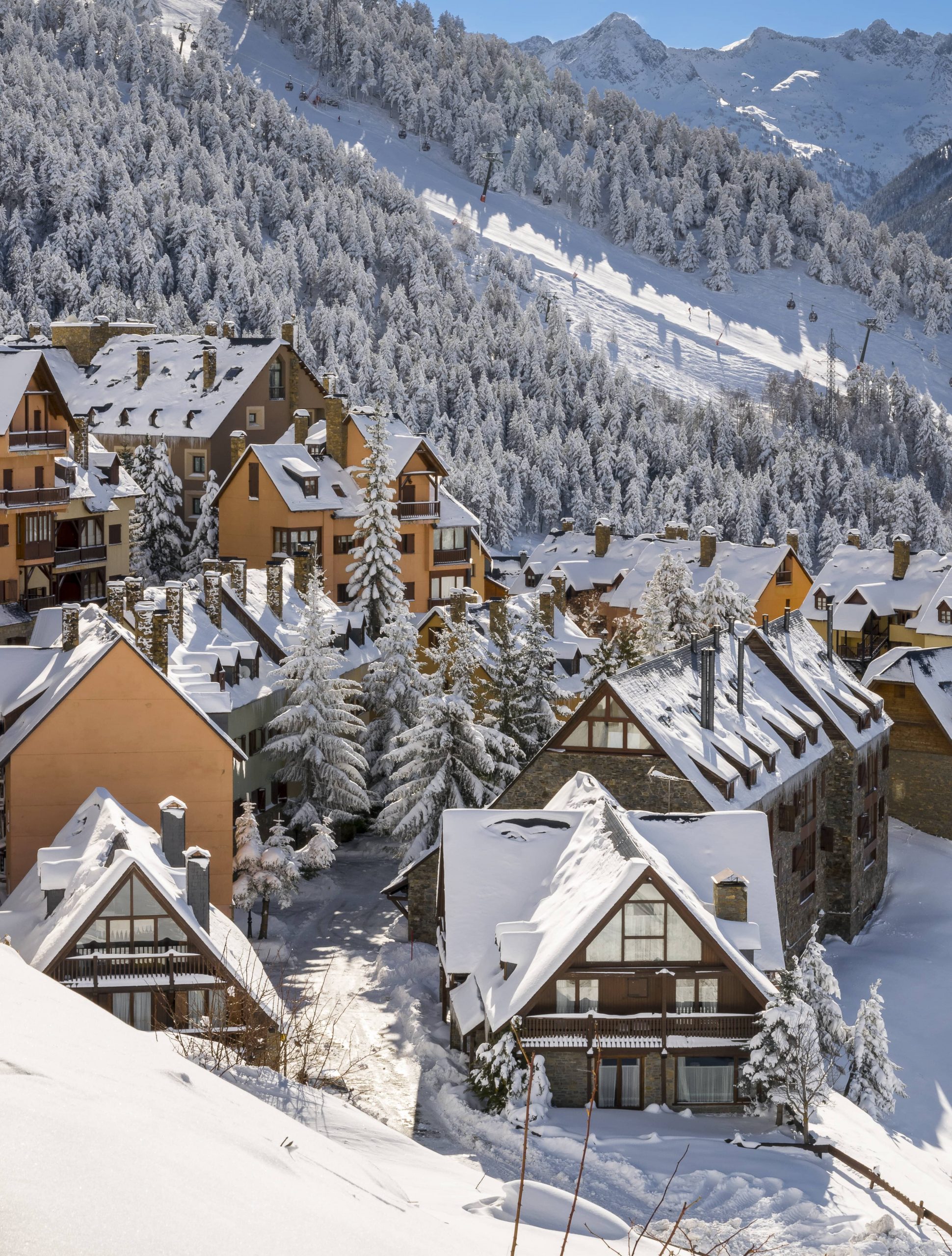
Val d’Aran
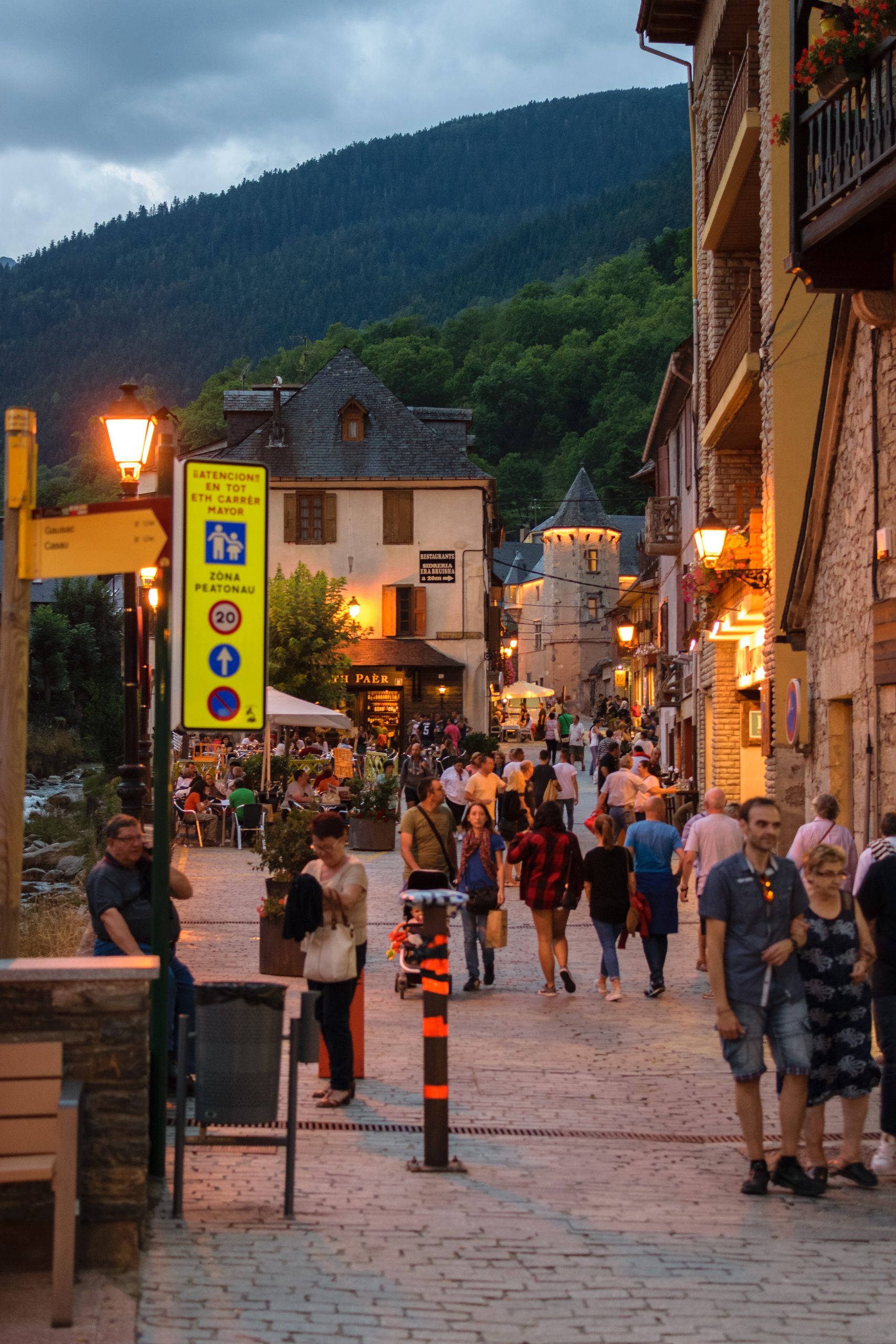
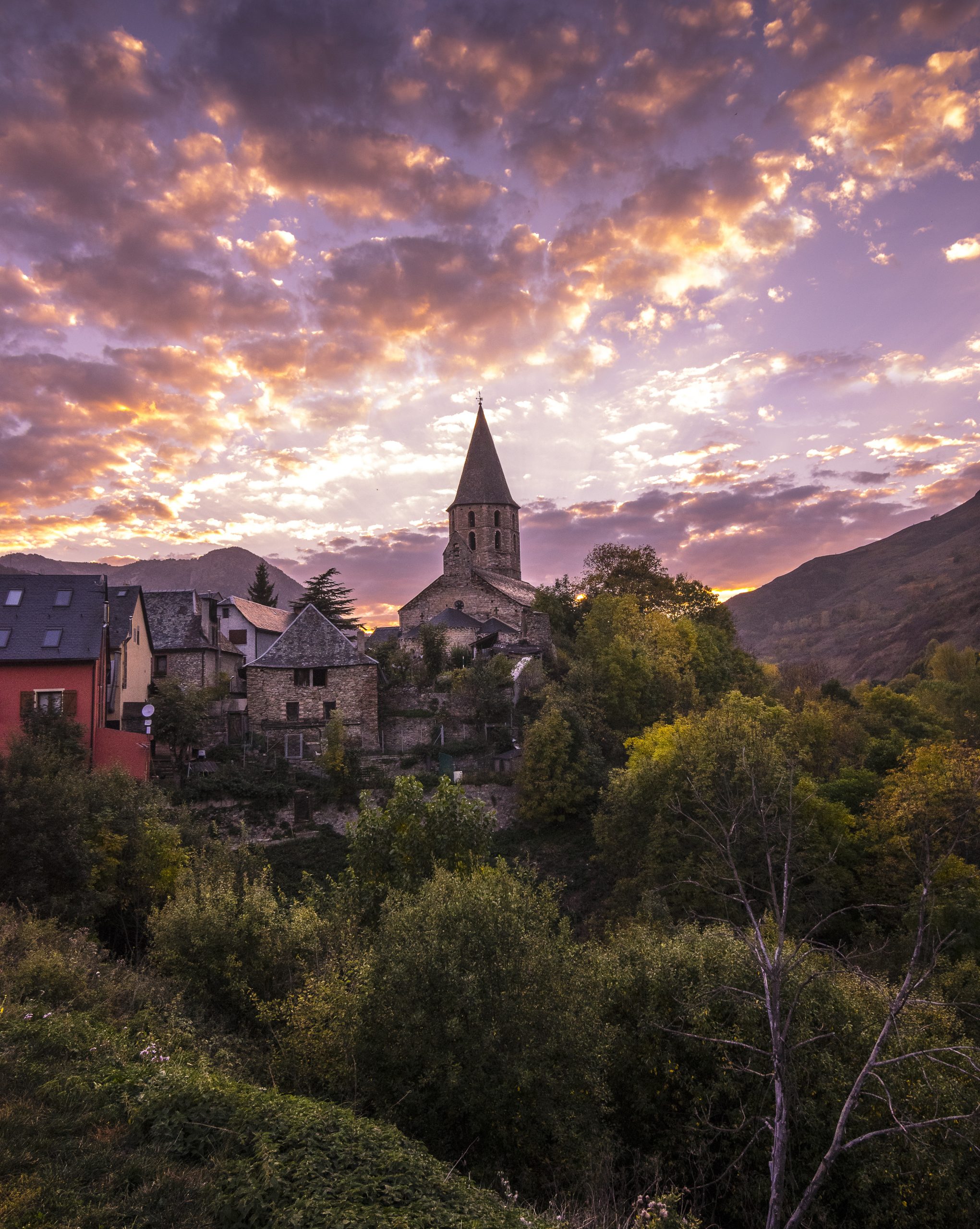
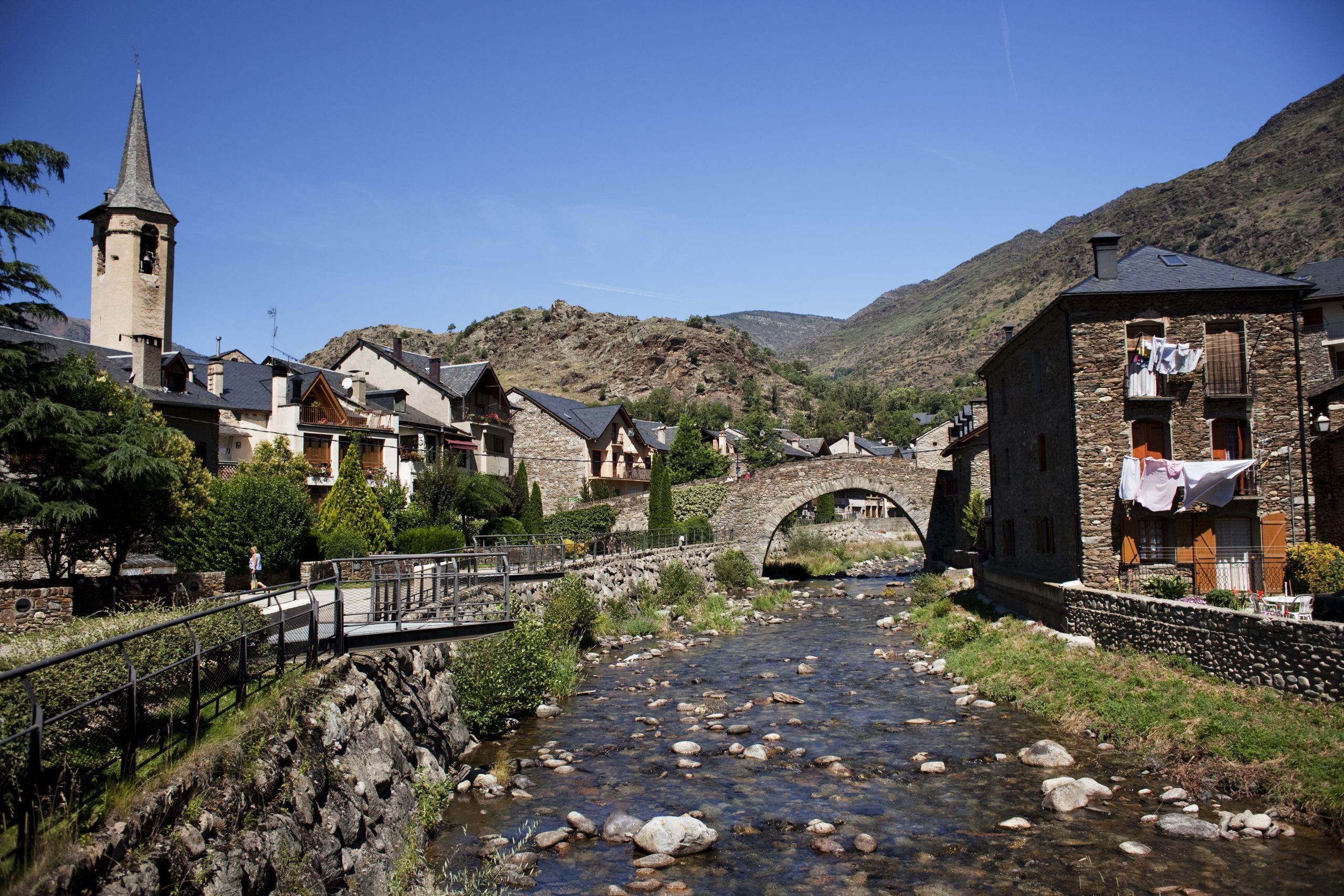
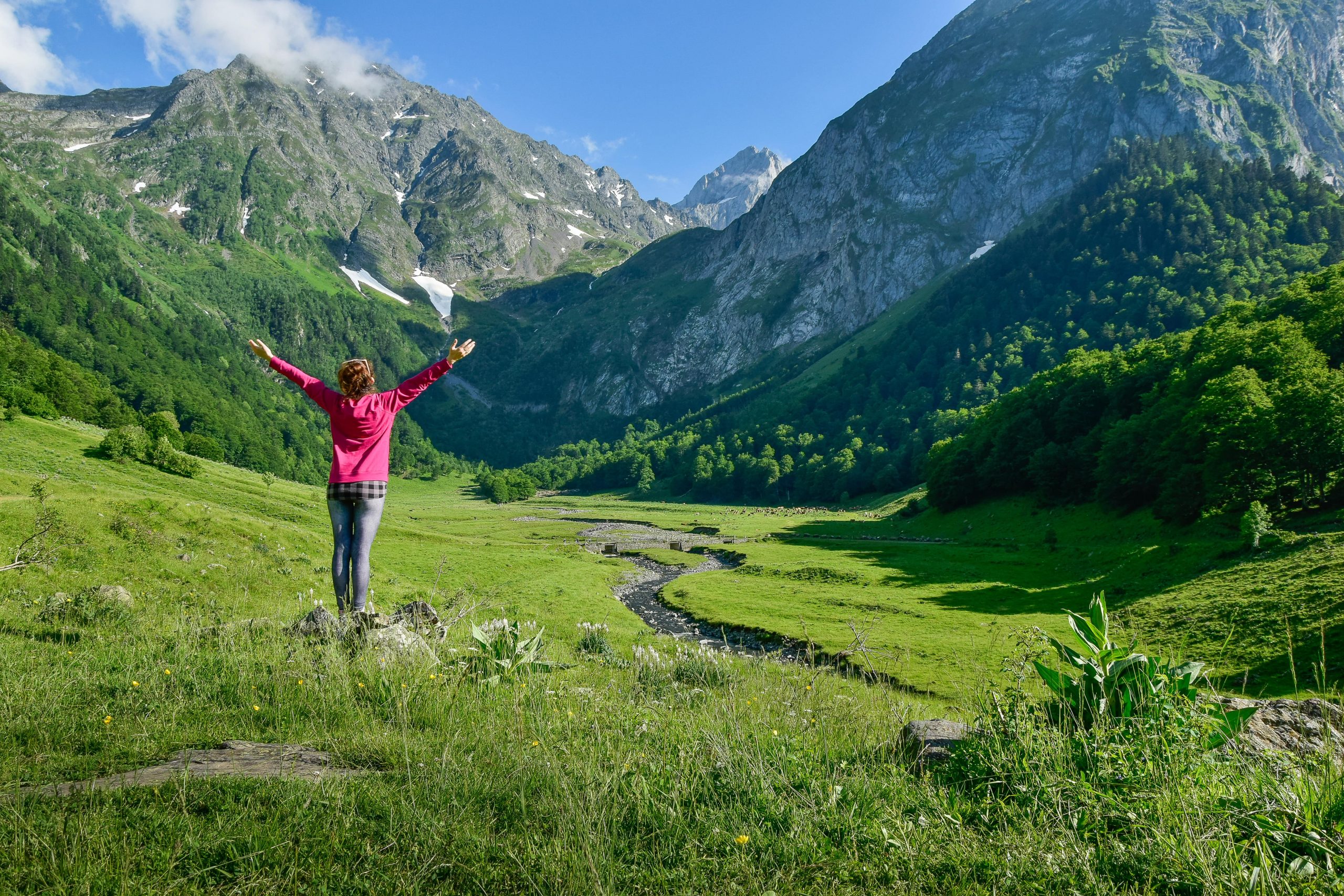
Dawn breaks in Val d’Aran. The Atlantic orientation of this valley, with almost a third of its land above 2,000 metres, shapes the climate and typology of its forest species, which are different from those found in other parts of the Pyrenees. We soon find that here, things are noticeably different from what we have seen so far. In Vielha, capital of the Val d’Aran, a poster advertising a craft fair hèt a man, hèt aciu (handmade, made here) reminds us that, first of all, here another language is spoken: Aranese. The architecture is also unique, with stone villages growing around a church and others hanging from the hillsides of the mountains, with panoramic views of the valley.
Gaudí’s Crypt
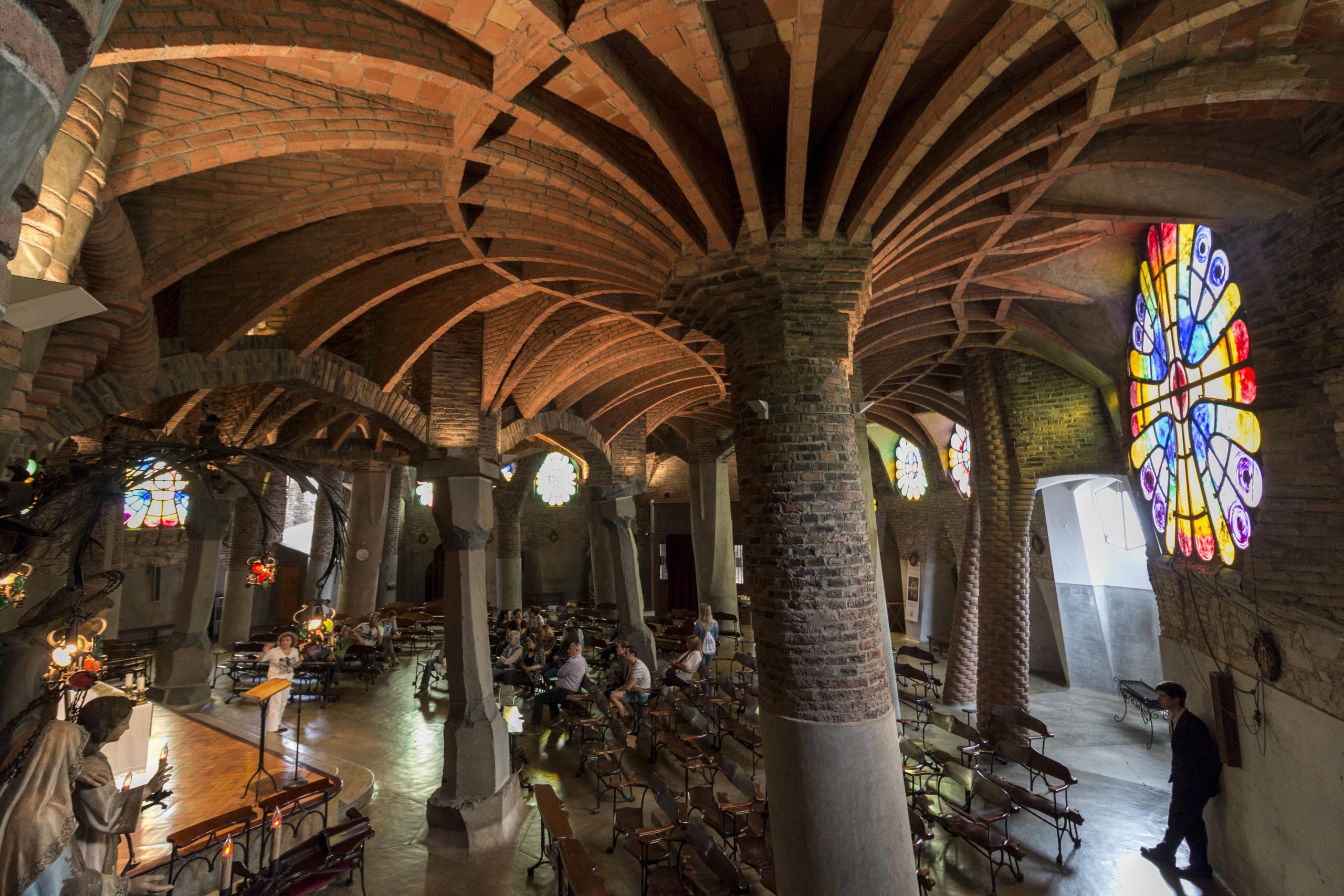
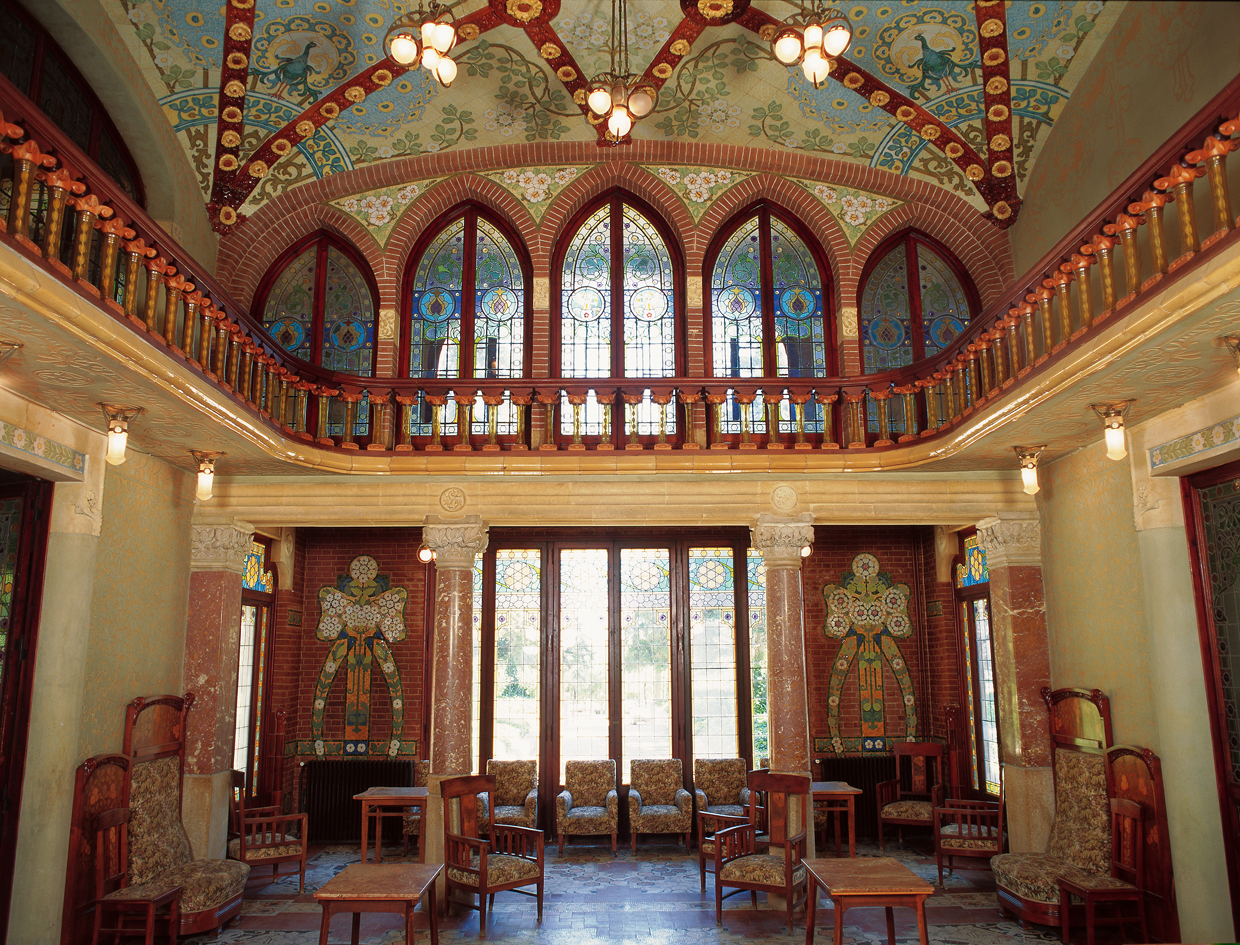
The first stop of the day, a short distance from Barcelona, is in Santa Coloma de Cervelló, where we’ll visit the crypt of the Colonia Güell, one of the works from Gaudí's naturalist period, which the architect himself considered "a monumental model for the Sagrada Familia", because in it he applied all the architectural innovations which we later see in his other constructions. The crypt is also part of the modernist buildings that are UNESCO World Heritage sites. An exhibition on industrial colonies, workers and Gaudí's work can be seen in the Colony’s former cooperative building.
Aranese caviar
The purity of the snowmelt water provides the best conditions for sturgeon farming, from which Val d’Aran caviar is made. After visiting the facilities in Les, we’ll head to Vielha to sample this exquisite delicacy. The town is also home to a wide range of restaurants, serving everything from the traditional olla aranesa (Aranese stew) to international and market cuisine, all surrounded by stunning natural scenery.
Catalan cuisine
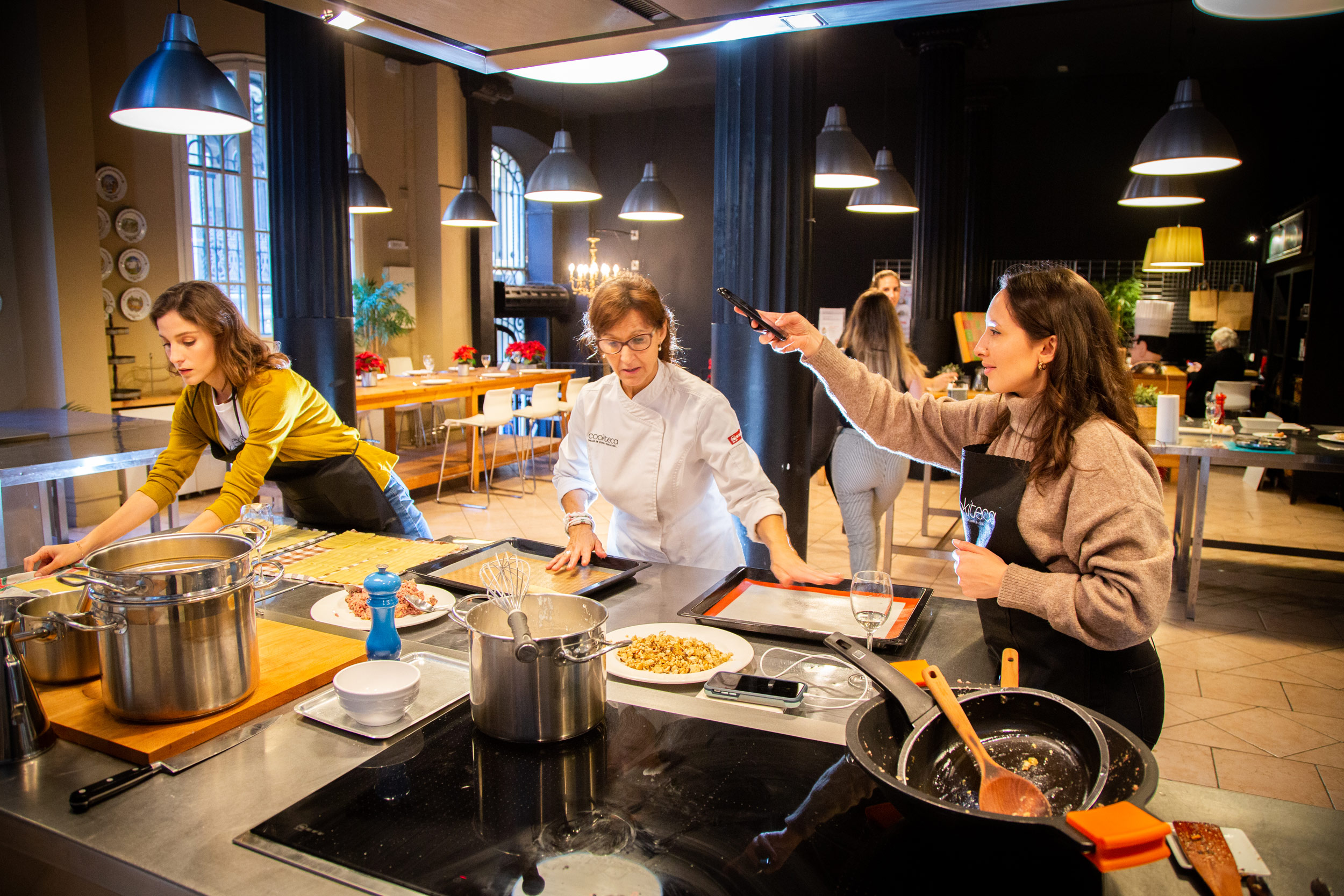
We continue with a workshop to learn the technique for making trencadís, one of the characteristic ornamental features of modernism. With basic tools, shards of ceramics and glass we leave with our own piece and great ideas for recycling old building materials. In another modernist building on the Passeig de Gràcia, we attend a cookery workshop where we learn how to prepare dishes such as esqueixada, a traditional salad with cod and tomato among other ingredients, and a delicious crema catalana with its top layer of burnt sugar.
To Montblanc
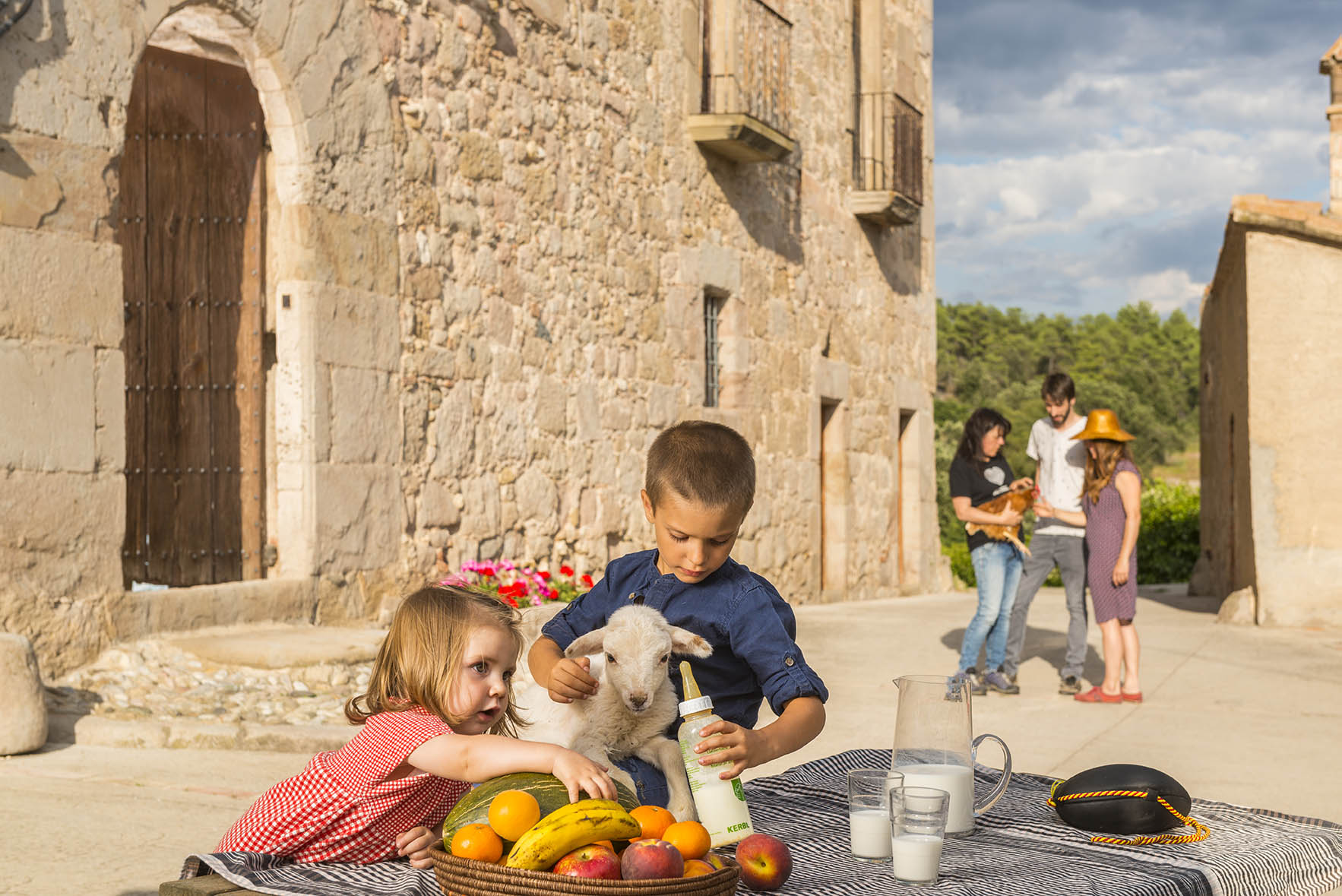
The route continues to Montblanc via Prades, another Charming Village. Surrounded by a precious natural environment, the town is also known as the Villa Roja because of the characteristic red stone colour of many of its buildings. By taking a short detour, just seven kilometres from Prades, we can visit Capafonts, where they offer the chance to spend a few hours as a shepherd learn how to make cheese.
The beauty of Romanesque art
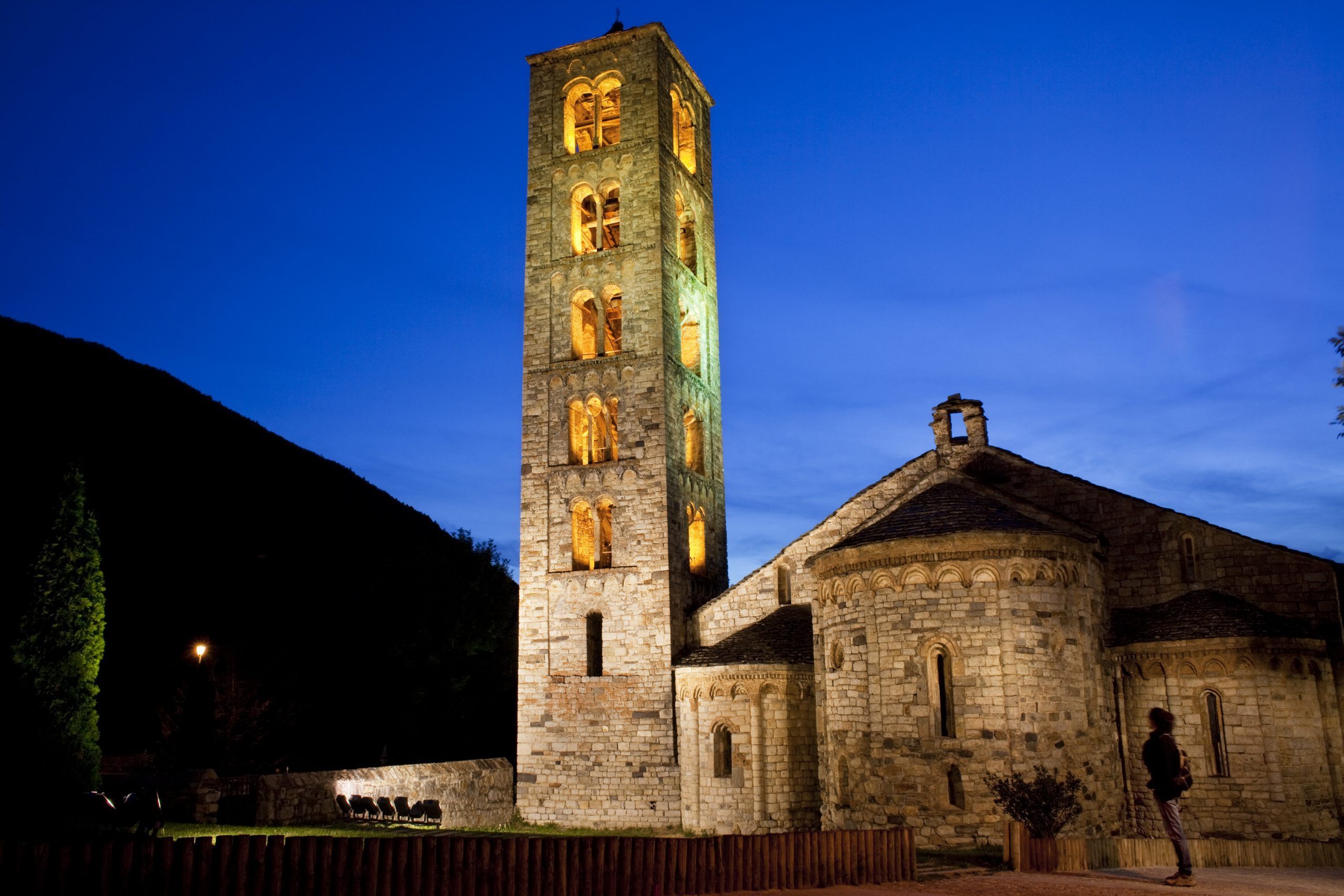
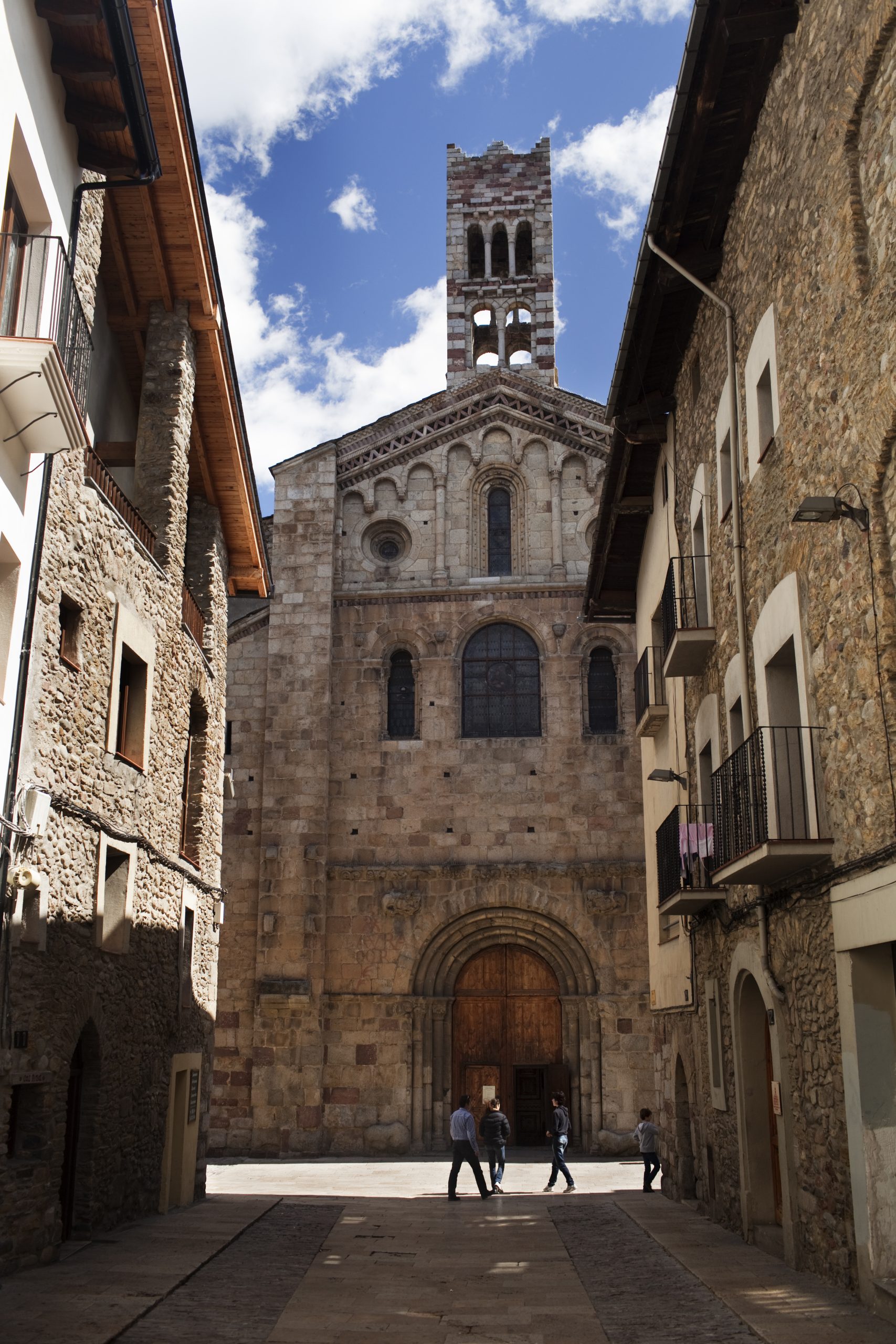
The afternoon will be reserved for the Romanese heritage of la Vall de Boí, which features on the UNESCO World Heritage list. A feudal family, the Erills, brought stonecutters to the valley, masters artisans and craftsmen who in a few decades erected eight churches and a chapel. In Taüll, official Charming Village, we find the quintessence of this Romanesque art, Sant Climent and Santa María, two churches consecrated in 1123, just one day apart. In Sant Climent, video mapping brings the frescoes of the greater apse and sanctuary to life. We stop at Erill la Vall to visit the Centre del Romànic de la Vall de Boí and the church of Santa Eulàlia, which, with its six-storey Lombard tower, is considered the most slender example in the valley. We continue our journey north to reach another of the great Pyrenean valleys: the Val d’Aran.
Stone Bible
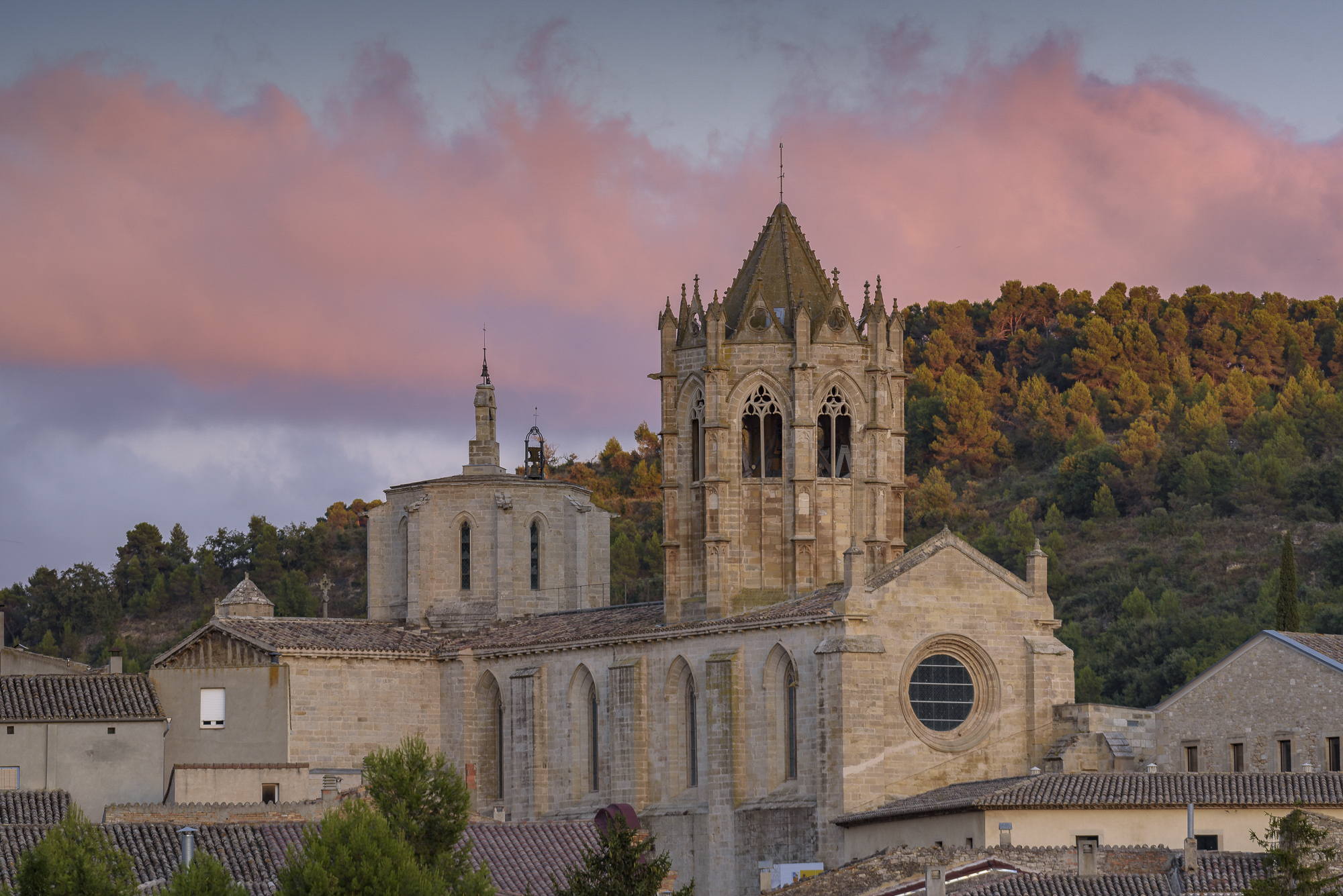
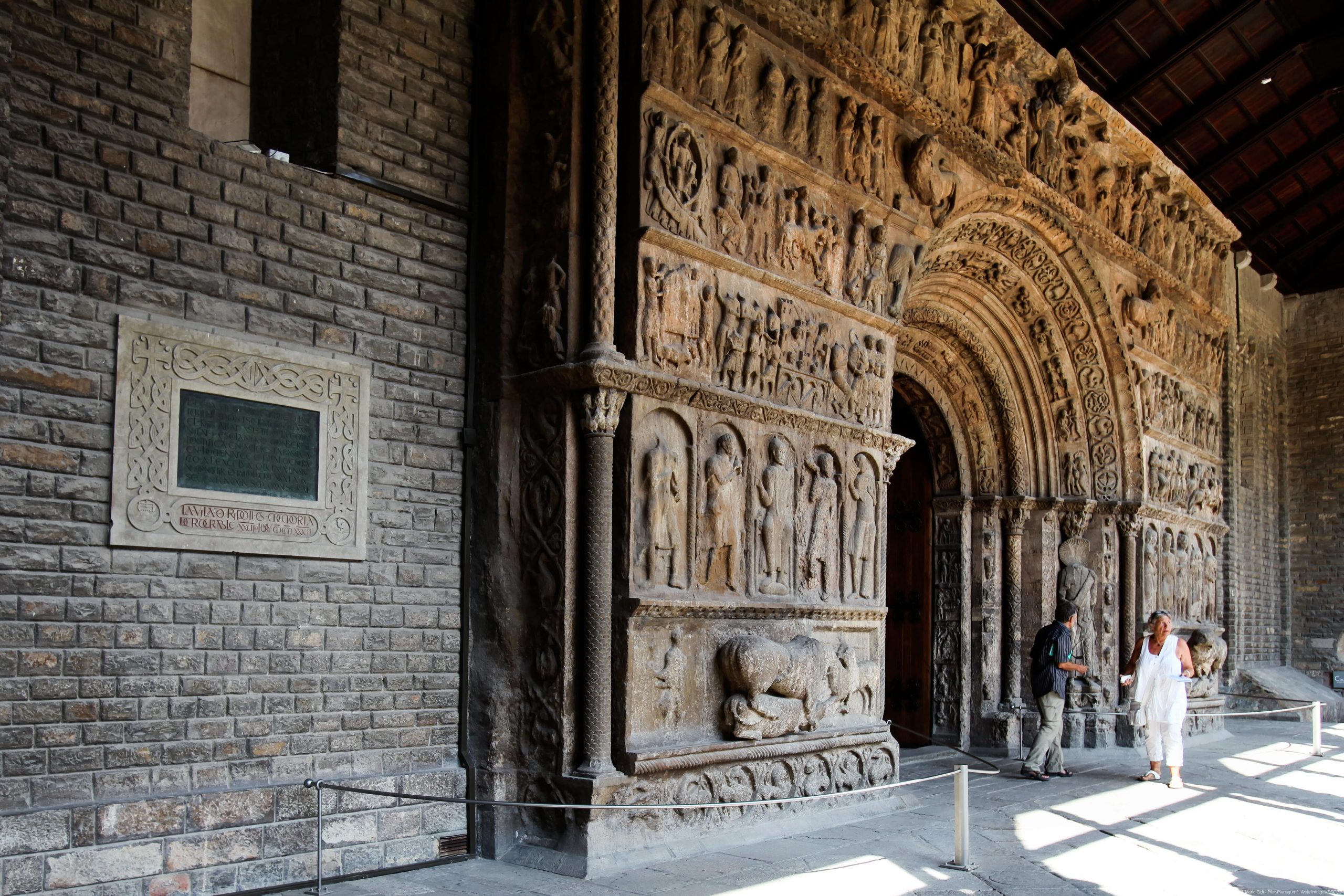
Today we get up in the mood for a mountain. For an energetic start we opt for an esmorzar de forquilla (breakfast), where some choose to enjoy botifarra amb seques and others go for a game meat stew which you absolutely must soak up with a thick slice of bread. After breakfast we head to the Santa María de Ripoll Monastery for an up-close view of this magnificent symbol of medieval Catalonia, founded in the year 879. Its monumental portico, covered in a mural of geometric motifs, plant shapes and characters carved in stone —they call it the stone bible— deserves careful contemplation.
From Puigcerdà to Collada de Toses
We leave Puigcerdà, the historic capital of La Cerdanya, cycling along the first flat kilometres of the valley, between meadows and farmhouses, until we reach Urtx, where the ascent to Collada de Toses begins. The winding, quiet road climbs gently for more than 20 kilometres, with a regular and pleasant gradient. The first sections offer open views over the Cerdanya plain, while further up, the road enters dense forests of fir and black pine. From time to time, the forest opens up to reveal the mountains of La Molina on the horizon.
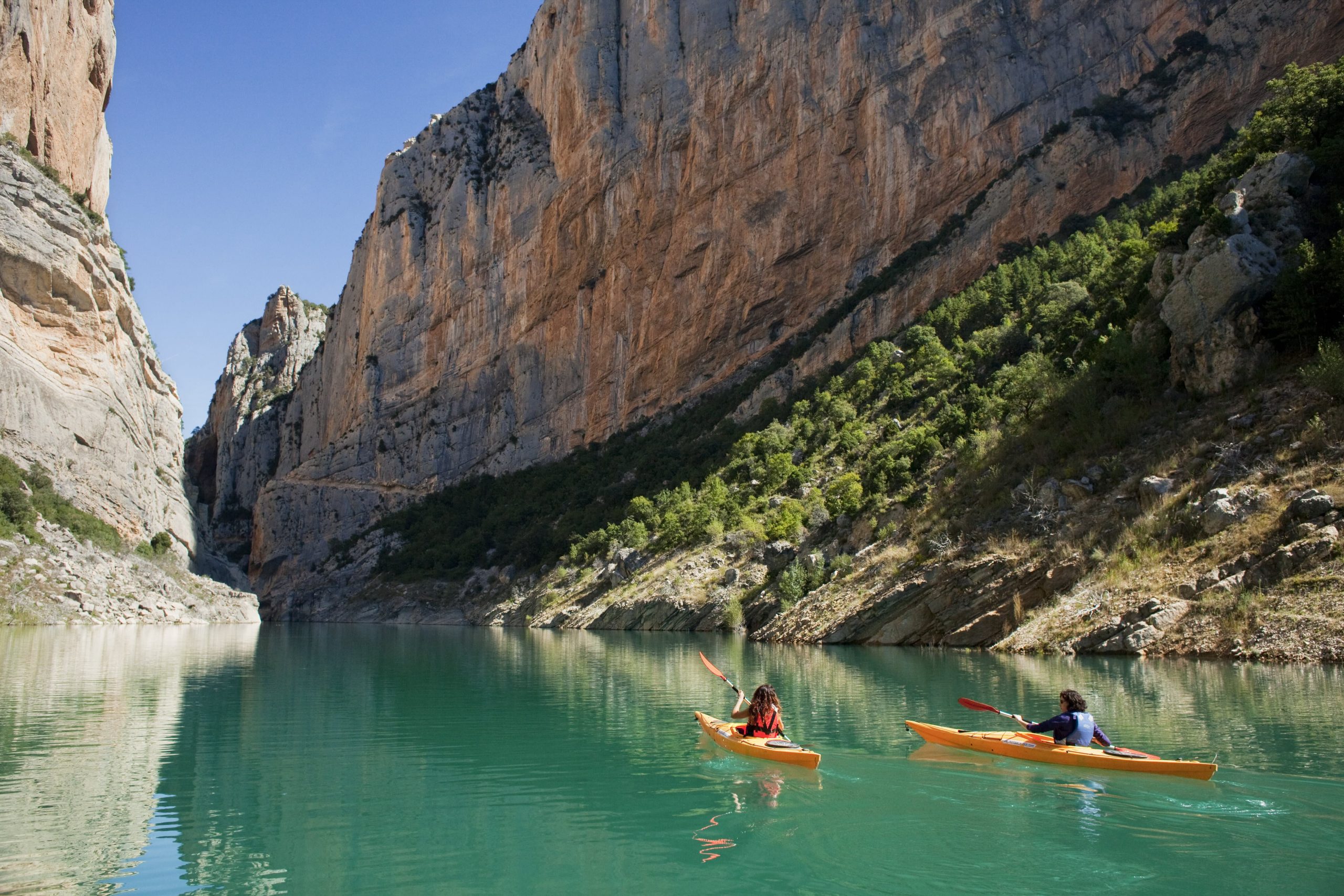
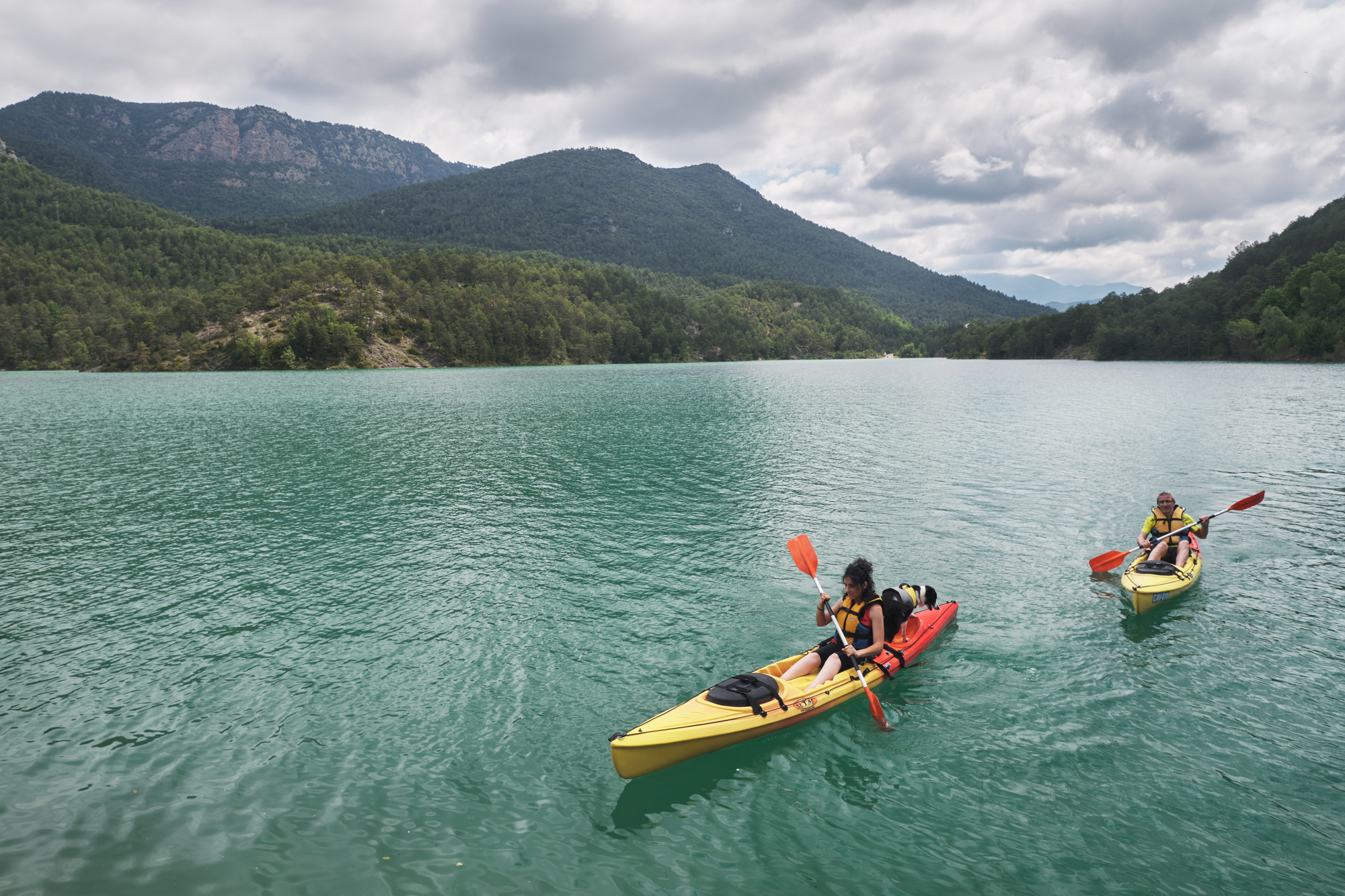
River Kayaking
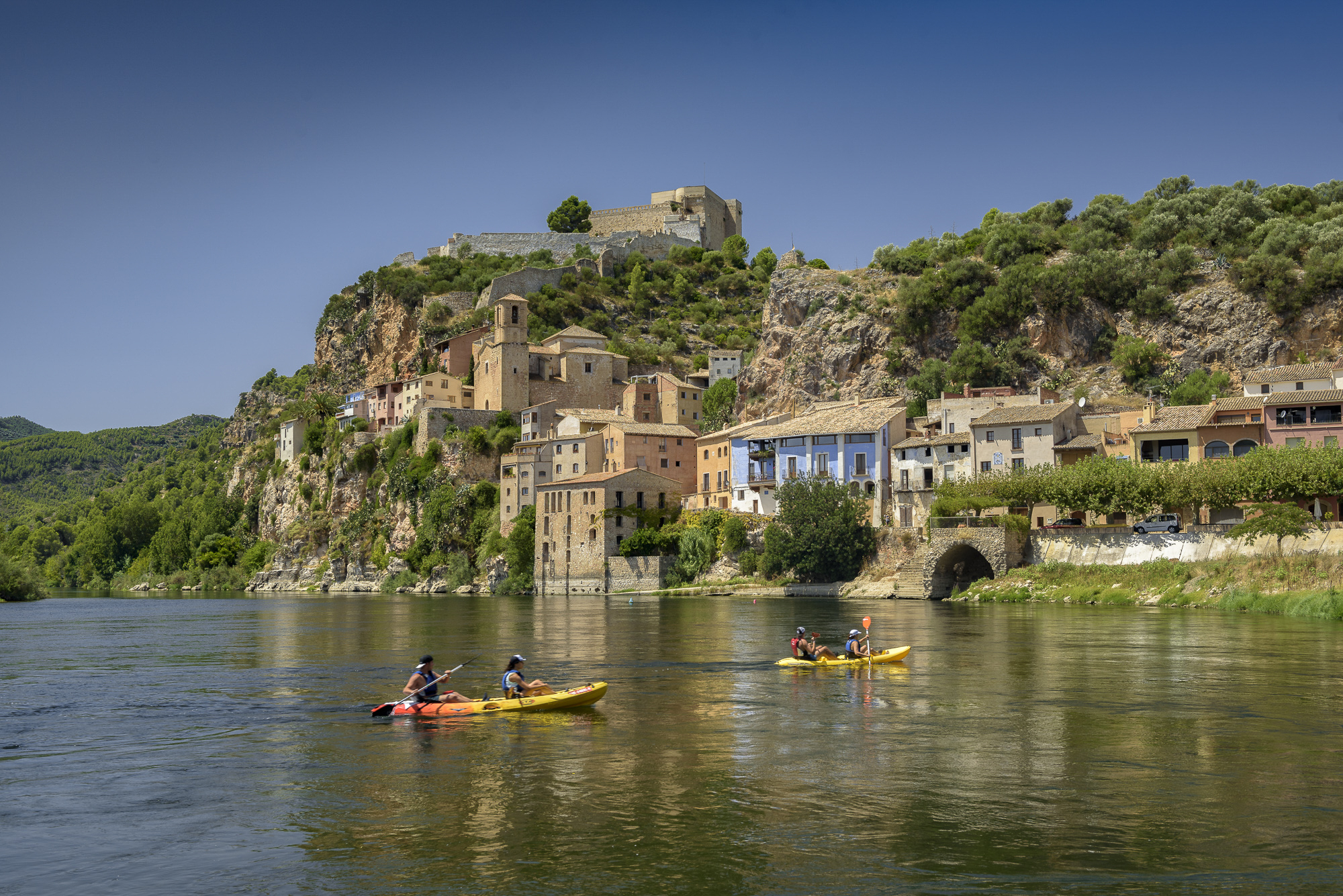
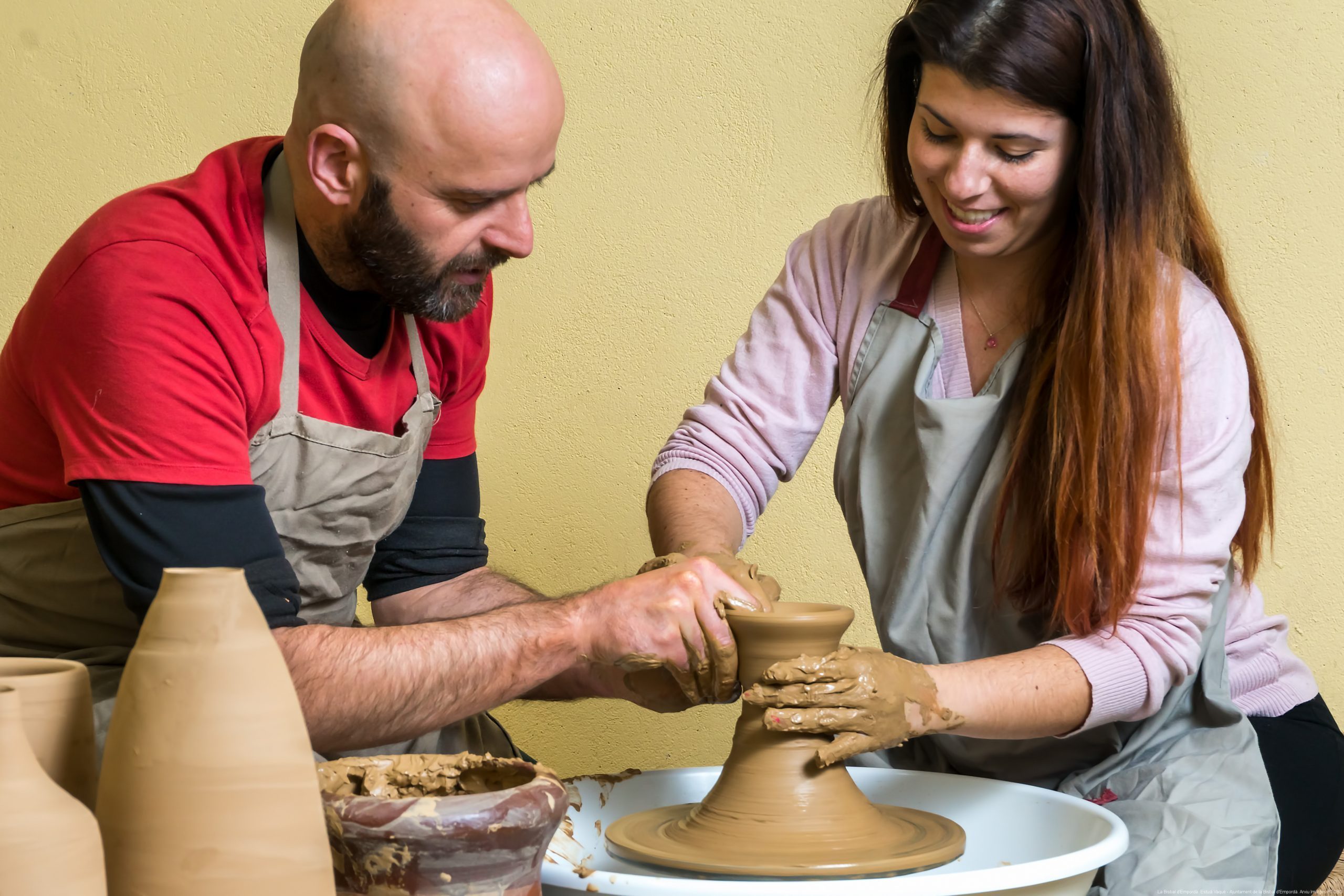
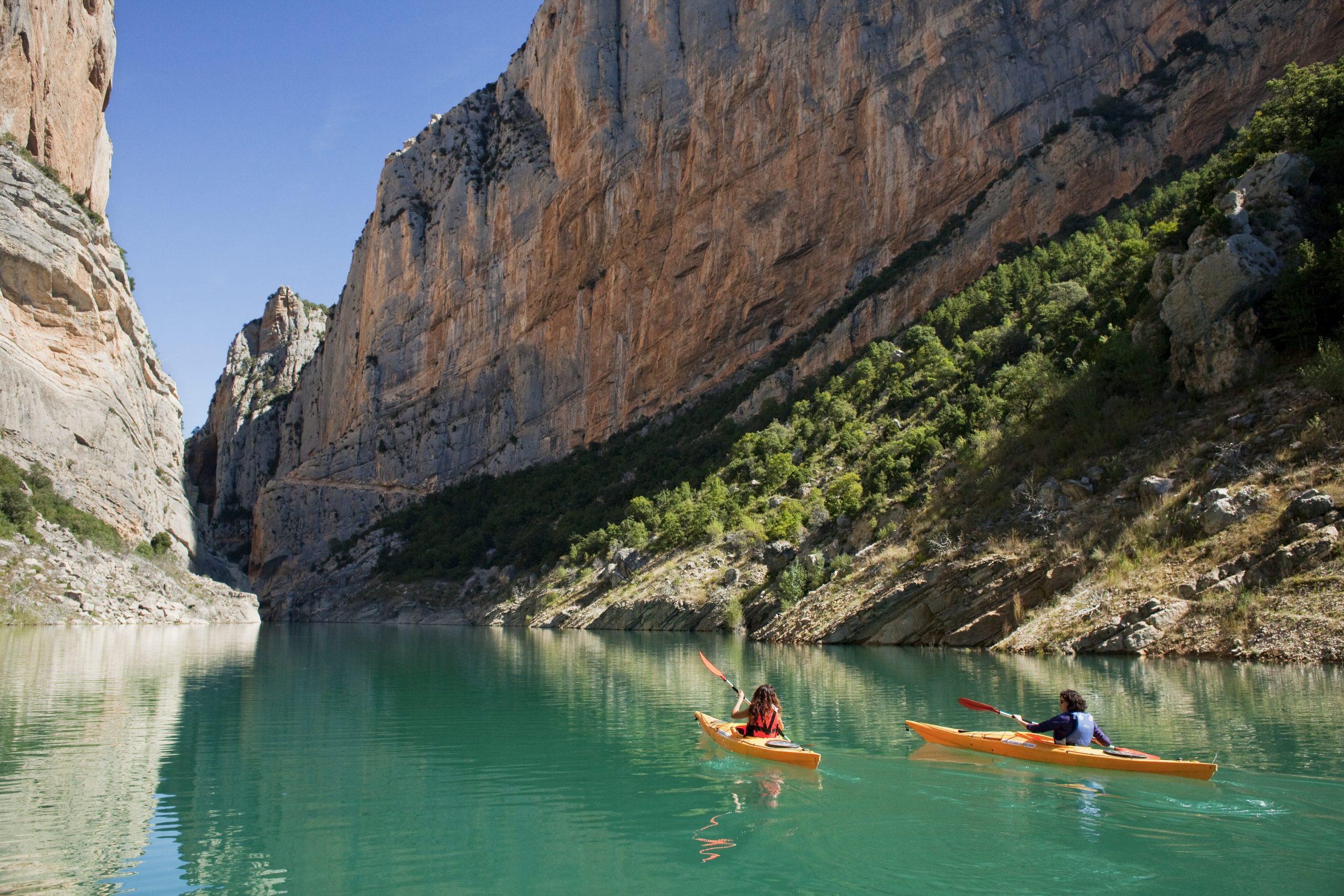
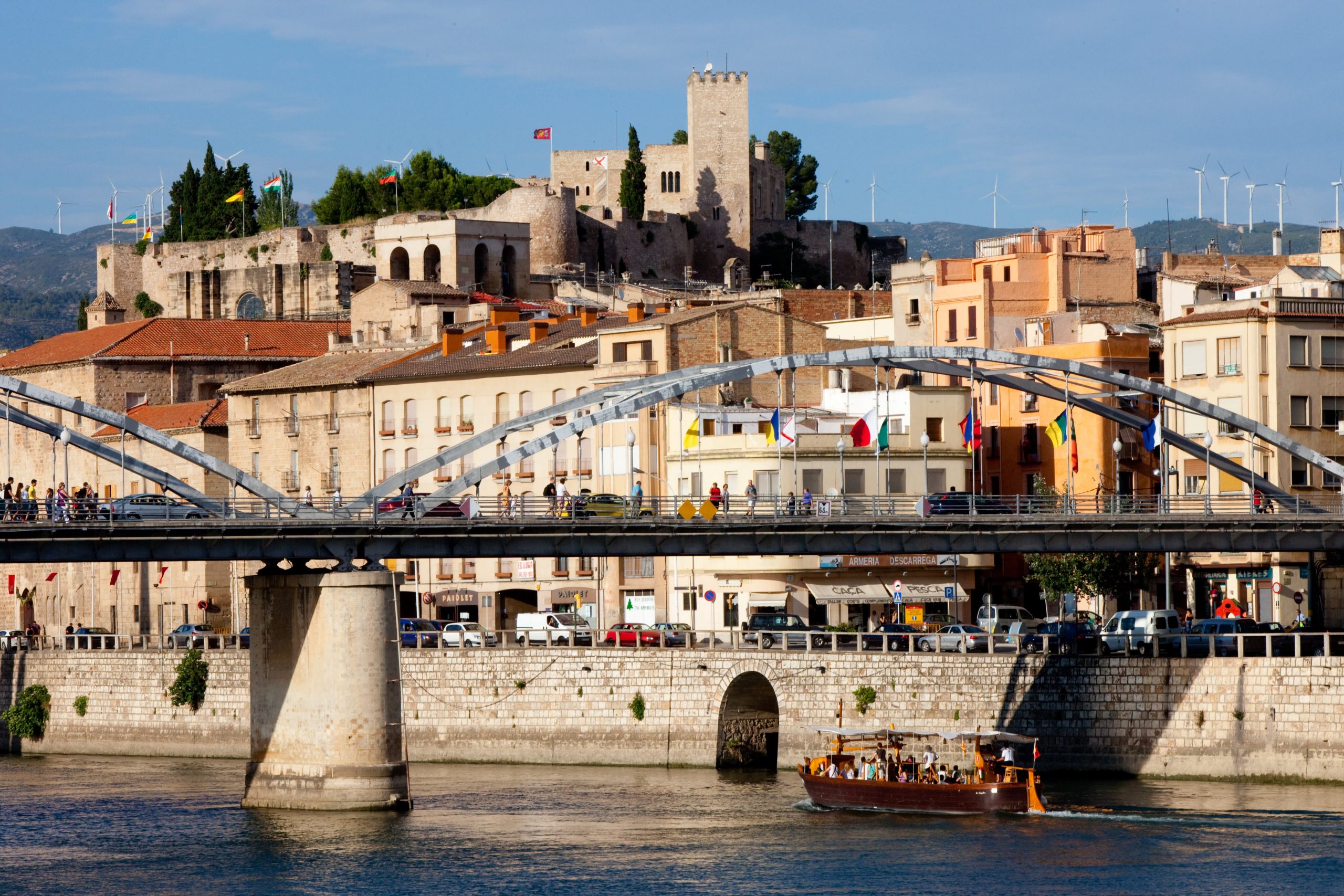
Since arriving at Terres de l’Ebre the river Ebre has kept us company; now it’s time to get in the water and travel a stretch of it in a kayak. The sound of the paddle and birdsong form the soundtrack to a quiet journey that takes us to the spectacular village of Miravet, with its houses and Templar castle hanging over the river. In addition to visiting the castle, we can also take part in a pottery workshop to explore its pottery tradition. After our boating trip, we set off for Priorat. Between the towns of Móra d’Ebre and Móra la Nova we make a short detour, barely ten minutes, to the Iberian settlement of Castellet de Banyoles, where you can see the meandering Ebre and the orchards of the Ribera d’Ebre. The view is especially beautiful during the trees flowering season. The explosion of colour begins in early February with the almond trees and extends to April with cherry and peach trees.
Sant Pere de Rodes, the romanesque jewel above Cap de Creus
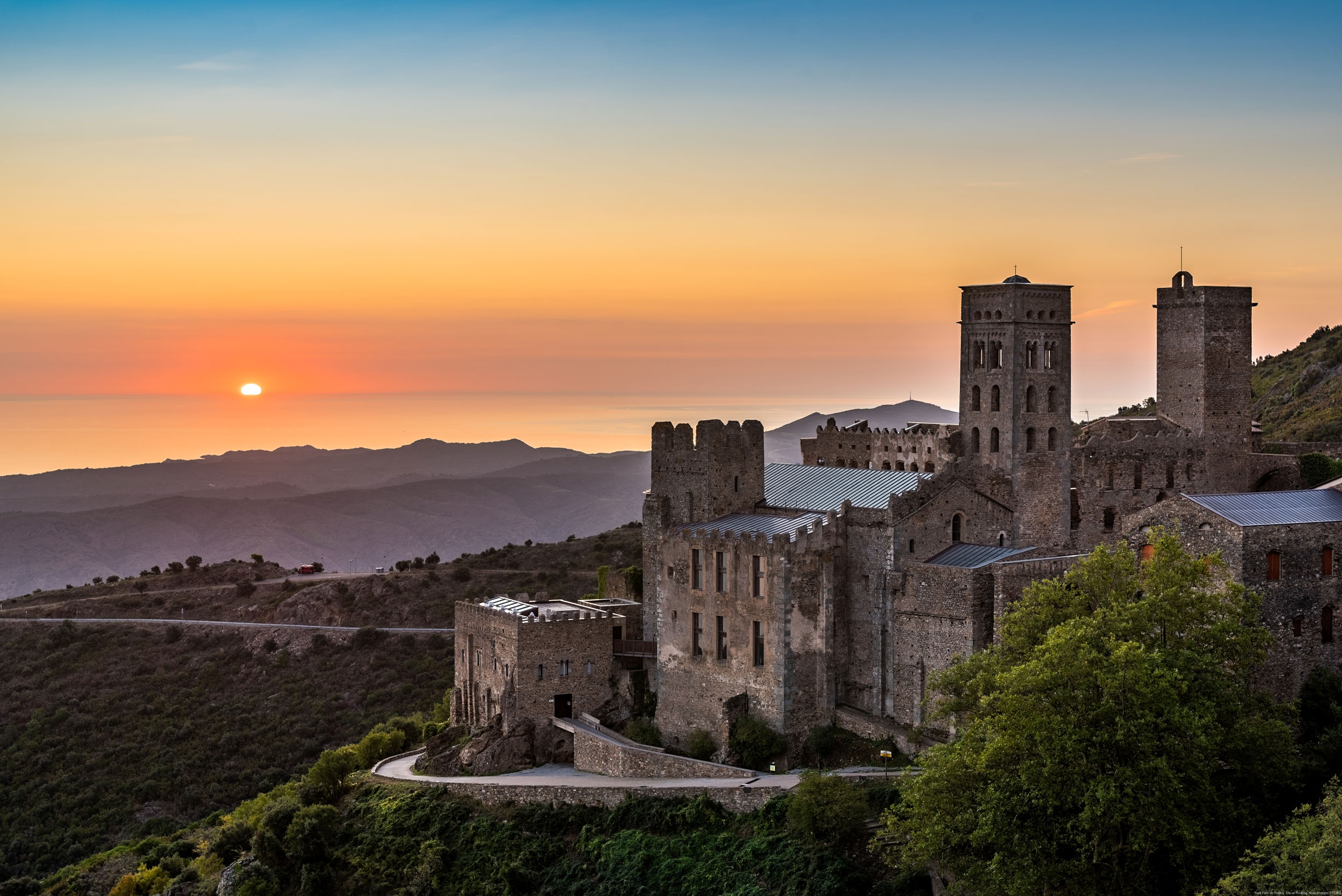
Once past the highest point, the track begins a long descent with spectacular views over Llançà and the sea. After passing through Valleta and Vilajuïga, we begin the climb by road to the monastery of Sant Pere de Rodes (8.8 km +484 m). It is a steady and pleasant climb, now within the Cap de Creus Natural Park, surrounded by olive trees and vineyards and with views of the Empordà and the Golf of Roses. At the top we find the monastery of Sant Pere de Rodes, which rises imposingly above the mountain of Verdera. Founded in the 9th century and considered one of the jewels of Catalan Romanesque architecture, the complex brings together the three symbols of feudal society: the monastery (faith), the village of Santa Creu de Rodes (work) and the Castell de Sant Salvador de Verdera (defence). From here, the views over the Empordà coast are immense, with Port de la Selva and Cap de Creus in the background.
Sunset toast
We’ll first meet Ms Maria, a local resident, who will let us in on more than a few secrets during a dramatised tour of the Espolla cooperative. The D.O. Empordà Wine Route offers another interesting activity in Colera, a vertical tasting to compare different vintages. As the sun sets and the rocks of Cap de Creus turn red, we’ll take a motorboat out on the water and toast with gin made on the Costa Brava.
Good Cheese
After all the excitement, a visit to some craftsmen who produce mountain cheese brings our pulse back down to normal. Our goal is to learn about the production process and taste the delicacies made by certain producers whose cheeses have won prestigious prizes such as the World Cheese Award. Before we finish our day in El Pallars Sobirà, take a detour of a few kilometres to visit the picturesque town of Gerri de la Sal, where we visit its walled old town, an eleventh-century monastery, a medieval bridge and salt marshes with its Royal Alfolí, monuments listed as Goods of National Cultural Interest.
The Valls d’Àneu and the arrival in Espot
The track continues downhill along the Noguera Pallaresa to Esterri d'Àneu, passing through Alòs d'Isil, Isil and Borén, where the long descent ends. From here, the route crosses the river and begins a new climb along a secondary road that leads to Son, a natural viewpoint over the Torrassa reservoir and all the Valls d'Àneu. The forests surrounding the road are made up of red pine, black pine and fir trees, typical of the mid-Pyrenean mountains. The last few kilometres alternate between gentle ascents and descents through forests until you reach Espot, the gateway to the Aigüestortes i Estany de Sant Maurici National Park and the end of a day that perfectly sums up the essence of the Pyrenees.
Val d’Aran
We will switch valleys as we continue through the heart of the Pyrenees, moving into the Val d'Aran. A third of the land is above 2,000 metres elevation and its Atlantic-facing orientation influences the make-up of the forests and Pyrenean fauna. Its villages, with stone houses surrounding a church, are the starting point for excursions through ravines, rivers and green meadows. The steep terrain of the Val d’Aran always kept its inhabitants slightly separated from the world, which accentuated unique social and cultural characteristics that persist today. These include a hearty cuisine, their native language—Aranese—and the Romanesque architecture that is so distinctive here. It isn’t easy to choose between the more than thirty churches in the area, highlighting the intimacy of Era Mair de Diu dera Purificacion, in Bossòst, and the sweet Santa Eulària d’Unha, both erected in the twelfth century.
The long descent to La Seu d’Urgell
The descent takes us to the Basseta refuge, in the sanctuary of Sant Joan de l'Erm, an oasis of calm among meadows and high mountain forests. From here, the route continues, alternating between small ascents and descents along the Santa Magdalena river valley, with sections of narrow track, ravines and areas of water that provide freshness and contrast. After another ascent of about 7.5 kilometres, the path descends through Serrat de les Cabanelles, a long and enjoyable descent with zigzag bends and panoramic sections. The track, although comfortable, has some technical points that require attention. In the last few kilometres, we pass through Sendes and Bellestar, already in the Alt Urgell region, before reaching La Seu d'Urgell. End of stage and section 3.
From Olot to La Fageda d’en Jordà
We leave Olot, a town surrounded by volcanoes and the capital of La Garrotxa, passing through fields and orchards until we reach La Fageda d'en Jordà, one of the most magical forests in the country. Beech trees grow here on undulating ground formed by lava from the volcanoes in the area, creating a landscape full of ‘tossols’ and irregular shapes. The silence, the filtered light and the smell of damp earth make this section a unique experience on the route.
The heart of the Natural Park
Once at the top, the reward is the descent to Navarcles via Talamanca, with its castle rebuilt in the 18th century. The first section is a fun road full of bends and with spectacular views of the reddish walls of the massif of Sant Llorenç del Munt i l’Obac. Further on, the road opens up, offering panoramic views of much of el Bages. Upon reaching Navarcles, the landscape changes radically: we leave the natural park behind and enter the region through rural and agricultural roads between fields.
A stroll through the Eixample
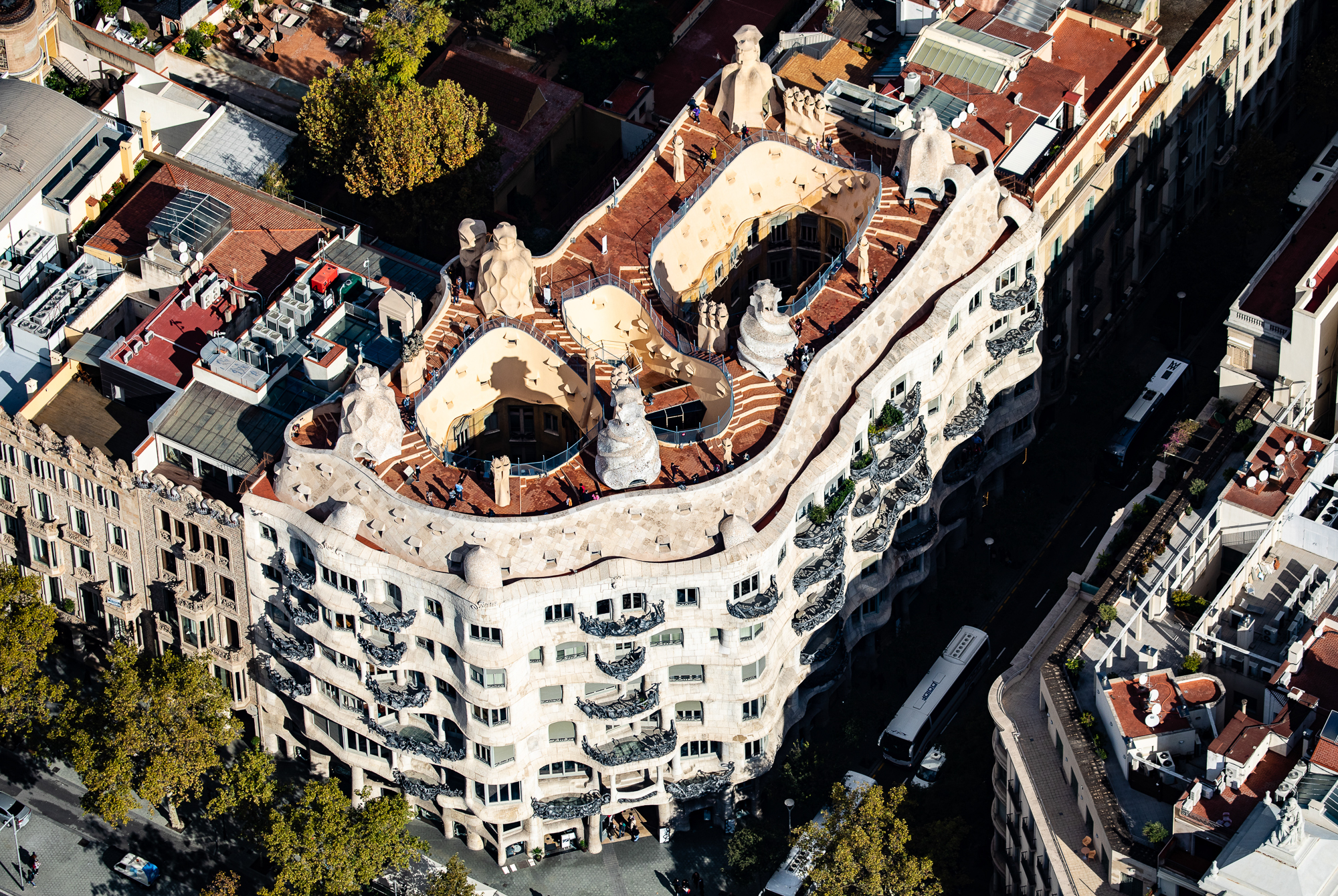
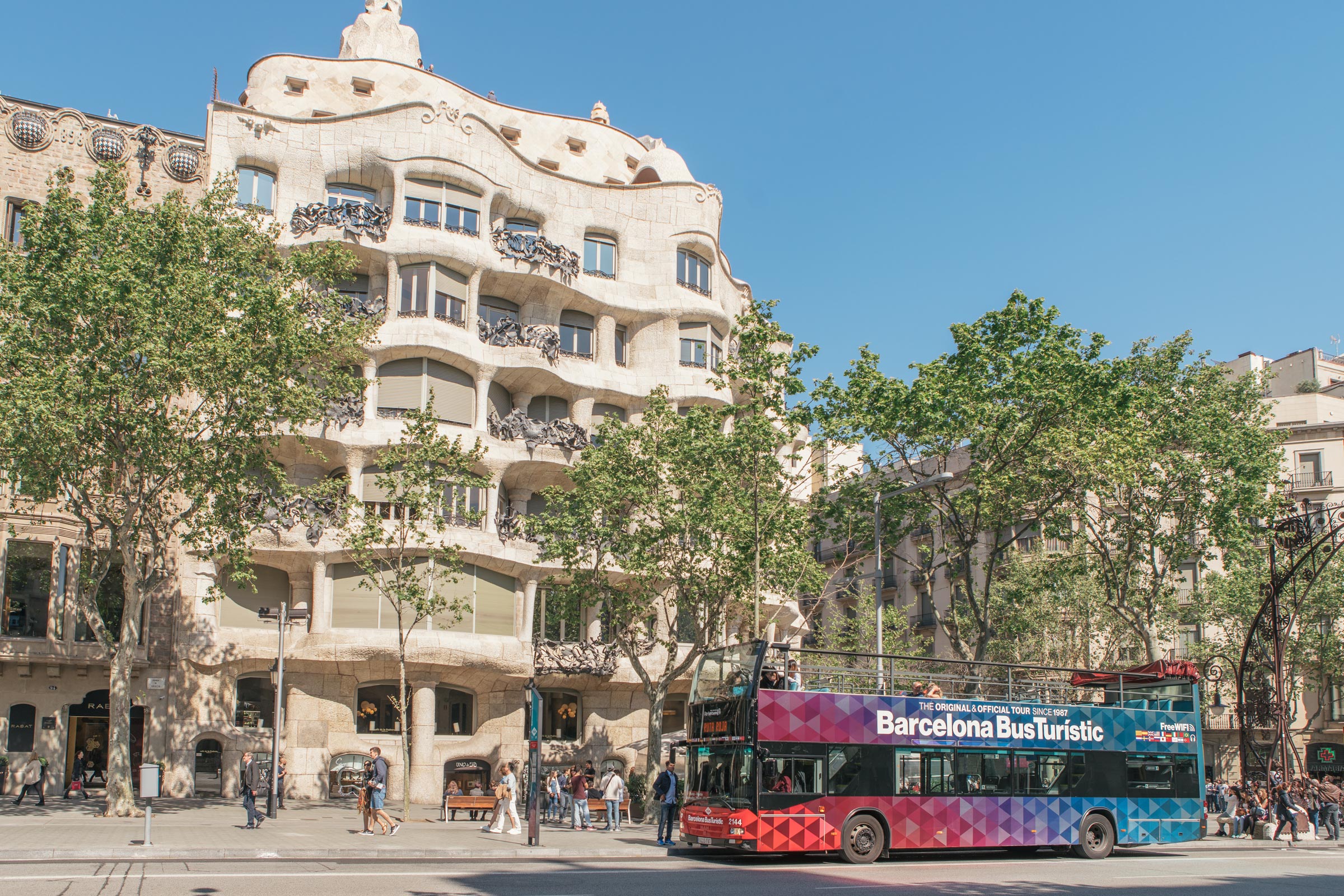
I head out early to stroll down the city's seafront and enjoy the sunrise again. To understand Barcelona's urban planning a little better, we can go on a private tour with an architect through the Eixample, the urban expansion that connected the old town with the Vila de Gracia, forming a checked pattern that looks as though it were drawn with a ruler. The neighbourhood is home to a large proportion of the city’s heritage-listed buildings, including important modernist works such as the Casa de les Punxes, La Pedrera, the Casa Amatller and the Casa Batlló.
The green lung of Collserola
Leaving the main road, we enter the network of paths that criss-cross the park. The wide, compacted dirt tracks wind through forests of pine and holm oak trees, passing through small rural villages such as Sant Bartomeu de la Quadra. The centuries-old farmhouses that appear in the landscape are silent witnesses to the rural history of these mountains. The route alternates between open stretches with wide views and more leafy areas where the light filters through the leaves, creating a play of shadows. The descent to Rubí follows well-maintained forest tracks, with some narrower sections but no notable technical difficulties.
Cistercian lands
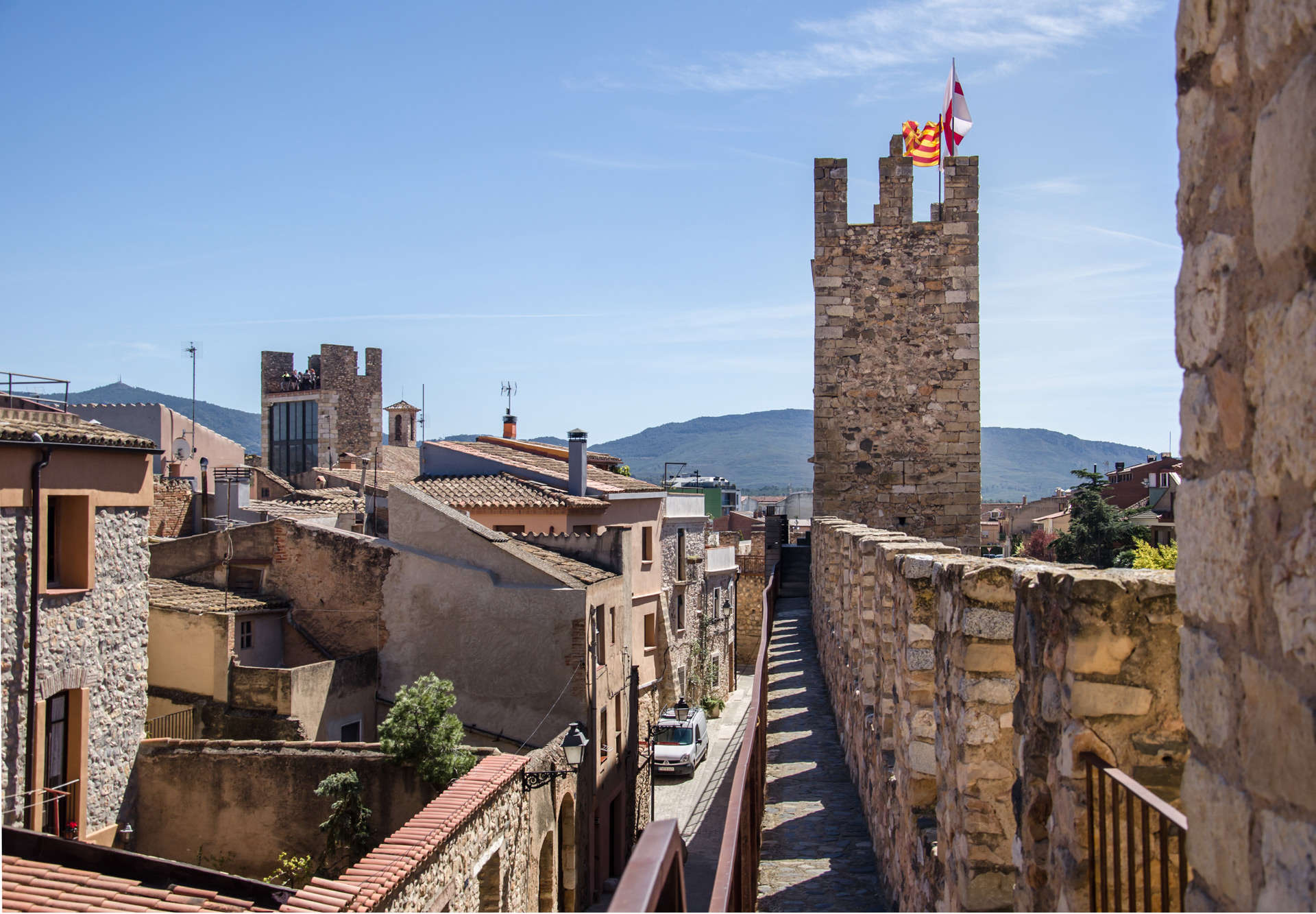
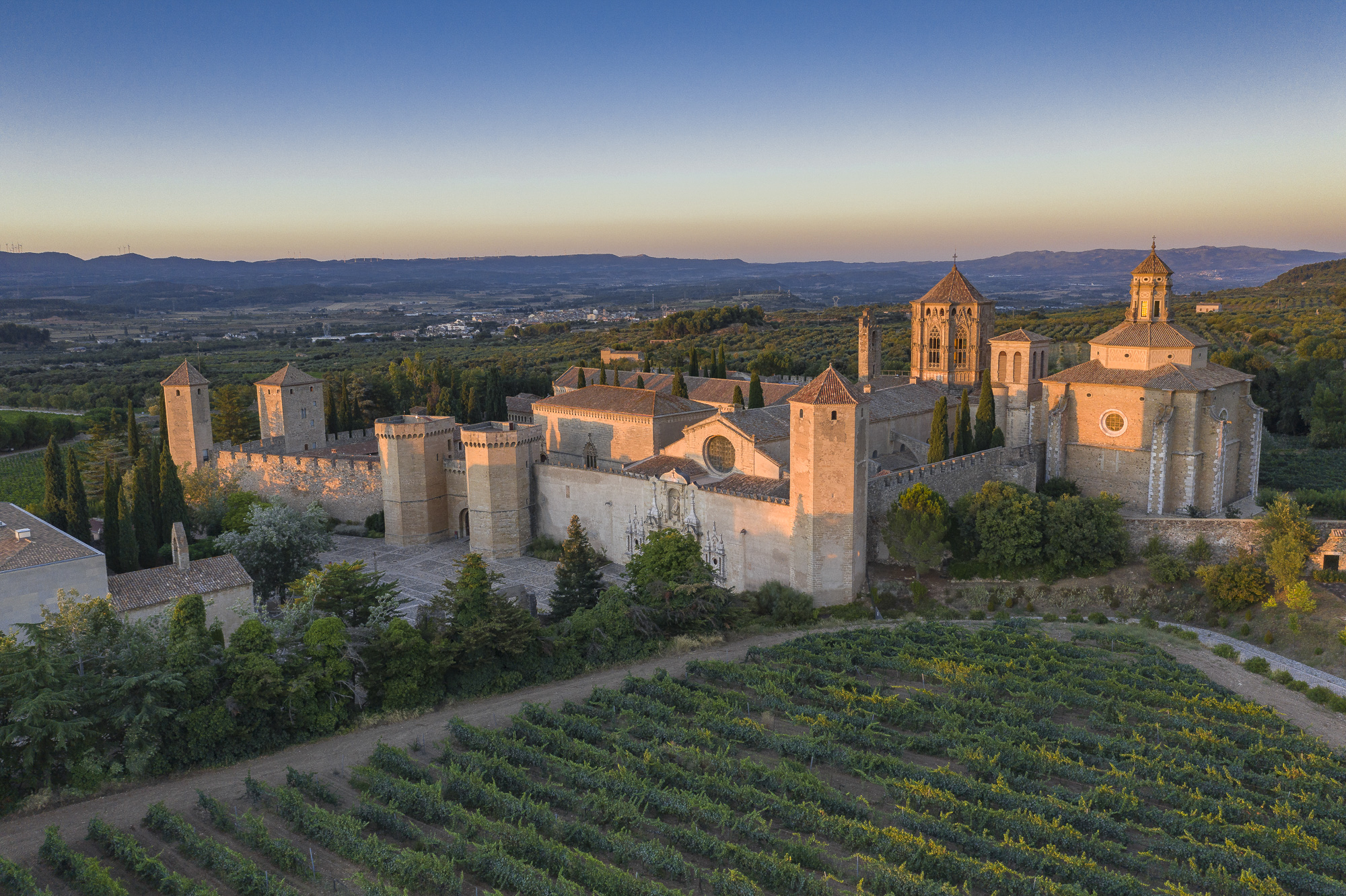
Crossing the Prades Mountains, home to mushrooms and the excellent Prades potatoes, we’ll arrive in Valls to taste one of the most famous foods in Catalonia: calçots de Valls. On the last Sunday in January, the town celebrates the popular Calçotada Festival in honour of the scallion. We’ll continue to the walls of Montblanc to see them from the inside and make our way up the seven floors of one of the towers, finishing with a wine tasting with views over the landscape of the Trepat Route, named after the indigenous D.O. Conca de Barberà grape variety. The Terra Museum in L’Espluga de Francolí tells the story of rural life and agriculture, with a touching tribute to our ancestors. The day will end near Poblet Abbey, with a meal and wine pairing featuring La Conca truffles.
Roman Tarragona
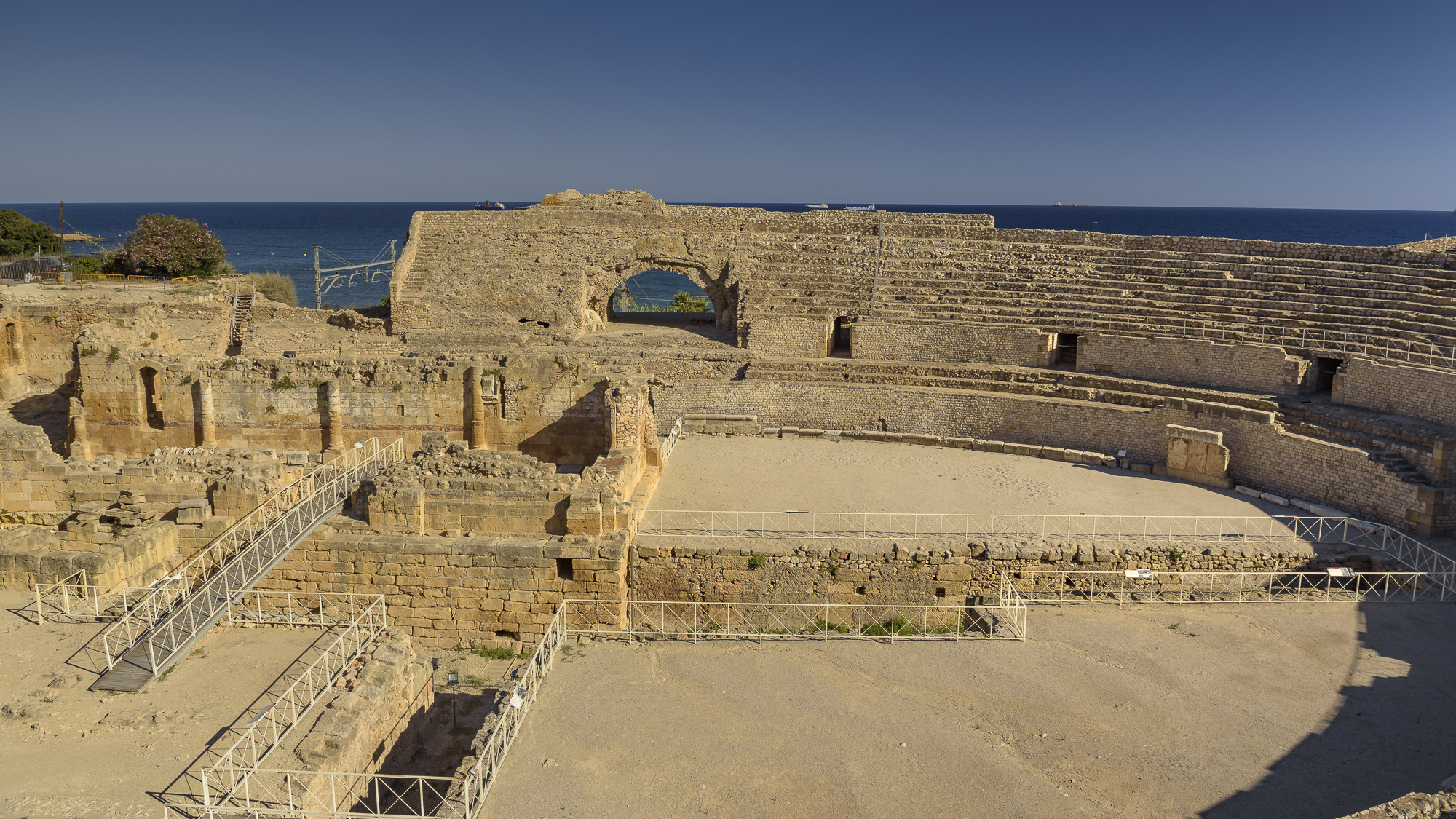
We travel back to Roman times in Tarragona and visit the archaeological site of Tarraco: the amphitheatre facing the Mediterranean, the circus and the walls take us to the days when the emperor walked the city’s streets. The city, a World Heritage Site, hosts the annual Tarraco Viva festival, an important gathering dedicated to sharing history and recreating the classical world.
Crossing the Barravés Valley
We leave El Pont de Suert following the course of the Noguera Ribagorçana river, which accompanies us for the first few kilometres of the stage. Tracks and paths alternate with paved sections, always parallel to the river, between fields, forests and small villages such as Les Bordes, Vilaller and Ginast. The valley is surrounded by mountain ridges that rise progressively as we head north. After Forcat, we turn right onto a track that climbs steeply to Senet.
Vermouth in Reus
We travel to the nearby town of Reus, Gaudí’s birthplace, to arrive just in time for a traditional vermouth. They tell us the story of this fermented beverage, transporting us to the days when it was exported to half the world and Reus was, along with Paris and London, one of three cities setting the price of spirits. Leading producers offer guided tours, some of which are dramatised, and product tastings. The days of splendour that the Vermouth brought to the city resulted in numerous commissions from prominent modernist architects. The Modernist Route covers 26 major buildings, including the Casa Navàs, the Casa Rull, the Casa Gasull and the Pere Mata Institute, works by Lluís Domènech i Montaner, and the Casa Anguera by Pere Caselles.
Towards the heart of the Penedès
The wide downhill tracks lead us to the Vía Blava de l'Anoia, a flat path that descends to the river. Here the landscape changes completely: the first vineyards of the Penedès appear, stretching as far as the eye can see. The route reaches its end in Sant Sadurní d'Anoia, along gravel tracks between rows of perfectly aligned vines.
Dawn on the seafront
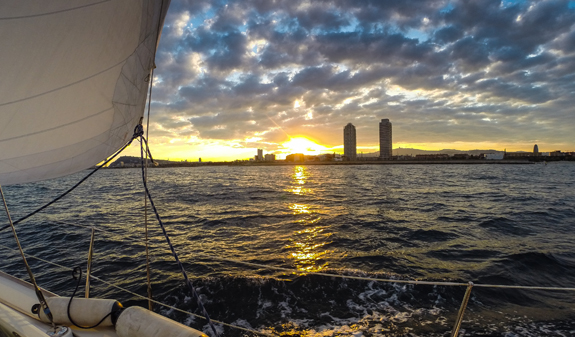
Our second day in Barcelona will be dedicated to the sea and local products, of course including a visit to one of the city's markets. With 43 members, the network of Barcelona markets is one of the largest in the world. We head out early to watch dawn and get a little exercise on the city's seafront. During a walk of just a few minutes, we go from the Barceloneta, a district full of bodegas and tapas bars, clothes laid out on the pavement and a Catalan rumba flavour, to the new architecture that sits on the seafront, featuring some interesting design-focused beach bars that we save for another visit.
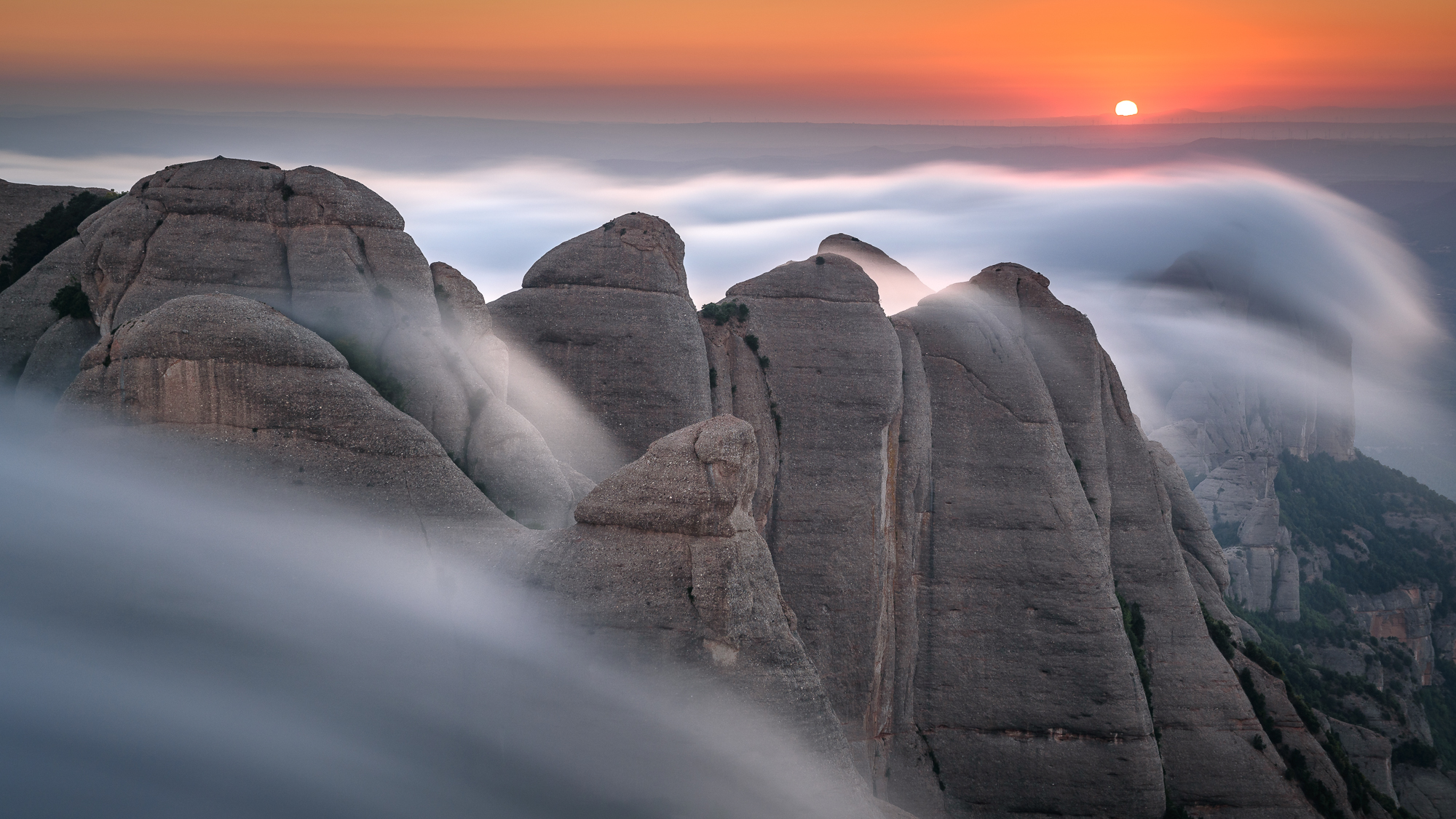
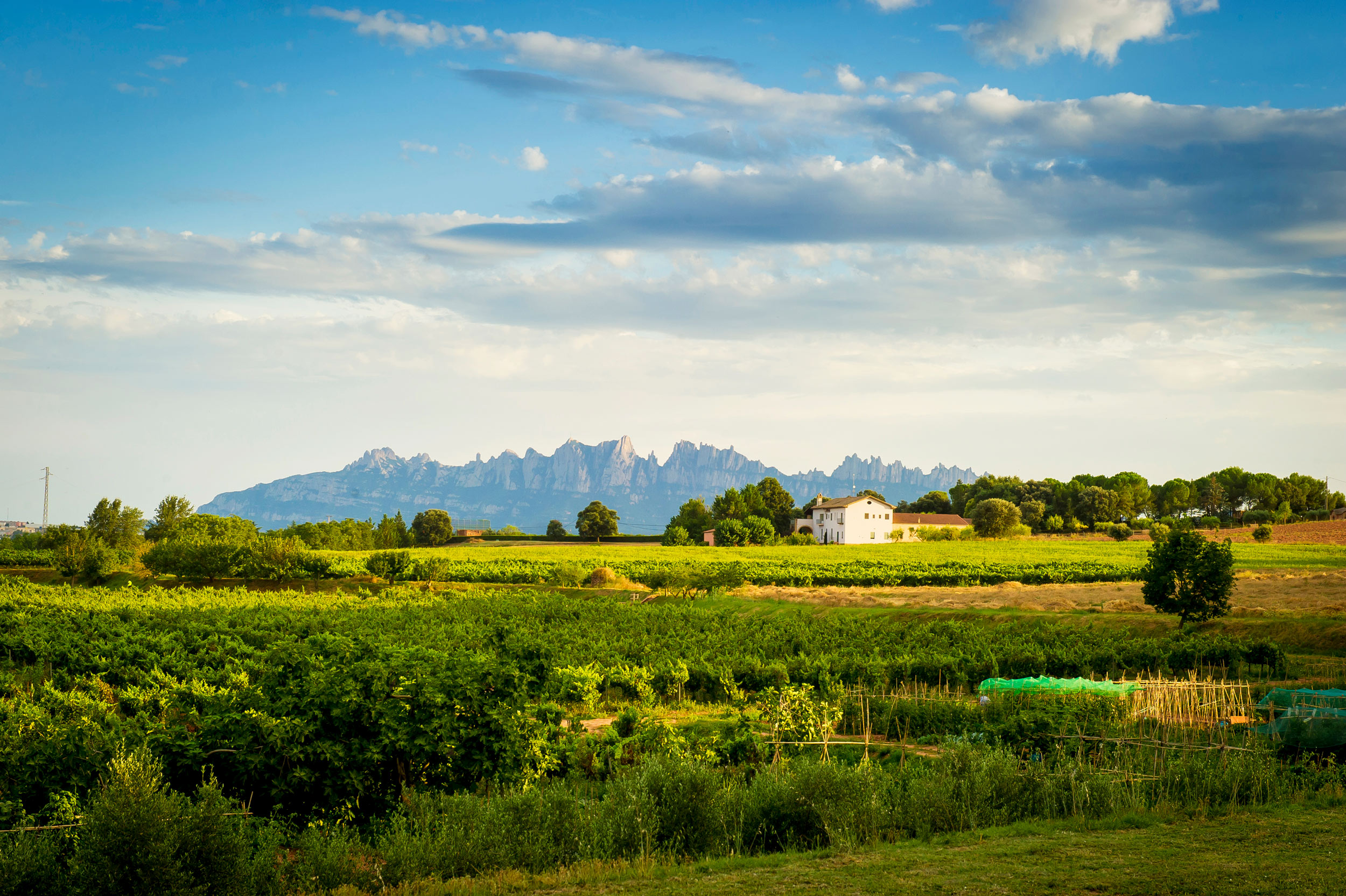
Circling the Montserrat massif
The route continues along a narrow road which, as it approaches the mountain, increases the feeling of being inside the massif. We climb gently until we join the main road at the foot of Montserrat and begin a descent that skirts much of the mountain to enter the small natural area of Roques Blanques. The path alternates between compact earth and stony sections, in a rugged landscape that contrasts with the vineyards that await us below.
Along the Camin Reiau to Arròs
We leave Vielha and, after crossing Gausac, we join the Camin Reiau, an ancient path that connects the villages of the Val d'Aran. The route runs parallel to the Garona river along wide paths and shady stretches, where the trees form a tunnel of vegetation. The forest is dense, full of birch, hazel and beech trees, with the constant sound of the river nearby. The terrain is gentle and very pleasant until Arròs, where we cross the river to begin the climb towards the Varradòs valley.
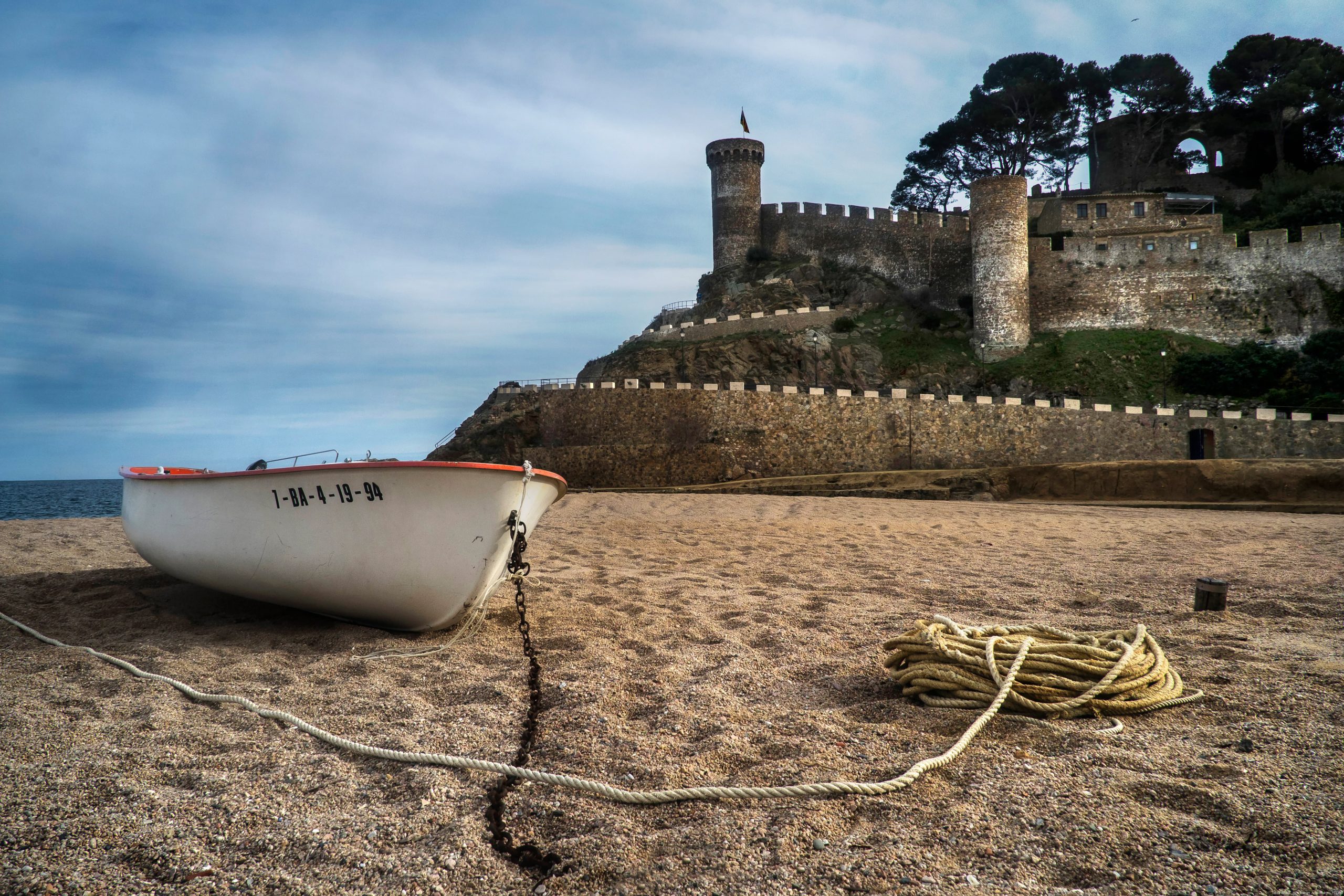
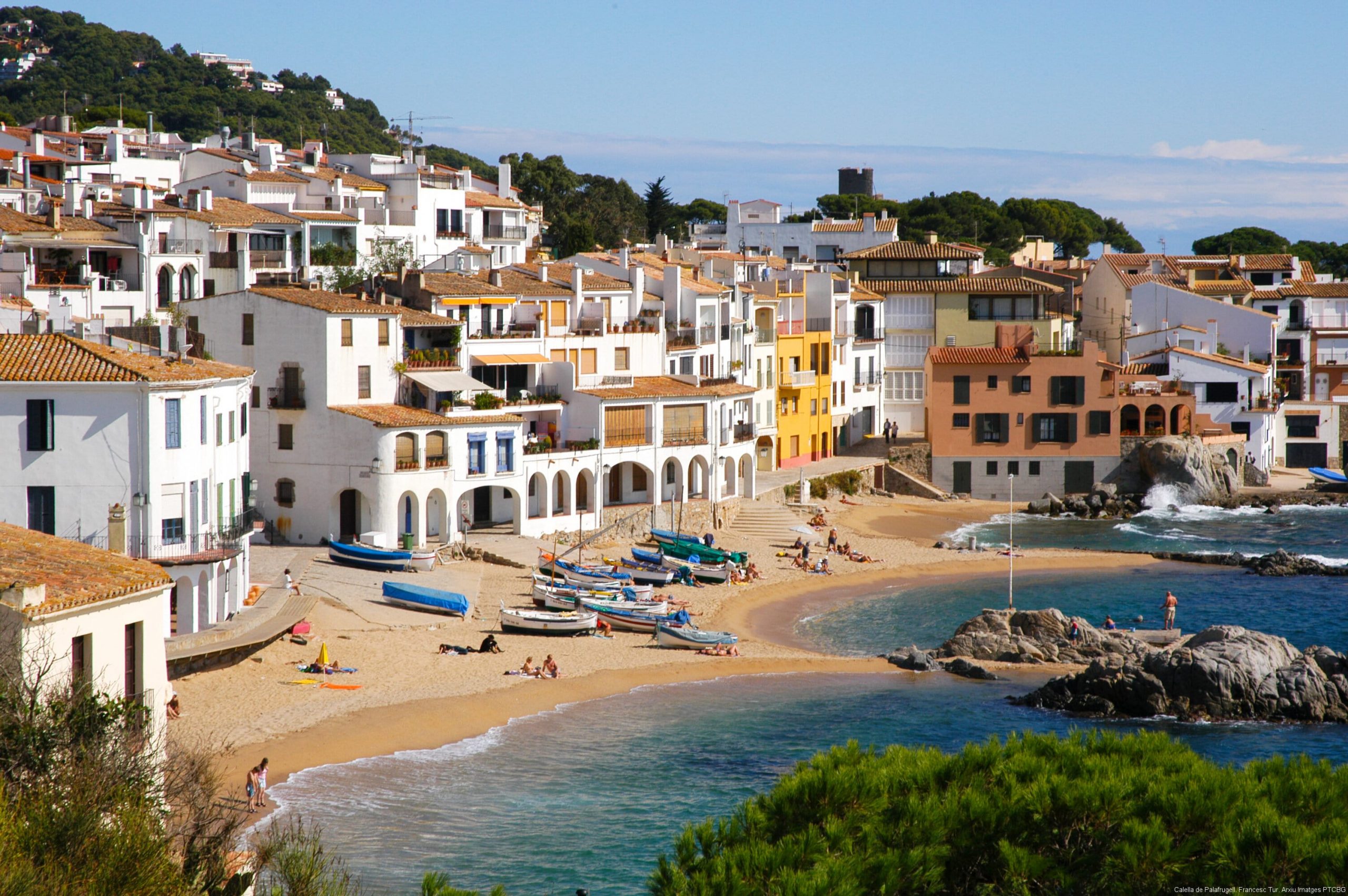
Tossa de Mar
We drive along the coast to our next stop, Tossa de Mar, leaving the Gavarres mountain range to the north, whose holm oak and cork oak woodlands produce considerable amounts of cork stoppers. We have our first coffee of the day enjoying the views from the walls of Tossa de Mar. Walking by the fishermen’s district of Sa Roqueta we reach el Portal, the access point for Vila Vella where we head out on a guided tour that include the entrance to the Municipal Museum to see a work by Marc Chagall. After walking through the oldest part of this fortified town, we decide to follow the stretch of the Camí de Ronda as far as Cala Giverola to enjoy the view from the Sant Jaume lookout, a balcony with a spectacular perspective on the cliffs and the village with its castle.
El Pinell de Brai and the Wine Cathedral
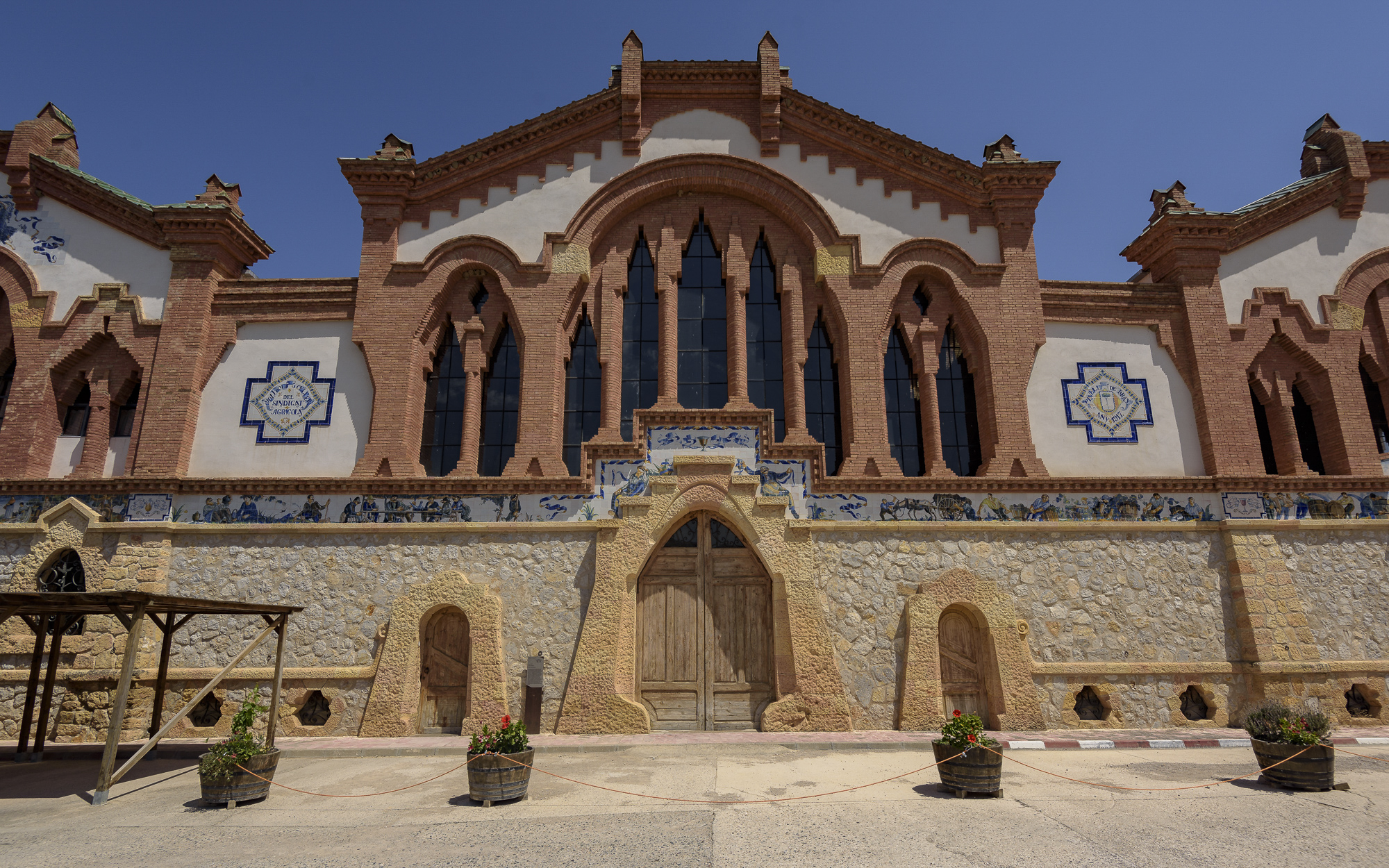
We leave the greenway and, via a secondary road, arrive at El Pinell de Brai, a village with one of the most unique architectural gems in the region: its Wine Cathedral, a modernist cooperative designed by Cèsar Martinell, a disciple of Gaudí. The building, with its parabolic arches and ornamental ceramics, is a symbol of the wine culture and identity of Terra Alta, one of Catalonia's 12 wine designations of origin. From El Pinell, a track winds its way through woods and vineyards, climbing higher and higher until it offers exceptional panoramic views over the Ebro valley and the Montsant mountain range in the background.
Vall de Núria
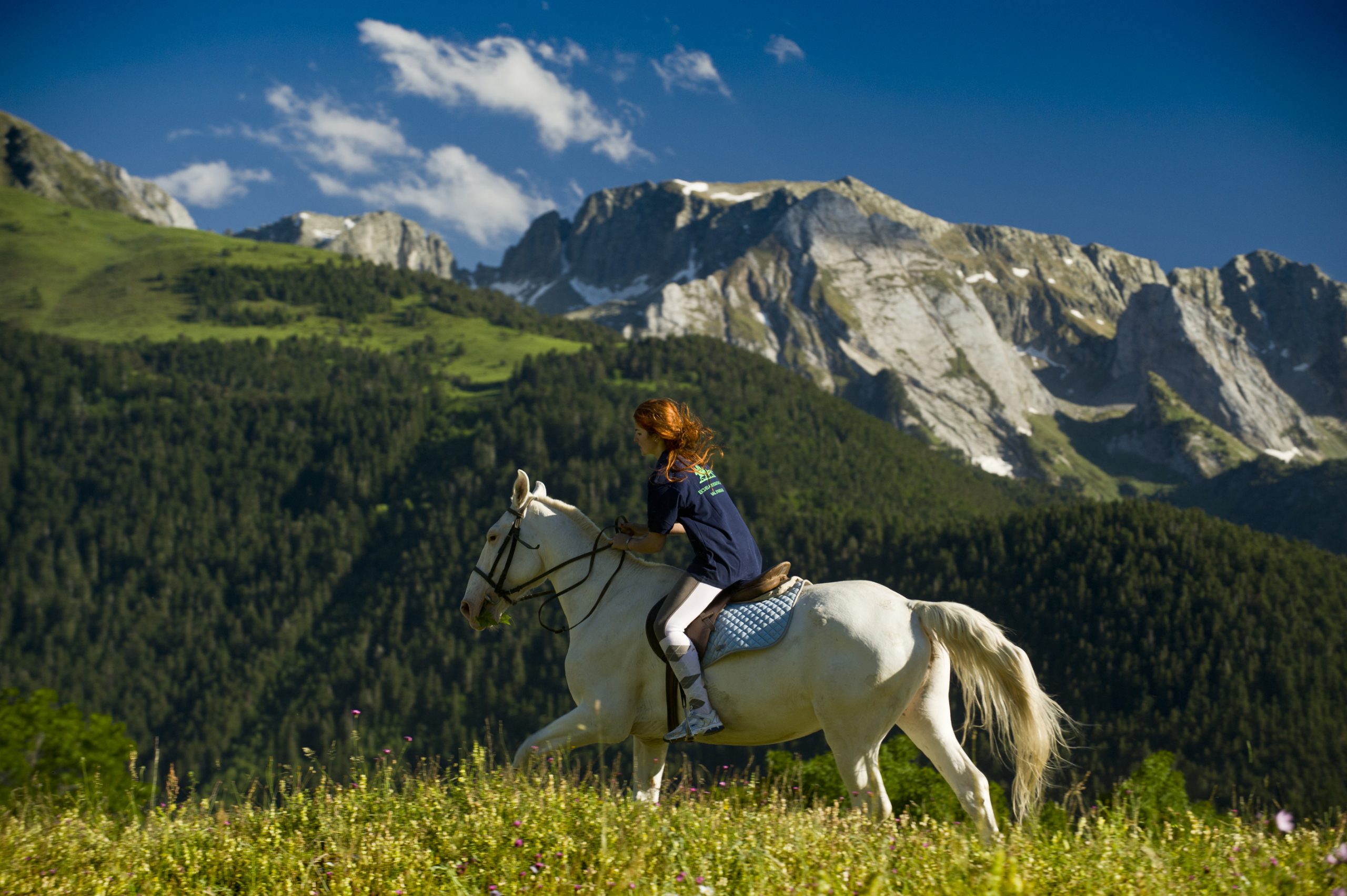
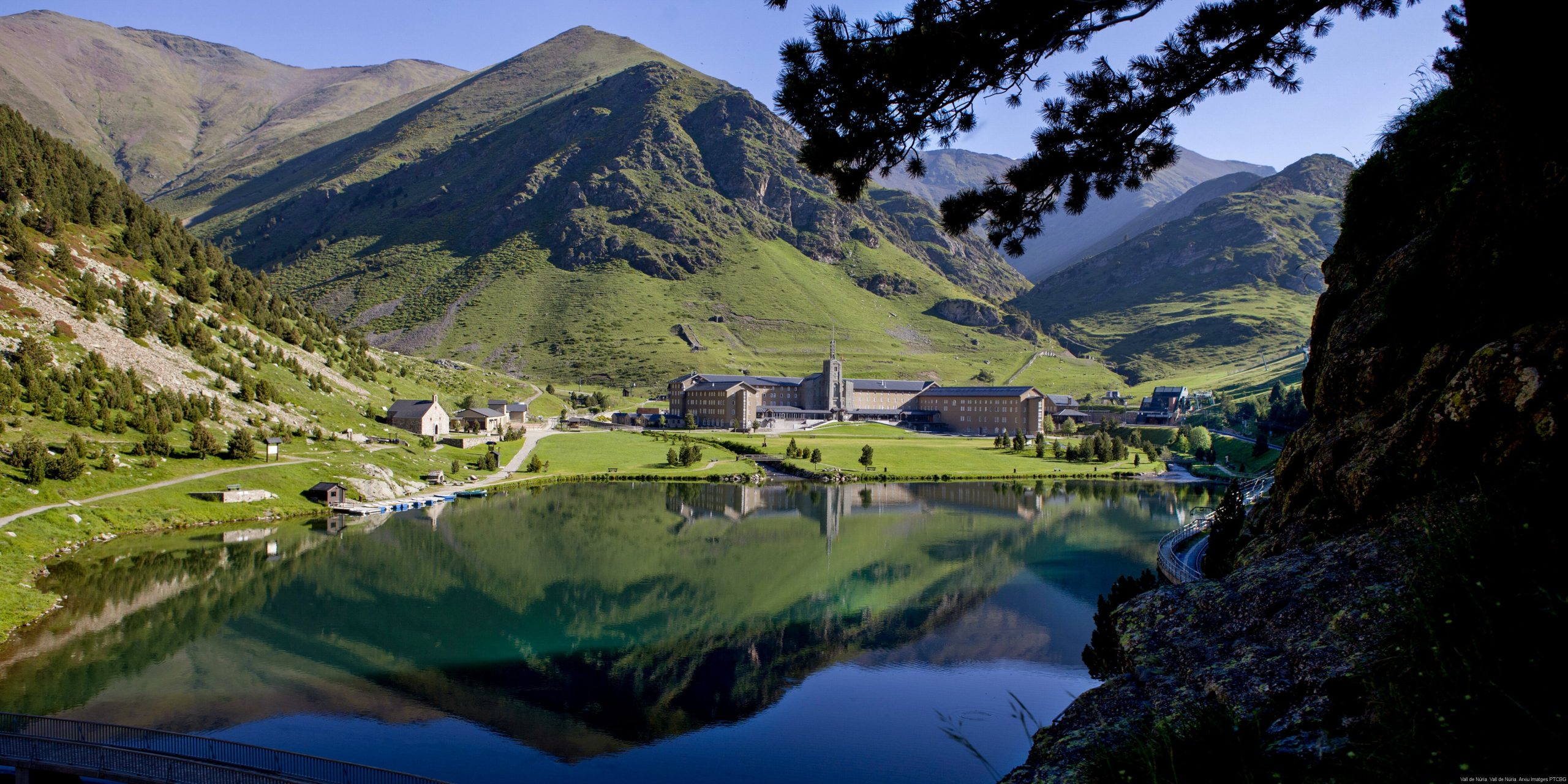
From Ripoll we climb to the town of Ribes de Freser where we exchange the car for a rack railway which, after a thousand metres of elevation gain, drops us at the head of the Vall de Núria. The vista from here is worthy of an oil painting: trees, green meadows and a sanctuary that looks tiny against the backdrop of the Pyrenean peaks. From the sanctuary of Núria there are several simple routes where it is easy to encounter chamois and marmots. Part of the group goes for a small guided excursion and the heads out on a horseback ride to the Verge forest. Some other visit, when we have more time, we could take on the challenge of climbing to Puigmal, an iconic beak with an altitude of 2,913 metres that acts as a natural border with France.
Carrilet Greenway to Girona
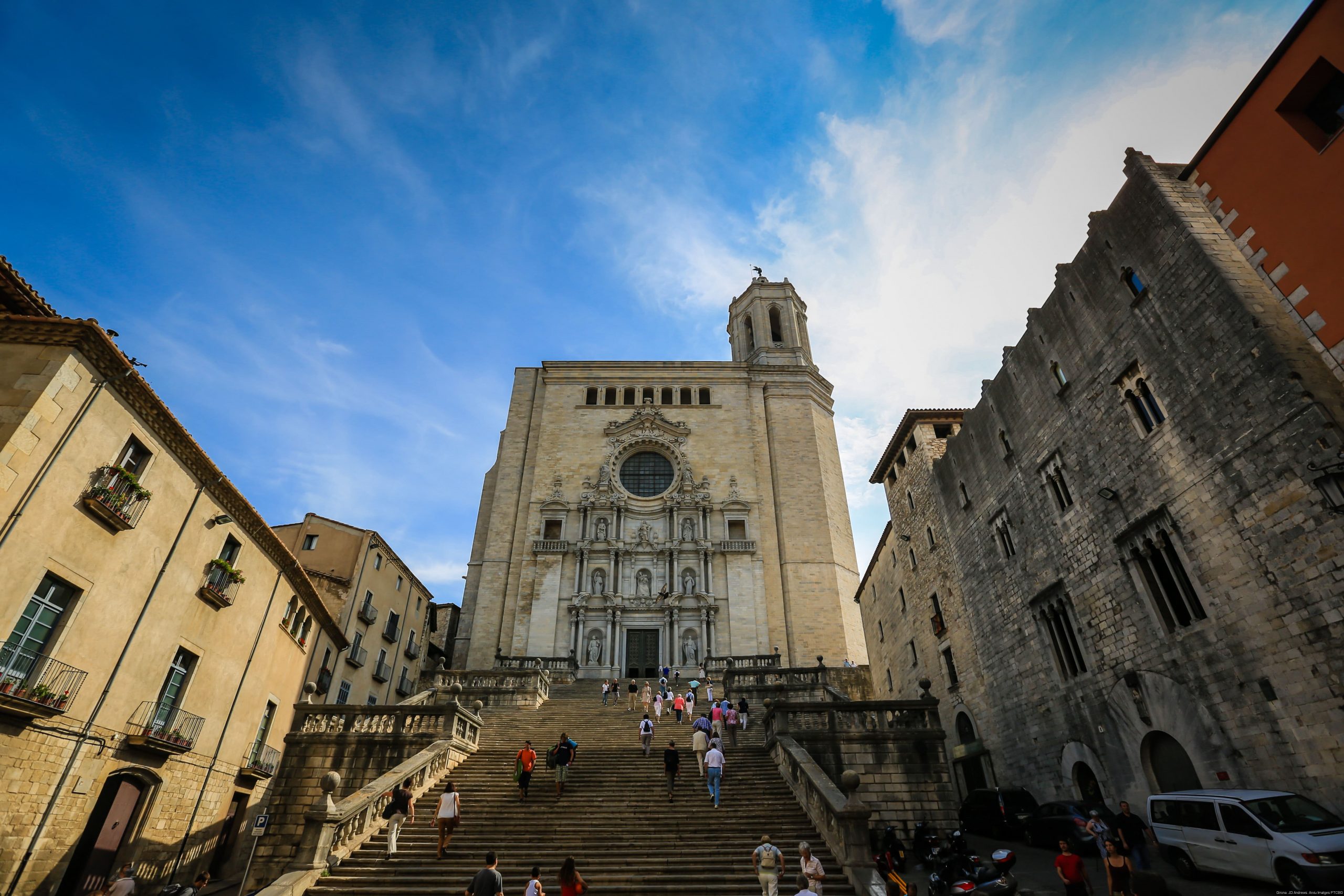
In Quart, we join the Carrilet II Girona–Sant Feliu de Guíxols greenway, an old railway line that has been converted into one of the most pleasant cycling routes in the region. The well-maintained path, surrounded by vegetation, runs parallel to the Onyar river between stretches of forest and cultivated meadows. The restored railway bridges and footbridges add a special charm to the route. The entrance to Girona is gradual, with the old town and the cathedral visible from a distance. Once we have parked our bikes, we can stroll through its cobbled streets and discover the Roman remains and the Jewish quarter, one of the best preserved in Europe, and stop off at one of the bike cafés.
Portlligat and Cadaqués
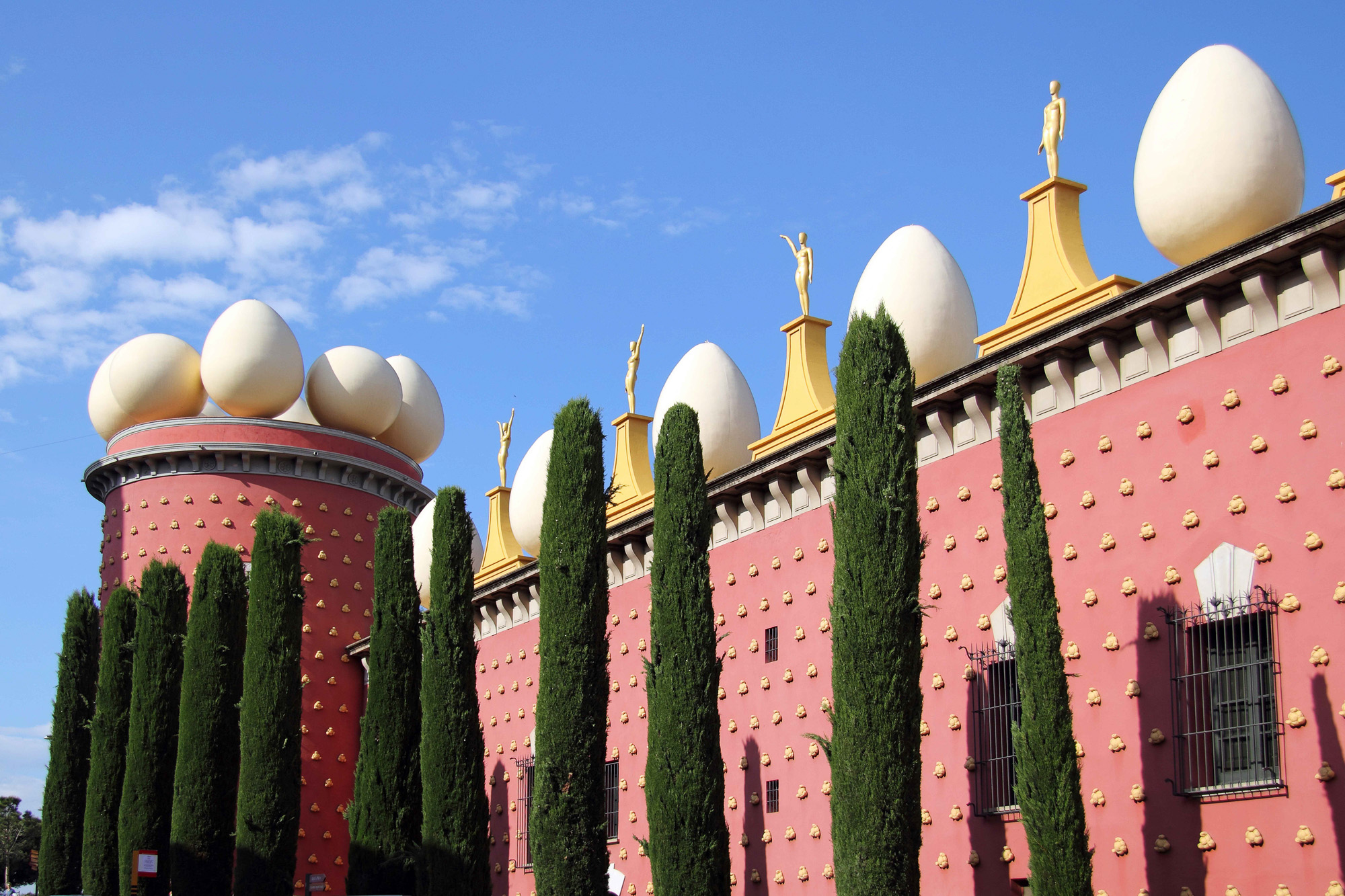
One of the transit points on this old trade route, which runs from Portbou to Blanes, is the beautiful town of Portlligat, which we will enter via road with a panoramic view from Cap de Creus. Dalí and Gala were married in this modest fishing village and resided there for more than thirty years. On a visit to his Museum-House, with its labyrinthine architecture and mismatched rooms, we discover that the artist worked with surrealism not only in his art, but also in his own life. We will spend the afternoon strolling through the picturesque town of Cadaqués. At sunset, we will seek refuge in a restaurant where we’ll enjoy a delicious taste of local seafood and wines from the DO Empordà.
The Garden of Penedès
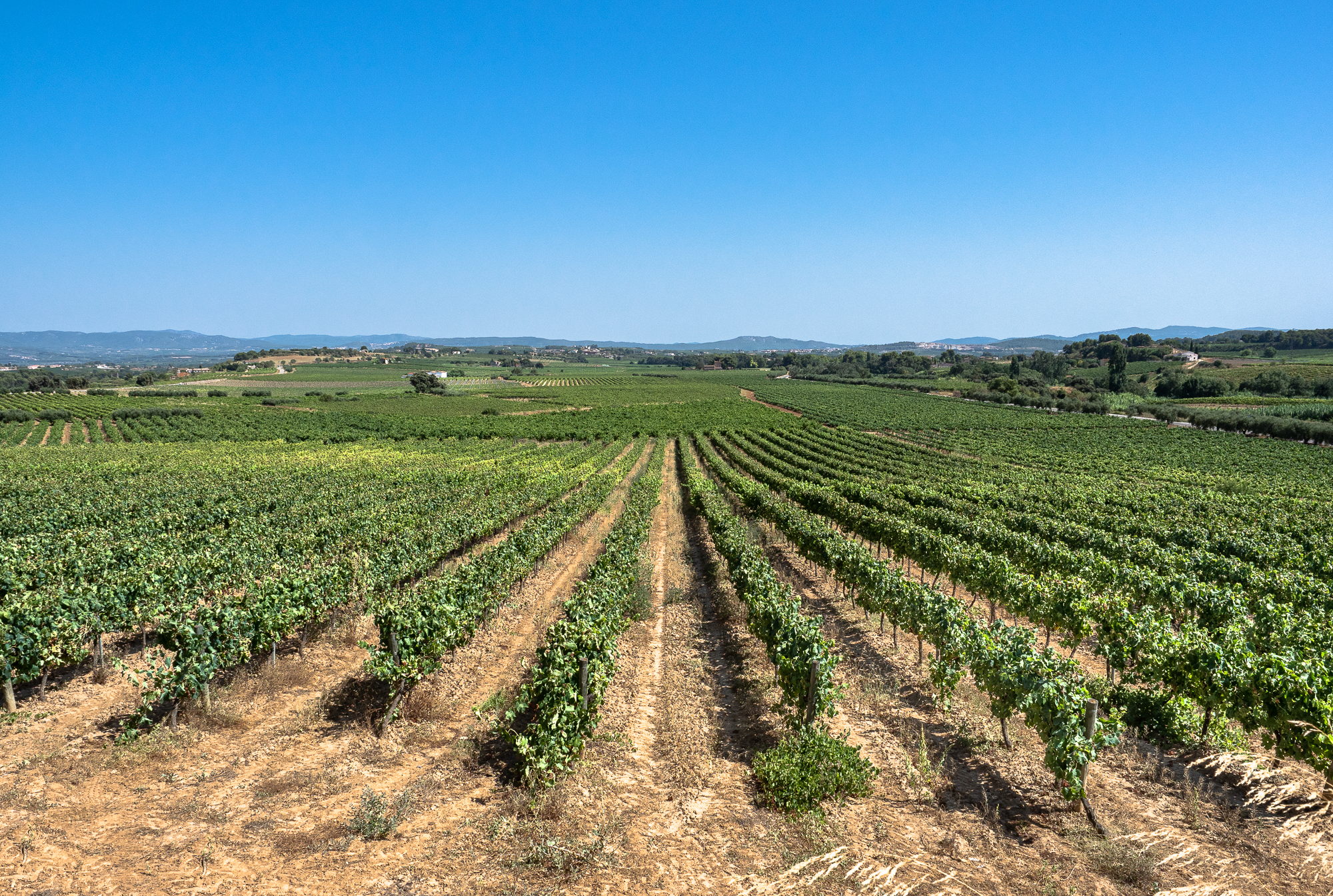
The heart of Penedès, a land with a long wine making tradition, is my next destination. Its vineyard is nestled between Montserrat and the Mediterranean Sea, a landscape marked by gentle undulations of the land and large flatlands, reflecting the waves of the sea that gives it character. In Sant Sadurní d’Anoia I visit the Cava Interpretation Centre, where I discover the history, protagonists, and architecture of this iconic drink through the different rooms. The sprawling Penedès vineyard must have garden fairies, I note in my travel diary after spending part of the afternoon visiting some of the sights of the Miravinya Route, five vantage points with magnificent views over a vine-covered landscape of the Alt Penedès dotted with dry stone walls and huts. I end the day with a vertical tasting in one of Penedès’ legendary wineries, where I learn to appreciate the subtle differences that the passage of time imparts to wine.
From Vic to Viladrau, the gateway to Montseny
We leave Vic on tracks and secondary roads that cross the Osona plain between fields of grain and scattered farmhouses. We pass through Sant Julià de Vilatorta and begin the climb up the track to Coll de Romegats (725 m), a gentle pass that brings us closer to the Massís del Montseny Natural Park. The road is narrow and quiet, with wooded sections and open views over the plain we leave behind. After a short descent, we arrive at Viladrau, known for its water and more than two hundred natural springs that flow throughout the village and the forest. Its cool, humid microclimate, unique within the Montseny mountain, has made the area a privileged place, where water and nature define the character of the site.
The passage to the Serra de Collserola Natural Park
The road remains uneven, with constant ups and downs, until the terrain begins to descend towards the south. We ride parallel to the Santiga stream, between agricultural areas and small forests, and further on we follow a section of the Ripoll river along a signposted cycle path. We pass through Ripollet and Cerdanyola del Vallès, where the landscape already shows the transition between the plain and the mountains. From here, the route enters the Serra de Collserola Natural Park, a veritable green border between the city and the industrial area of the metropolitan area. The track is wide and comfortable, but with demanding ramps that climb up the Collserola mountain.
Crossing the Montseny: from Coll de Bordoriol to Coll de Sant Marçal
From Viladrau onwards, the most spectacular part of the stage begins. The road enters the Massís del Montseny Natural Park and begins to climb steadily. We climb up to Coll de Bordoriol and then continue towards Coll de Sant Marçal (1,324 m), always surrounded by dense forests of beech, fir and oak. In the highest areas, the light is filtered and the silence is absolute, while in summer the greens are intense and in autumn the forest is filled with golden and reddish tones. From the most open points, you can see the mountains surrounding the massif and the Santa Fe valley.
Leaving the capital
We set off from Plaça Catalunya, following the cycle lanes of Gran Via, surrounded by Barcelona's imposing modernist buildings, such as Casa Calvet, one of Gaudí's most conservative works. The urban landscape begins to change as we take Carrer de Trullols, a steady but moderate climb that leads us to Carretera de les Aigües de Collserola. As we gain altitude, the views widen: on one side, the city skyline with the Sagrada Familia standing out; on the other, the first forests of the natural park. Carretera de les Aigües offers a unique perspective of the city from above, as if it were a balcony, with the Mediterranean Sea as a backdrop on clear days.
From Berguedà to Coll de la Merolla
We leave La Pobla de Lillet on the road that climbs towards Coll de la Merolla (1,108 m), a natural pass between Berguedà and Ripollès. The climb, about 8.5 km long, is gentle and very pleasant, with many curves and shady sections through forests of red pine, beech and fir. As we gain height, the landscape alternates between rock faces and small open meadows until we reach the top of the pass, where the view extends towards the surrounding mountains and the Montgrony mountain range.
From Alta Garrotxa to Olot via Oix and Castellfollit de la Roca
After Beget, the climb to Coll de Pera (802 m) begins, a short but demanding ascent in places. The pass crosses the Alta Garrotxa, surrounded by the humid forests typical of the area. Reaching the top of the pass gives way to a long descent that leads us to Oix and then to Castellfollit de la Roca, where we enter the La Garrotxa Volcanic Zone Natural Park and where stone houses rise above the basalt cliffs. The last few kilometres pass through Sant Joan les Fonts and La Canya, following roads that cross these villages until reaching Olot, the end point of the stage.
Dining with Dalí
Our gastronomic route through Figueres will take us to places that meant something to Dalí: we’ll stroll under Galatea Tower and through the Ca la Teta cellar, tasting wines caressed by the tramuntana north wind, accompanied by dishes such as mar i muntanya (surf ‘n’ turf). In Peralada we’ll visit an avant-garde winery designed by RCR, the Pritzker Prize-winning architects from Olot. The Peralada Castle Museum houses a collection of objects related to the world of wine. For our next stop, in Garriguella, we’ll don beekeeper’s suits to learn about the L’Albera honey-making process.
From Sant Sadurní to Vilafranca, among vineyards and farmhouses
We leave Sant Sadurní d'Anoia cycling among vines and farmhouses, surrounded by the
calm of the Penedès. The tracks are wide and compacted earth, ideal for enjoying the leisurely pace of the wine-growing region. We pass through El Pla and continue to Vilafranca del Penedès, the historic capital of Catalan wine and the nerve centre of the Penedès DO, with numerous wineries offering tastings and the Wine Museum (VINSEUM). We continue along paths flanked by perfectly ordered vineyards. From here, the route climbs gradually through La Serreta and Sant Miquel d'Olèrdola, with a short, more demanding stretch that offers an open view of the entire Penedès plain.
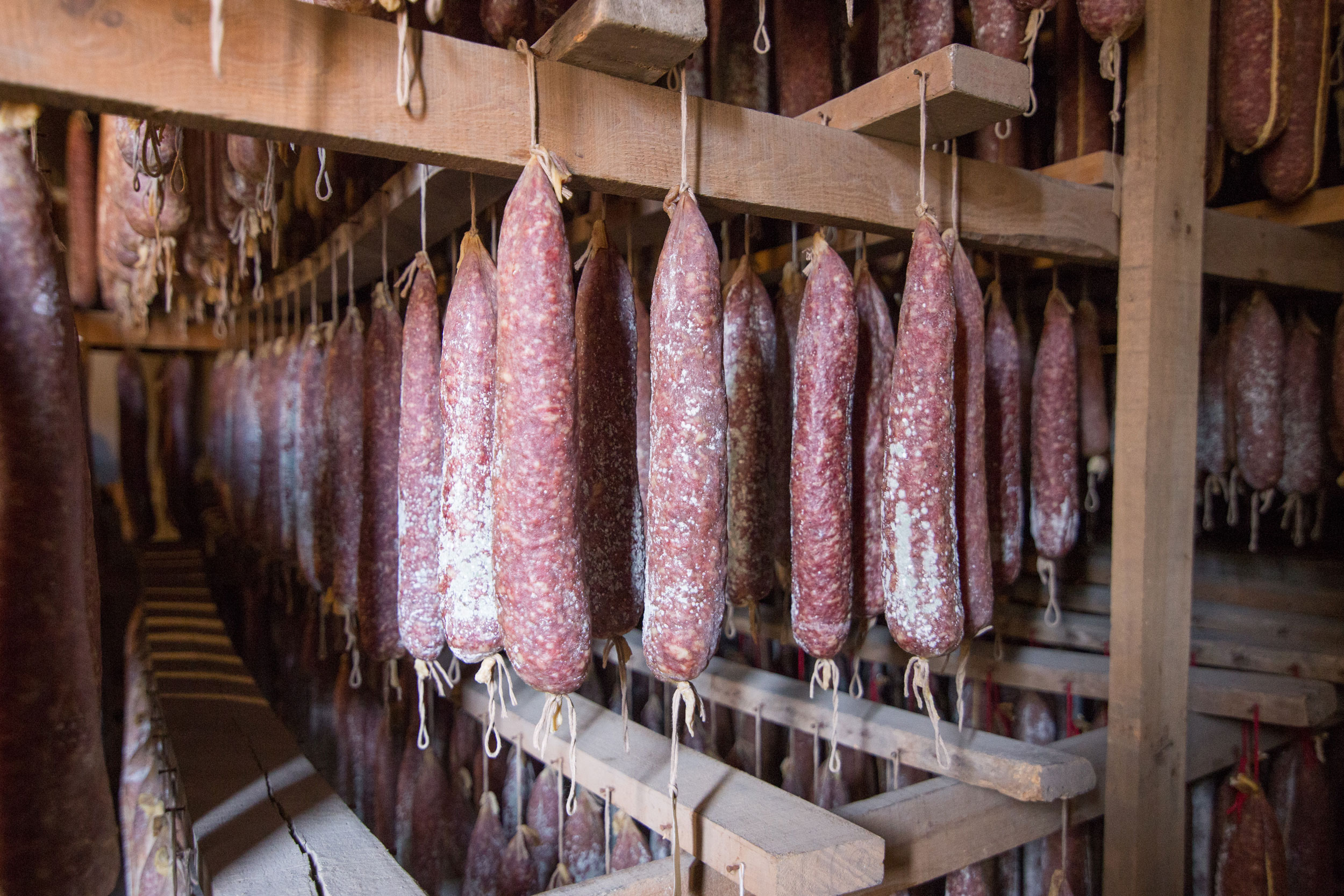
Vic Sausages
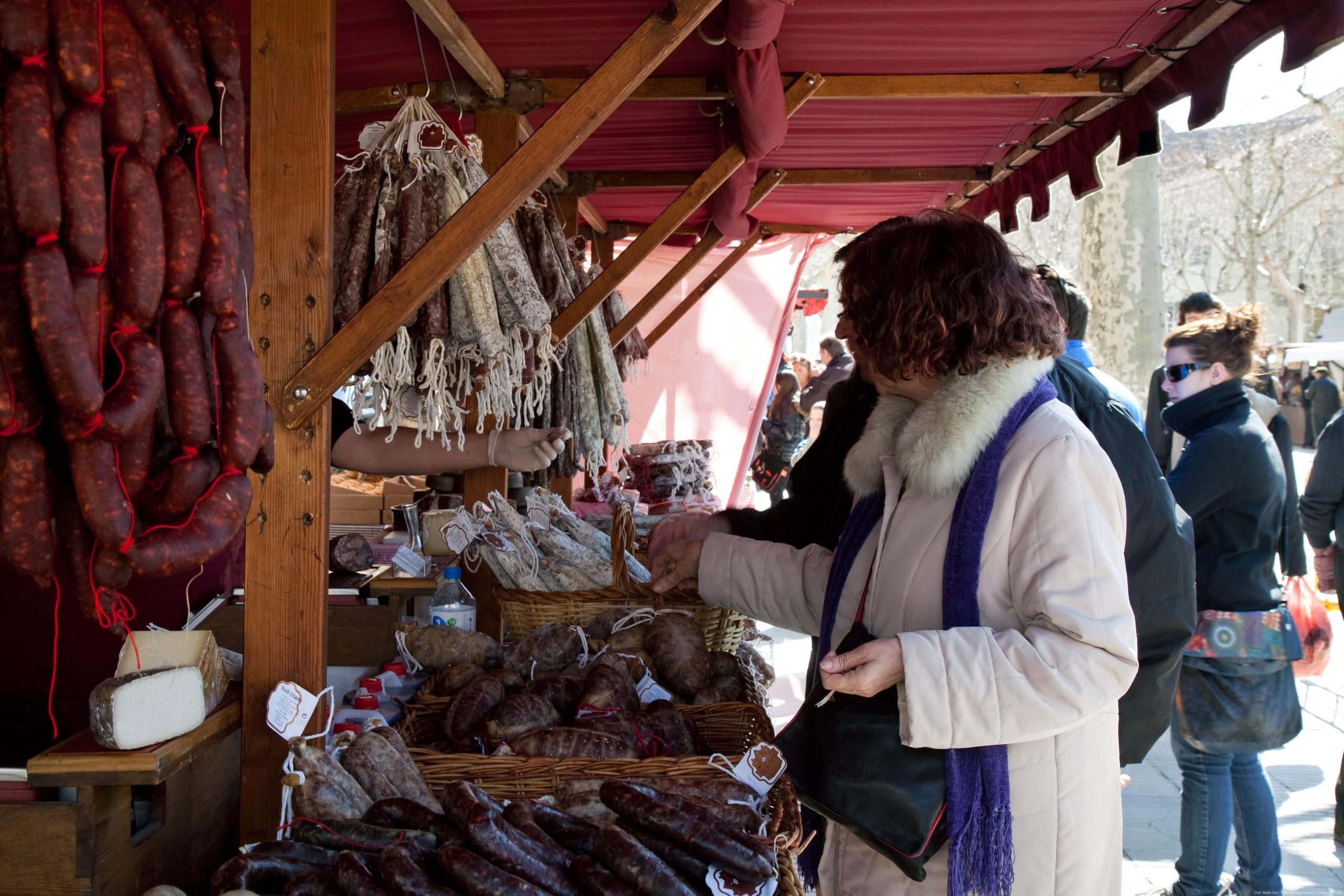
Our next stop is Vic. Its Plaça Major is one of the most iconic of the Catalan districts, a monumental porticoed square that is always busy during the weekly market. After the guided tour of the city, where we see an outstanding Roman Temple, the cathedral and the streets that formed part of the Jewish Quarter, we entered a century-old drier to try out the famous Vic sausages, the llonganissa and the fuet. We spend the afternoon getting to know the legends of witches and outlaws at the Espai Montseny de Viladrau, an interpretive centre for the Montseny Natural Park, and hiking along a circular route that runs through the heart of the mountain range. This Biosphere Reserve offers landscapes featuring beech, fir and oak forests; we can encounter sequoias like those of Can Casades, or see the riverbank flora alongside the rivers that cross the park. The views from any of Montseny's iconic peaks are well worth a visit if you have the time to make the climb. We certainly need to return in autumn when the leaves form a beautiful tapestry in the undergrowth and Viladrau holds the Chestnut Fair.
From Les Guilleries to the Sau reservoir, ending in Vic
We leave Rupit on a secondary road that enters the Natural Area of Guilleries-Savassona. The road descends steadily to the Sau reservoir, an iconic reservoir on the Ter river, known for the ruins of the bell tower of the old village that emerge when the water level drops. We cross the dam and continue along a road that circles the reservoir, but is surrounded by dense forests that block the view of the water. We leave the reservoir behind and continue towards Tavèrnoles, where we take a track that, between fields and farmhouses, takes us to Roda de Ter and finally to Vic, the capital of Osona, with its historic porticoed centre as the end point of the stage.
Flying high
Montserrat is even more breathtaking from a helicopter. After landing, and still riding high from the experience, we’ll sample artisan mató (cottage cheese) with a delicious drizzle of honey, paired with a glass of ratafia (a local herbal liqueur). To learn more about the herbs and plants used in this popular drink, we’ll visit a native plant nursery in Sant Llorenç del Munt i l’Obac Natural Park and take a nature walk around the area.
Arrival in El Vendrell
We leave the reservoir behind and enter a flatter area. The route passes through fields of vines and olive trees, farmhouses and small villages such as La Gornal, always in a rural and open environment. The last few kilometres are easy and pleasant, ideal for a leisurely ride to El Vendrell, the end of the stage, the meeting point between the interior and the Costa Daurada, and the birthplace of the musician Pau Casals, where you can visit his museum.
A sea of vines
Our journey will take us through Penedès, whose vineyards stretch all the way to the sea. To experience the uniqueness of this county, we’ll visit two exceptional places: the Vinseum Museum in Vilafranca del Penedès and the Cava Centre in Sant Sadurní d’Anoia, where we’ll learn fascinating details such as how cava bubbles are formed. Penedès offers countless wine tourism options: tastings, cycling routes or lunch in a vineyard, to name but a few. We’ll visit a family vineyard in Méhari and enjoy lunch in the countryside.
Trails along the Riu Negre
We leave Solsona with a gentle start, following a trail parallel to the Riu Negre for 15 kilometres, with some paved sections breaking up the continuity of the dirt road. The river accompanies us with its calm course while the landscape remains green and dotted with farmhouses. This first part allows us to get into our stride and enjoy the route without any major slopes until we reach the Eix del Cardener, the gateway to Cardona.
Arrival in Sitges and the Mediterranean
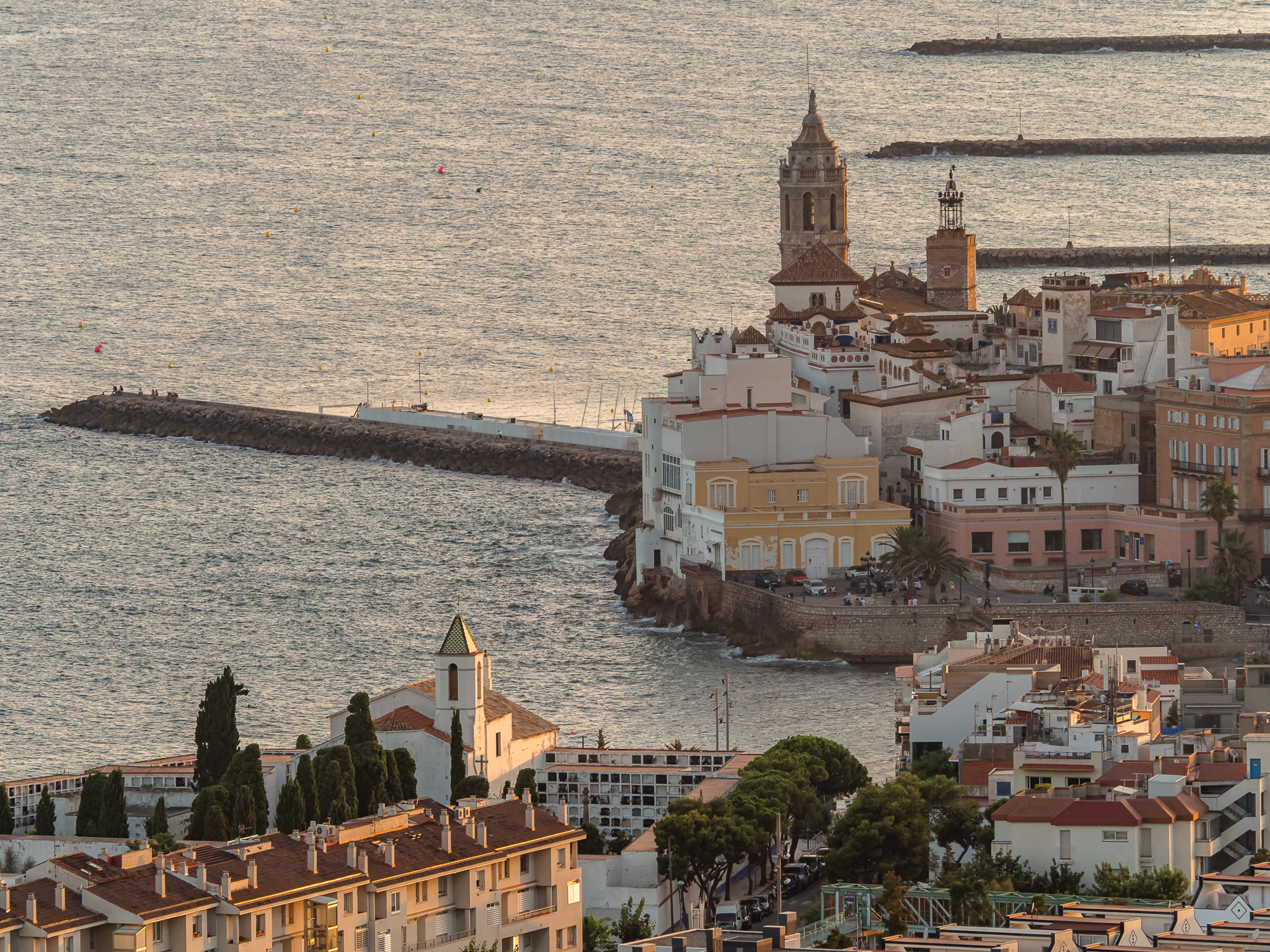
The final descent takes us to Sitges, one of the most emblematic towns on the Catalan coast. We enter the town centre via the seafront promenade, following the cycle path along the beach to the historic centre. The salty air, palm trees and white houses herald our arrival at the sea. A short but intense stage, linking the silence of the vineyards with the Mediterranean.
Camí de Ronda
From the same town, as we head south, there is a beautiful stretch of the Camí de Ronda that we will follow to see some of the best-preserved corners of the Catalan coast. The easy route follows the GR-92 and gives us access to beautiful coves of red rock and crystal clear water. We continue to the nearby village of El Perelló, where we dress in bee-keepers’ clothes to enter the complex world of beehives where high-quality honey is produced, and learn to make honey-based pastries.
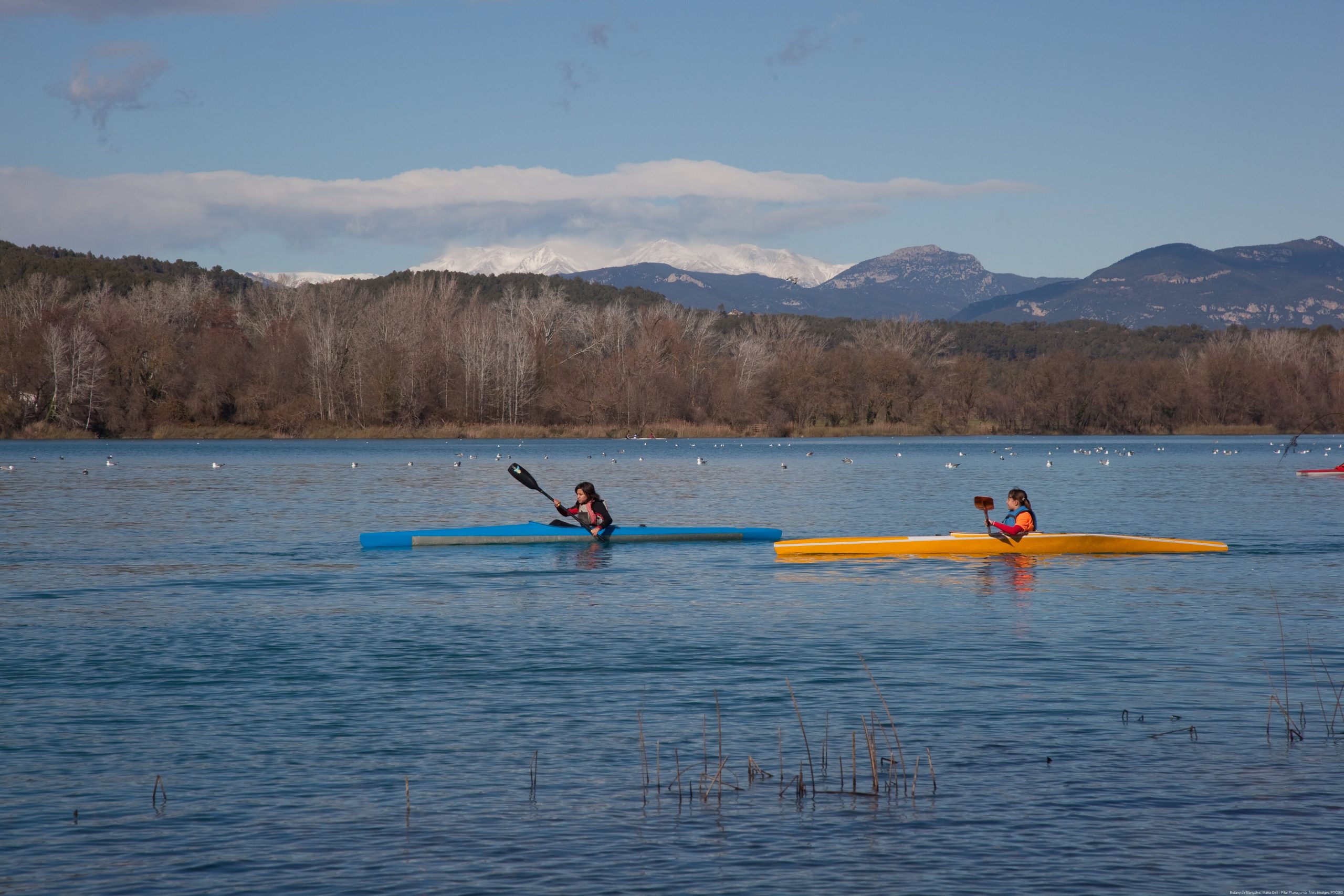
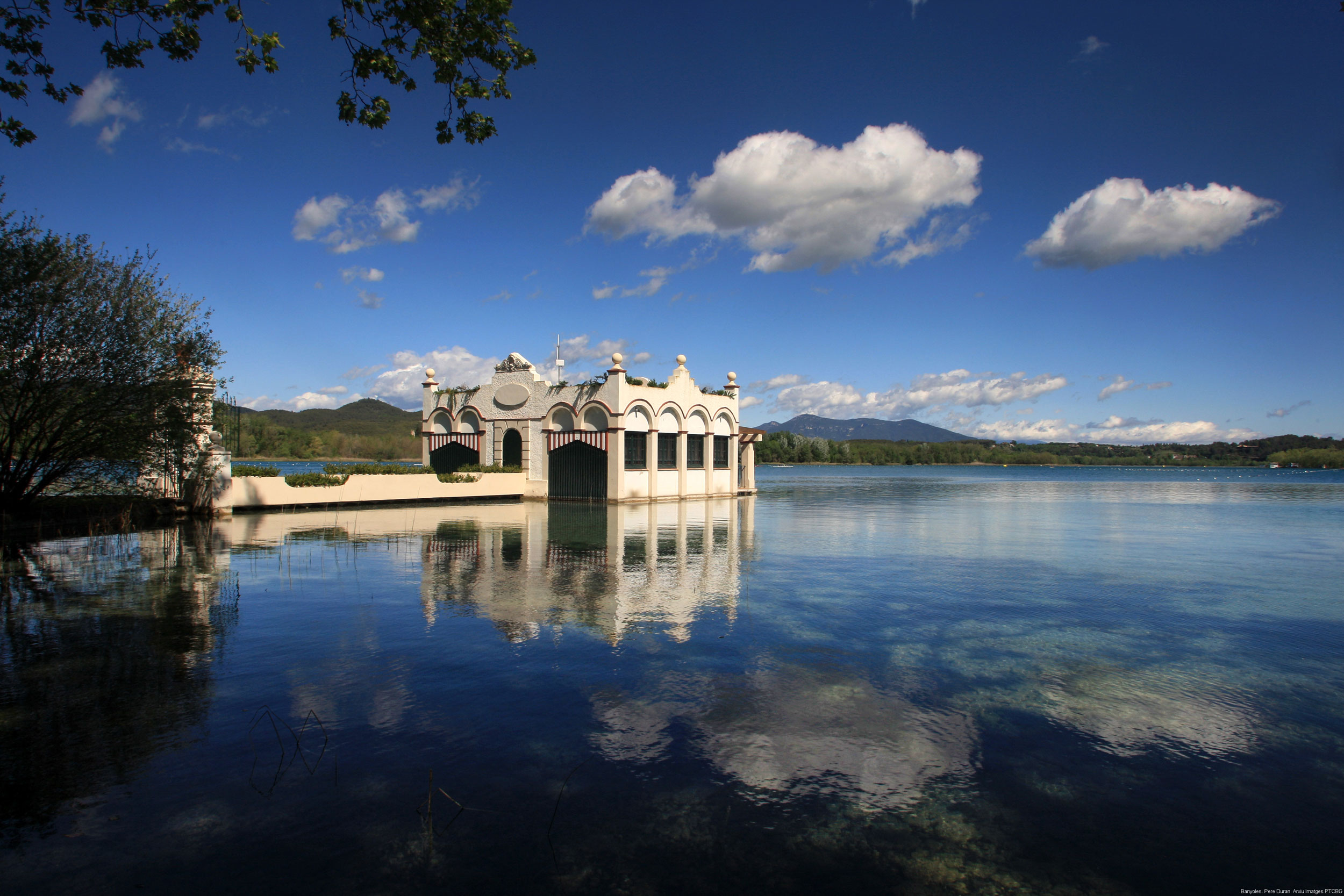
Sunrise in Banyoles
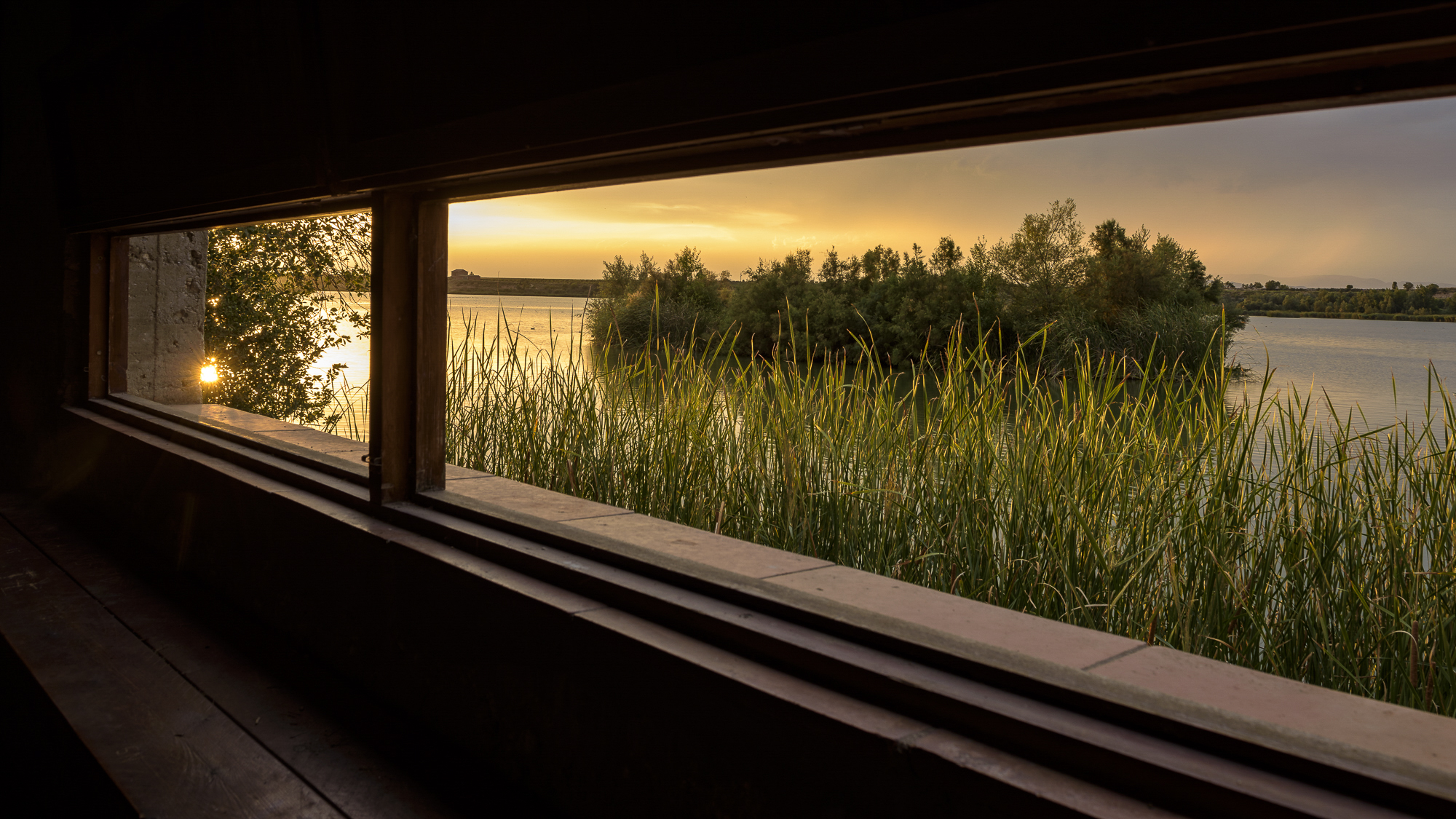
The Lake of Banyoles, located halfway between the peaks of the Pyrenees and the wide plains of the Empordà, wishes us good morning with the hypnotic pink tones of a sunrise over its waters. At this early hour it is just us and the bird watchers who have come to photograph some of the species protected by the Natura Network and the RAMSAR convention, which designates this wetland as a Wetland of International Importance.
From the sea to the Cadiretes massif
We leave Tossa de Mar and leave the coast behind to enter the Cadiretes massif, a protected natural area that combines holm oak, cork oak and Mediterranean pine forests. The track climbs gradually through dense forests, with shady sections and occasional views of the sea behind us. As we gain height, the landscape opens up, revealing the Vidreres plain and, on the horizon, the Montseny mountains. It is a solitary and natural stretch, with stony but cycleable paths.
Fresh products at the market
We've got a date at the market, so let's pick up the hand-made palm frond baskets we bought the day before at one of the shops in the Born district and get ready to let ourselves be advised by our guide on buying the freshest produce, with which we will prepare dishes at a cookery workshop. After enjoying the seafood paella we cook, and taking notes on every step of the recipe so we can repeat our success at home, we head to the fishermen’s guild to see the arrival of the fishing boats and witness the bidding at the auction. It is interesting to see how fishing has survived in such a large metropolis, thanks to a guild that can serve fresh fish to meet the high demand of the Barceloneta restaurants.
Villages of La Cerdanya
We are heading to La Seu d'Urgell, where after passing through St Mary's Cathedral, the only completely Romanesque cathedral still standing in Catalonia, we’ll want to sample some local specialities, such as cheeses from the Alt Urgell i La Cerdanya PDOs, the only cheese protected denomination of origin in Catalonia. The producers themselves will tell us how they are made and, even more excitingly, let us know how they taste. In the afternoon, we will drive through some of the little stone villages of La Cerdanya. These are places with short, charming names, such as Talló, Prullans, Pi, Bor, Riu, Alp and Urtx, which have always been nestled under the peaks of the Cadí-Moixeró Natural Park. On the south side of the park, perched above a crown of fir trees and beeches, stands the majestic Pedraforca, one of Catalonia’s most iconic peaks. Between Puigcerdà, a town with a beautiful lake, and Figueres, the roads run in the shadow of the Pyrenees and give plenty of reasons to stop off: the Llobregat fountains and the industrial colonies in Castellar de n’Hug, the Romanesque façade of Santa María de Ripoll and Castellfolit de la Roca, a town at the edge of a dizzying cliff.
The road to La Garrotxa
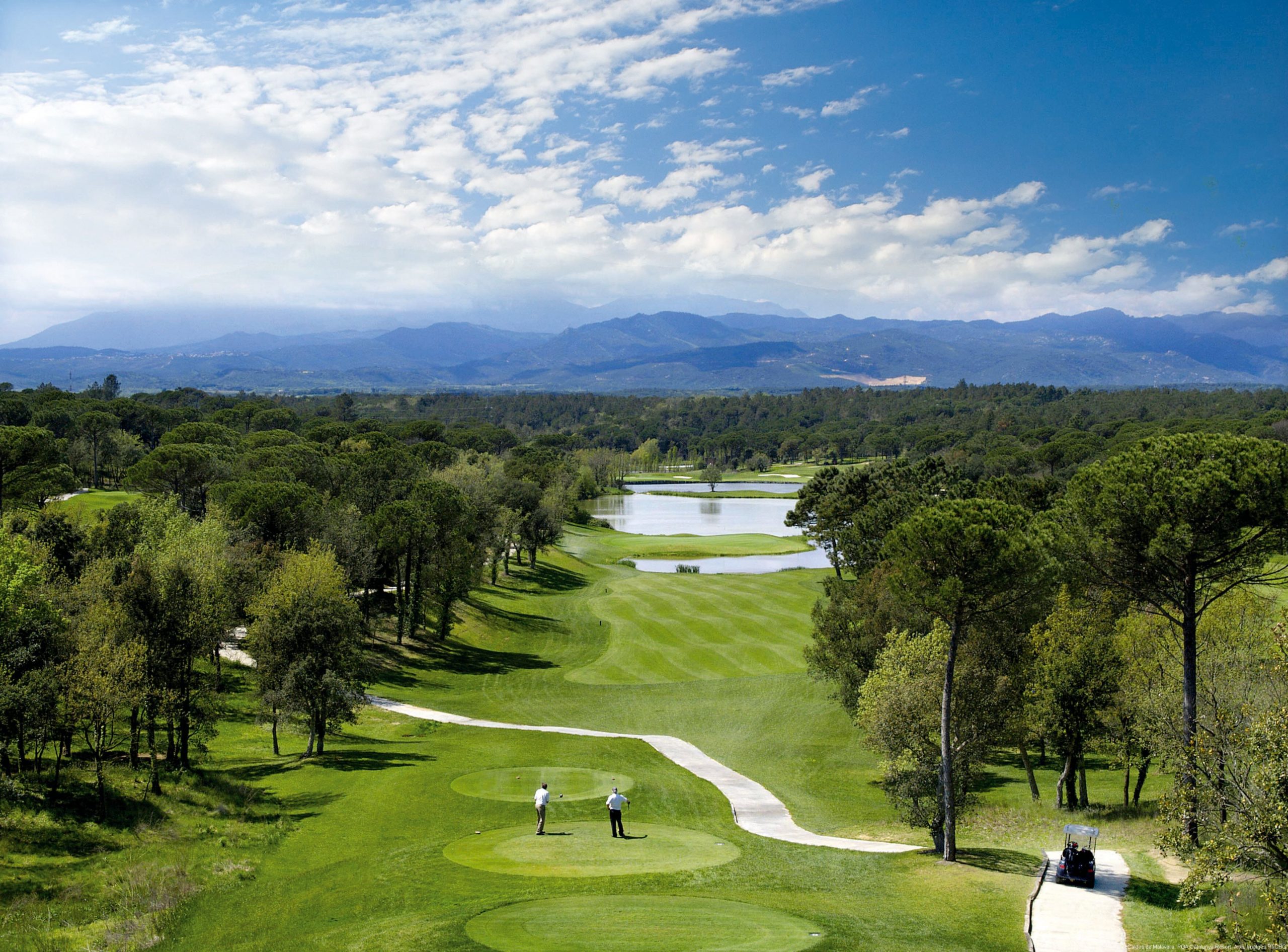
For golf lovers, there is the option of visiting the Camiral, A Quinta do Lago Resort, with a golf course in a beautiful landscape, but instead we choose to drive along the roads that take us to La Garrotxa in the south, a district marked by its volcanoes and lava-covered landscapes. We spend the afternoon at Hostalets d’en Bas, one of the beautiful villages of the Vall d’En Bas. This municipality, which comprises several small towns, cradles the Fluvià River, the mouth of which we crossed a couple of days before when we passed through the Bay of Roses.
Wine cathedrals
We’ll continue along the D.O. Terra Alta Wine Route. This county boasts the world’s largest production of white Grenache. To learn more about the rich history of this distinctly Mediterranean grape, we’ll visit the “wine cathedrals” of Gandesa and El Pinell de Brai, the most impressive of Catalonia’s modernista wineries. As we pass through La Ribera d’Ebre, we’ll promise to return during the flowering season, between February and April, when the almond, peach, and cherry trees fill the fields with shades of white and pink.
From Tarragona to Reus: history and modernism
We leave Tarragona on cycle paths and small roads that take us away from the city, following a flat, pleasant route, and almost without realising it we enter Reus. We cross the centre, where we find the Plaça del Mercadal, dominated by the modernist building of the Gaudí Centre, where we can learn about the life and work of the architect. Passing through this city invites us to have a vermouth, a drink with a long tradition since the late 19th century, before heading back into the countryside. A perfect combination of heritage and Catalan authenticity.
Towards Garrotxa
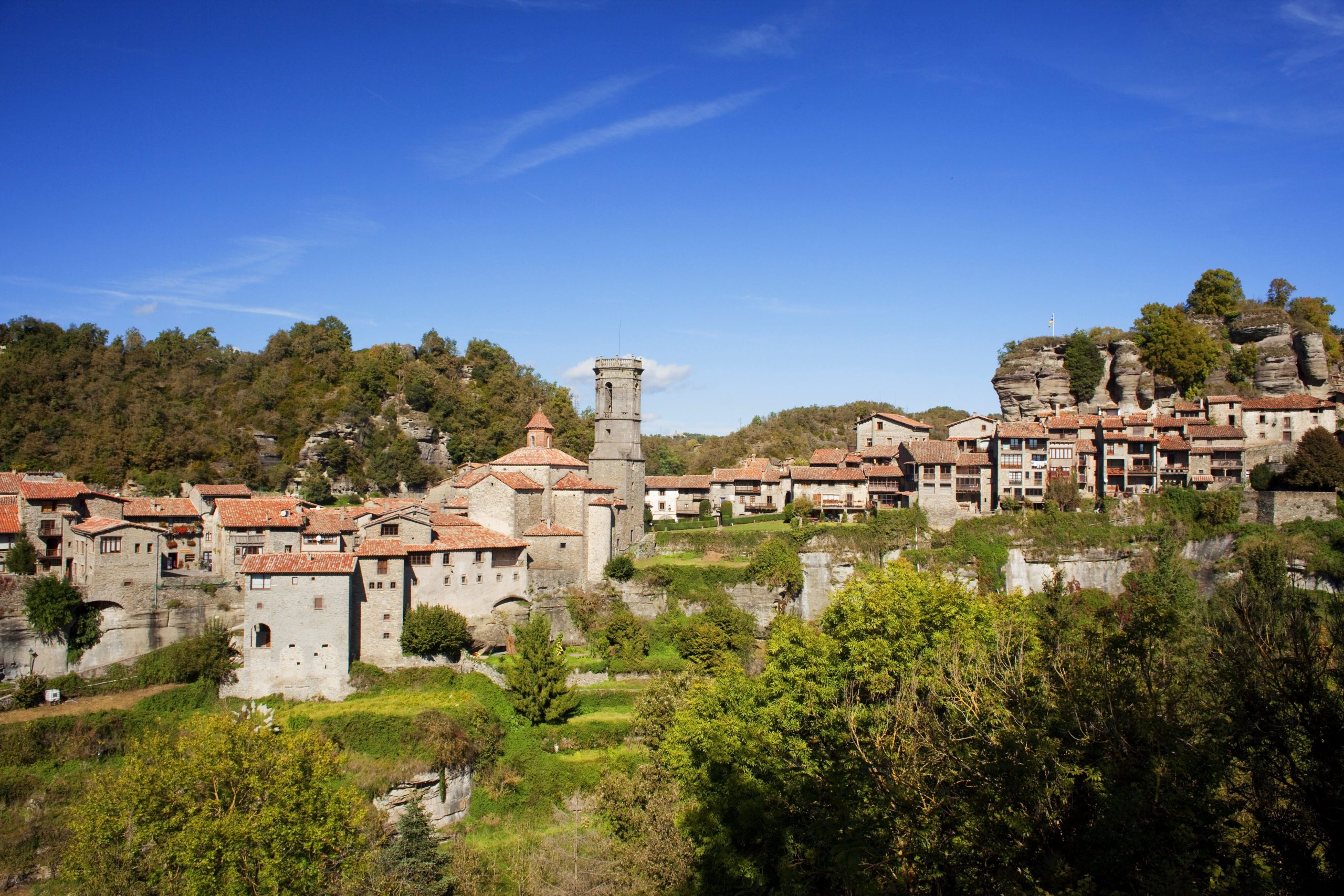
The morning will begin in Girona to experience the highlights of its heritage, Catalonia's best-preserved Jewish quarter, Arabic baths, colourful houses on the River Onyar and the Cathedral of Santa Maria, along with a guided tour of the city's flavours: xuixo pastries, local cheeses and ice cream made by one of the Roca brothers. To get to Rupit, we’ll drive across the southern part of the Garrotxa Volcanic Zone Natural Park, an exceptional landscape featuring volcanoes, lava beds, dense forests and small towns offering lovely opportunities for rural tourism. Once we reach Rupit, after a lunch featuring dishes from the local mountain food so characteristic of Collsacabra, a hearty cuisine that never fails to include traditional Osona sausages and stews, we will hire a guide to tell the story of this town at the foot of a huge rock on which a castle once sat. The village is surrounded by forests and waterfalls where you’ll have the chance to relax in the heart of nature.
From Sant Joan de les Abadesses to Camprodon
We leave Sant Joan de les Abadesses following the Via Verda del Ferro i del Carbó to Sant Pau de Segúries, a very gentle and pleasant stretch that follows the course of the Ter river through forests and meadows. After the greenway, we continue along secondary roads to Camprodon, one of the most emblematic villages in the area. Its Romanesque bridge over the Ter river, the main street and the stone houses reflected in the river create a welcoming and authentic atmosphere.
A perfect pairing
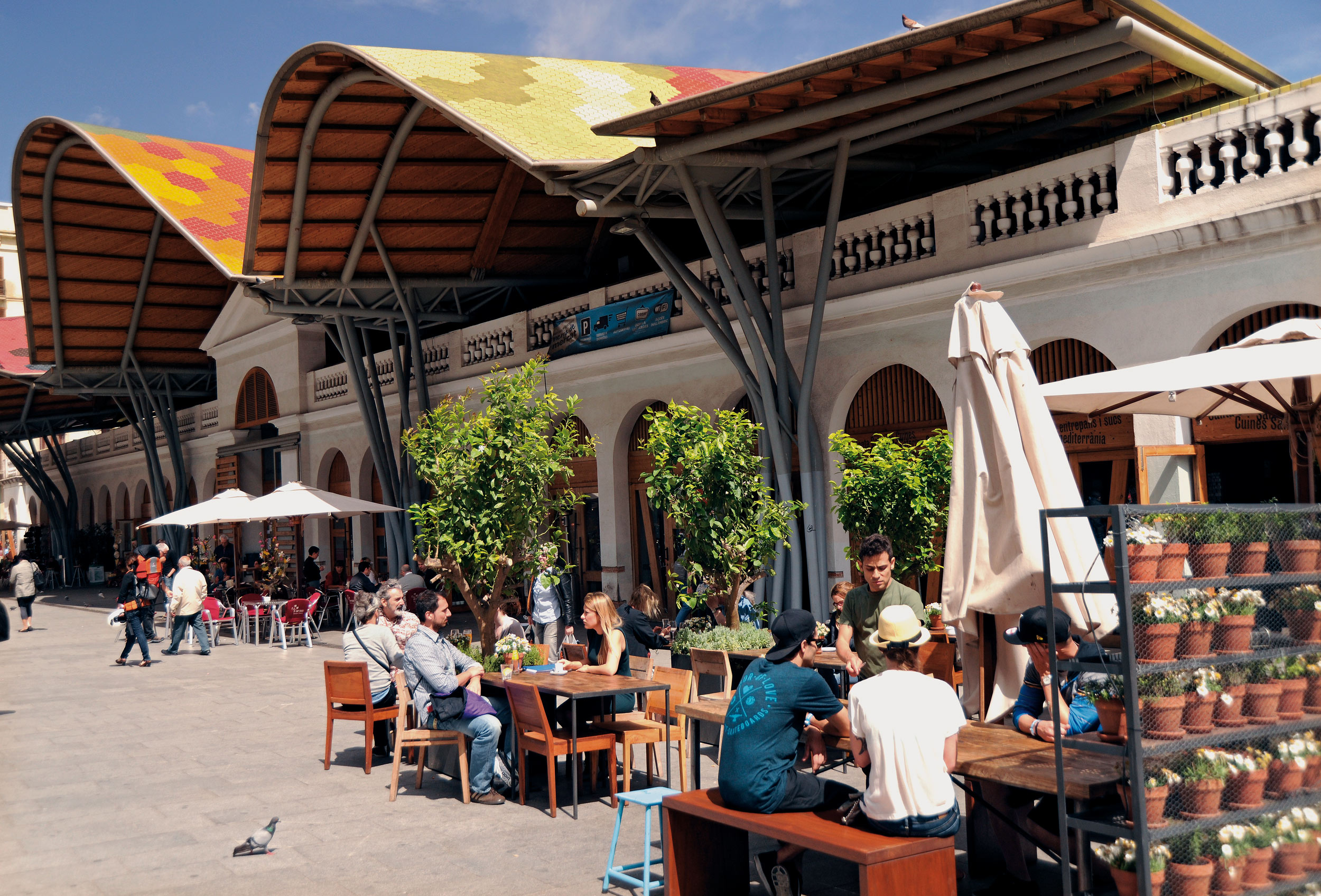
Modernisme and chocolate – there’s no better way to start. After departing from a charming Modernista-style hotel, we’ll visit two shops: one of a chocolate brand founded at the end of the 19th century, taking us back to childhood with every bite, and another avant-garde shop brimming with imagination in every one of its confections. The tour ends with a cup of hot chocolate among the great modernista buildings on Passeig de Gràcia. Since one of the best ways to get a feel for a city is to visit its markets, our next stop will be Santa Caterina, one of the city’s 39 municipal markets, where we’ll select products for a seafood rice cooking workshop.
Villages of the Val d’Aran
We have seen that the Val d’Aran is a place of deep superstitions, fire festivals that are an Intangible Cultural Heritage and artisans who spend hours making ceramics, wrought iron and sausages such as the fuet, known here as langoisa seca. The day begins with visits to the towns of Arties, featuring notable Renaissance houses in its old town, and Salardú, where we see one of the aranese Romanesques, Sant Andrèu, a church with an octagonal tower, stunning wall frescoes and its wooden Christ. Arties and Salardú can also be reached via E-BTT, electric mountain bikes. There are other options for getting to known the valley's quirks, such as the nearby villages of Escunhau, Bagergue and Tredòs, but we believe that the landscapes of the area are best experienced slowly and on foot, so we choose to take another easy hike. If you’re looking for a little more relaxation, you can opt for a visit to the Banhs de Tredòs, the highest-altitude thermal spa in Europe, with a stunning location in the heart of nature.
Montgarri and the source of the Noguera Pallaresa
We leave the asphalt behind and take the forest track that gently descends towards the sanctuary of Montgarri, one of the most beautiful and emblematic places in the Val d'Aran. The track runs parallel to the Noguera Pallaresa river, between green meadows and forests of fir and birch trees. In summer, the pastures are filled with horses and cows, and the feeling of calm is absolute. The Montgarri Sanctuary, converted into a refuge, is an ideal place to take a break and enjoy the high mountain atmosphere. We continue down the track until we enter the Bonabé valley, leaving the Val d'Aran behind and entering the Pallars Sobirà.
Cuisine of Terres de l’Ebre
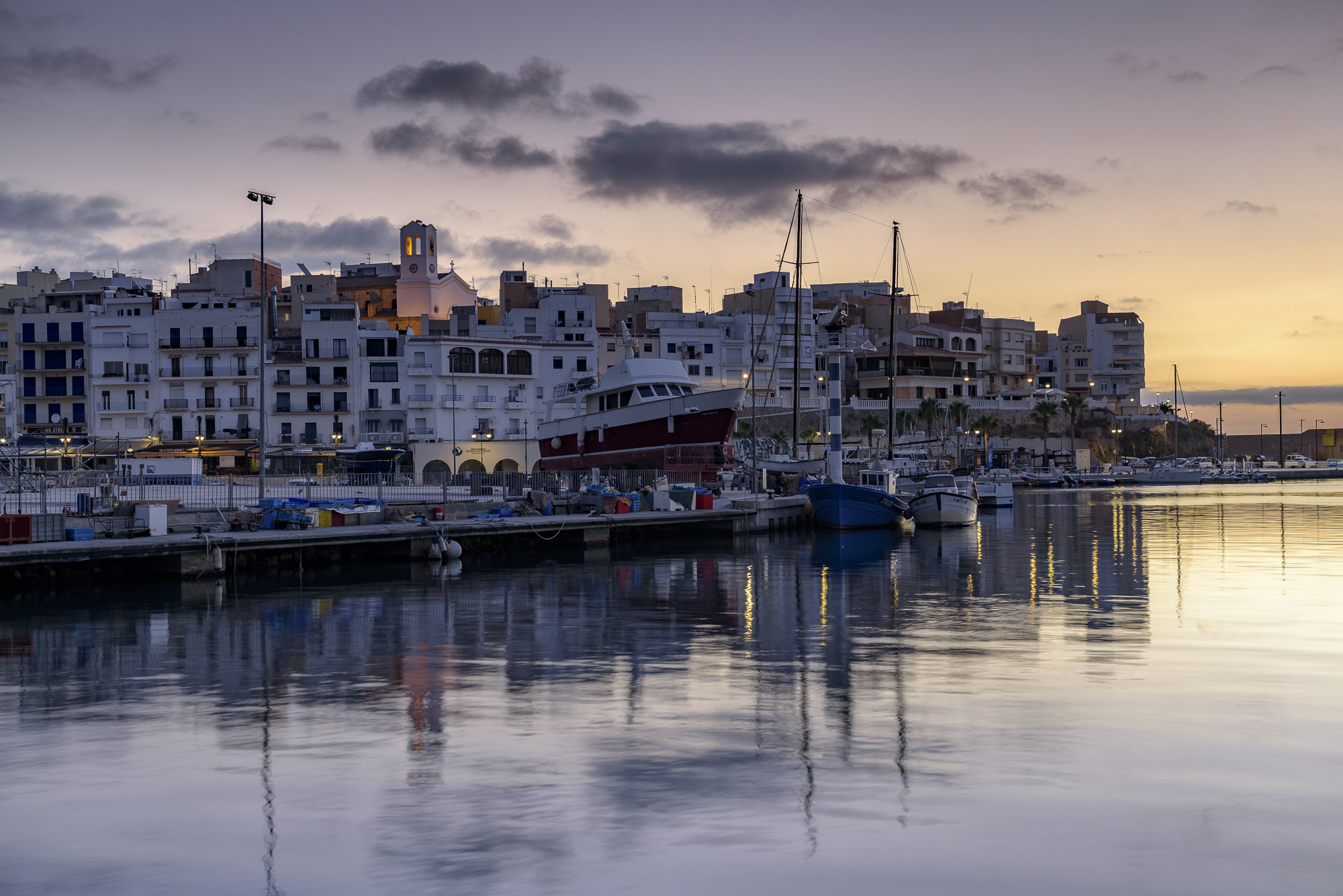
We will leave Tarragona early to make our way to the Terres de l’Ebre. Our day begins with a visit to L’Ametlla de Mar, a town with some of the best and most varied coves on the coast of Catalonia and one of the official Marine Districts and Villages regions. At the port, which still retains the charm of an ancient seaside town, we will climb aboard a boat and put on wetsuits to swim with Mediterranean blue fin tuna, huge creatures weighing over two hundred kilograms. The activity ends with a tasting. Gastronomy is one of the main draws in Terres de l’Ebre. An excellent alternative to swimming with the tuna is to continue on to L’Ampolla to explore the Fangar Bay, an activity that includes a visit to the mussel farms where the prized oysters and mussels are grown. A fresh product that you can try right there with a glass of Cava.
La Garrotxa in a balloon
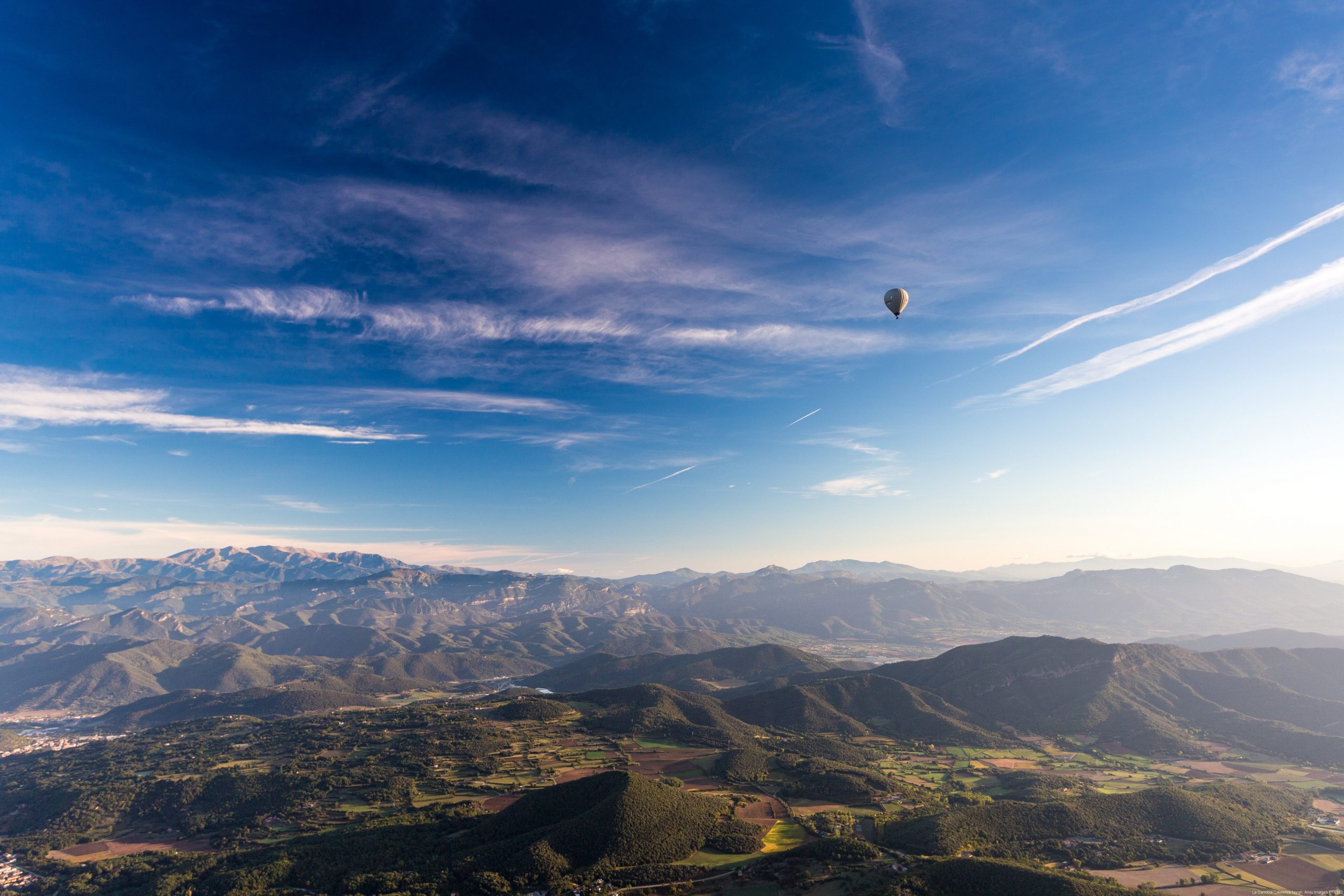
The alarm wakes us up before dawn. The early morning is more than justified because we have booked a flight in a hot-air balloon over the La Garrotxa Volcanic Zone Natural Park, a unique place on the peninsula, featuring a landscape of exceptional value and dense forests of beeches, oak trees and holm oaks. Part of the group decides to explore the volcanoes from the ground and will cycle one of the stretches of the Carrilet Greenway Olot. Those of us who are going to fly in the balloon travel just five kilometres to the south of Olot. The experience begins with assembling the instruments and inflating the balloon. The first rays of sunshine kick off this adventure, which is for the most part silent and contemplative. At our feet are the Volcano of Santa Margarida and el Croscat; in the distance we see the fog-covered Pyrenees. It is impossible to capture this kind of beauty in the frame of a photograph, it has to be experienced. While you can also explore them on foot, nothing matches the view you get from the sky.
Terraced vineyards at the foot of the Serra del Montsant
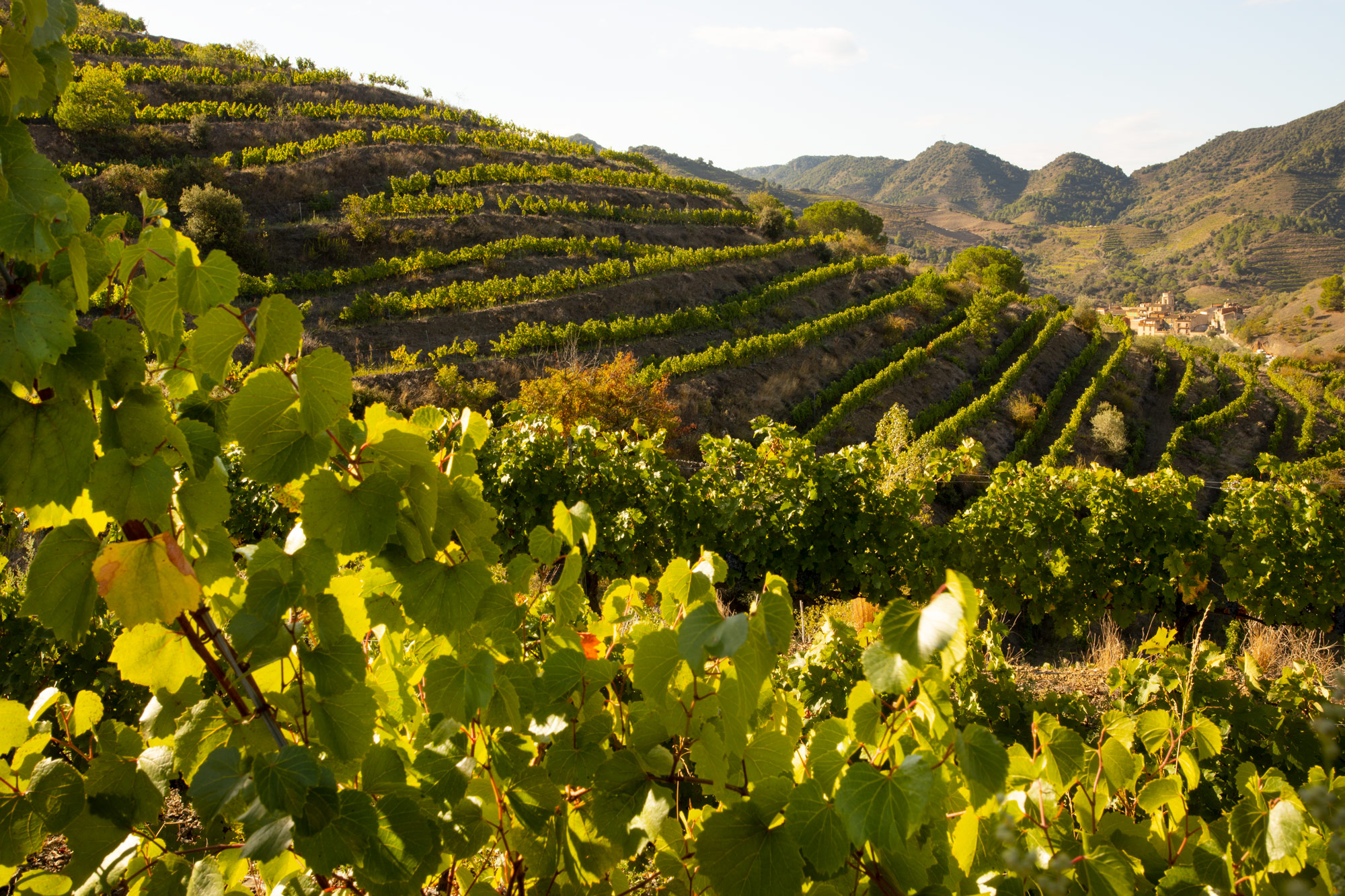
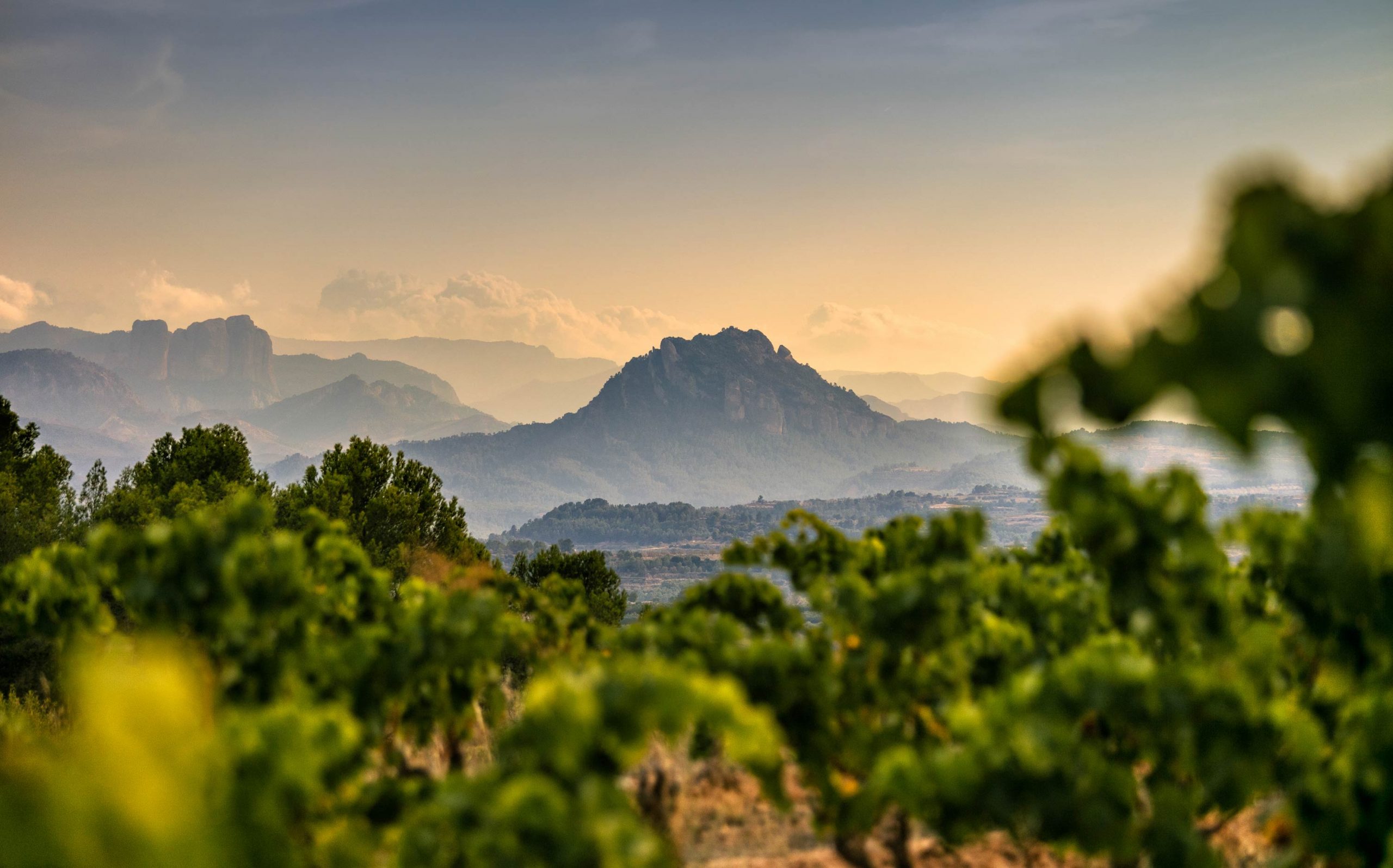
In Vilella Alta, we leave the tarmac and take a track that crosses the heart of the Priorat, a highly regarded wine DOQ, among terraced vineyards. The climb is steady but pleasant, with some more technical and rocky sections that require extra attention. The surroundings are majestic. To the right, the terraced vineyards seem to go on forever, and to the left, the stone walls of Montsant tower above us. The silence is broken only by the sound of the wheels on the gravel and the wind coming down from the mountains. We return to the road for the final few kilometres that take us past the historic Monestir d'Escaladei, the origin of Priorat viticulture, before reaching Poboleda, a small stone village that exudes peace and authenticity.
Beyond grapes and glasses
After following the Miravinya Route, which will take us to five viewpoints, there are several options to choose from, such as exploring the Xató Route (centred around the traditional Catalan salad) or tasting the malvasia wines of Sitges, on the Costa Barcelona. However, we’ll stay on the Penedès Wine Route for two activities: a tasting of extra virgin olive oil (EVOO) in La Bisbal del Penedès and a tasting in El Vendrell of the vinegars that have been served at the Nobel Prize award ceremonies for more than a decade. The day will end with a ride in a traditional farm cart from the Modernista-style winery in Nulles, on the D.O. Tarragona Wine Route.
The Vielha tunnel and the gateway to the Val d’Aran
We leave the reservoir behind and continue parallel to the N-230 road, passing by the Besiberri ravine and the Conangles refuge, surrounded by a high mountain landscape of forests and quarries. We arrive at the entrance to the Vielha tunnel, a historic infrastructure that connects Alta Ribagorça with the Val d'Aran. The tunnel is passable by bicycle, provided that the SOS Vielha service is notified in advance via the cable car located at the entrance; the staff temporarily close one lane to traffic to ensure the safe passage of cyclists. It is compulsory to carry a light and a reflective vest. Inside the tunnel there is a 400-metre climb and the rest is all downhill. On leaving, we take the Camin deth Port, a downhill track that follows the Nere river to the centre of Vielha, the end of the stage and gateway to the Val d'Aran.
From Coll d’Ares to the Pallars basin
We begin a long descent along a narrow road with broken asphalt, where caution is advised. The descent winds through pine and oak forests, alternating between shaded sections and clearings that offer privileged views of the Terradets reservoir and the Montsec mountain range. We pass through small villages such as Sant Esteve de la Sarga, l'Alzina and Moror, where time seems to stand still, until we reach the Llimiana viewpoint, where we rejoin the Ruta dels Llacs, which we will follow until the end of the stage.
From La Pobla de Segur to Sentís
We leave La Pobla de Segur on a secondary road that climbs and descends gently between farmhouses and small fields until it joins the Eix Pirinenc. The route takes us through Senterada, a small village nestled between mountains, and continues northwards to the turn-off for Xerallo. From here, the slope increases significantly: a narrow, traffic-free road climbs steeply to Sentís, a stone village located at an altitude of over 1,200 metres, where the landscape is entirely mountainous.
From the forest to the coast: crossing the Maresme region
After the pass, there is a steep descent to Sant Iscle de Vilalta. Here begins a new demanding climb that leads to the Sender dels Miradors, from where we can already see the sea sparkling on the horizon. The track descends towards the Maresme, through woods and fields, until it reaches Canet de Mar, a coastal town with a rich modernist and seafaring tradition, also known for its craft workshops and the architectural legacy of Domènech i Montaner. We continue along rural paths that cross small streams to Arenys de Munt, where we join the Coll del Pollastre road (267 m). It is a short climb but full of curves and good views over the coast, culminating in a rapid descent to Mataró, the capital of the Maresme, an ancient Roman city and today a lively town with a rich modernist heritage, such as the Nau Gaudí, Antoni Gaudí's first work.
From the foot of Montseny to the forest tracks
We leave Sant Celoni heading south, crossing the AP-7 motorway via an underpass to enter the Olzinelles valley. The road is narrow and quiet, surrounded by holm oaks and pines in a green and humid environment that preserves the essence of Montnegre. Before reaching the village, we turn right to begin the climb up a forest track that rises through the woods to Coll de Can Poliva (471 m). The atmosphere is totally Mediterranean: dusty tracks, the scent of pine and rosemary, and views that open up from time to time.
Catalonia’s only national park
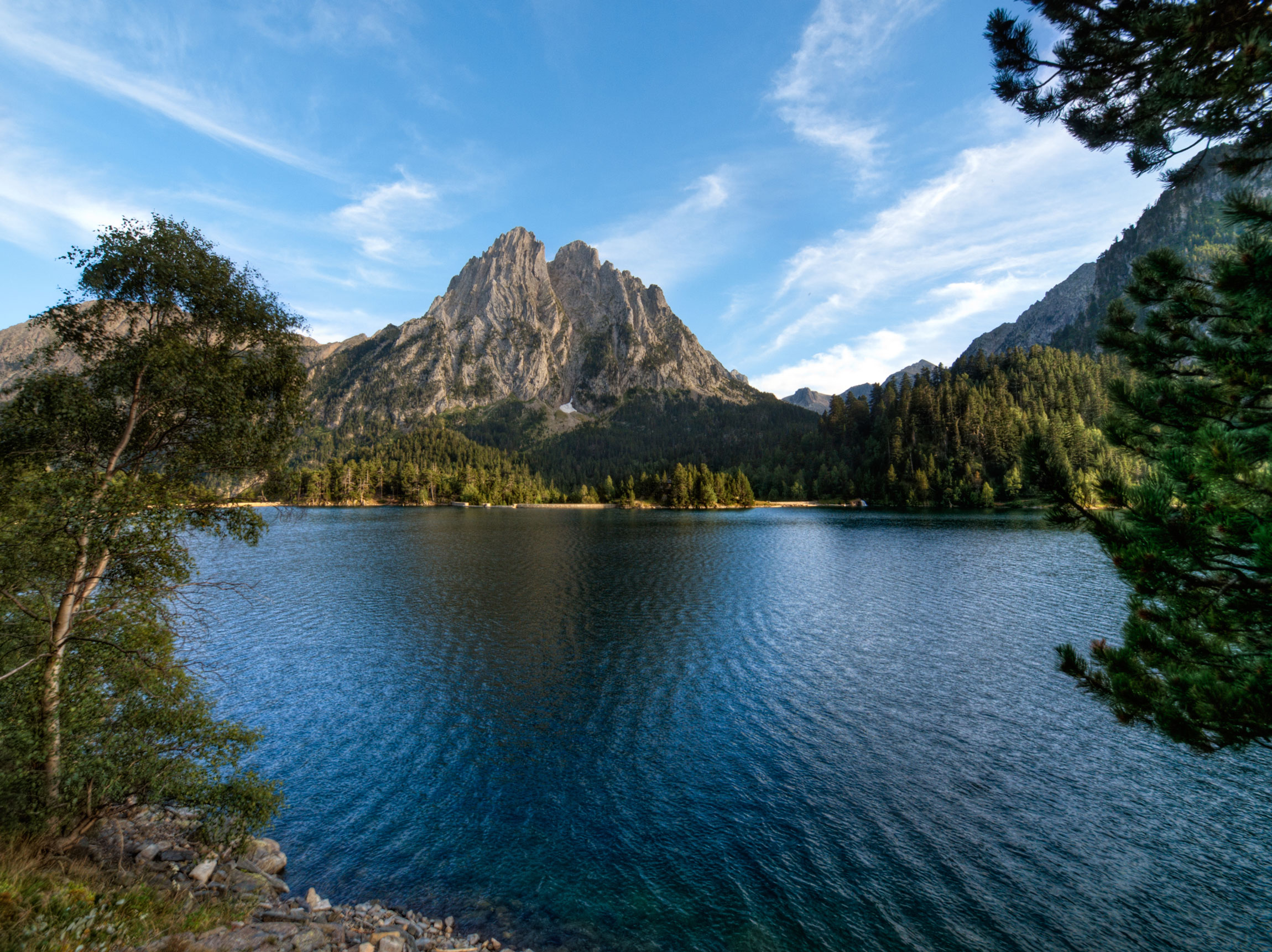
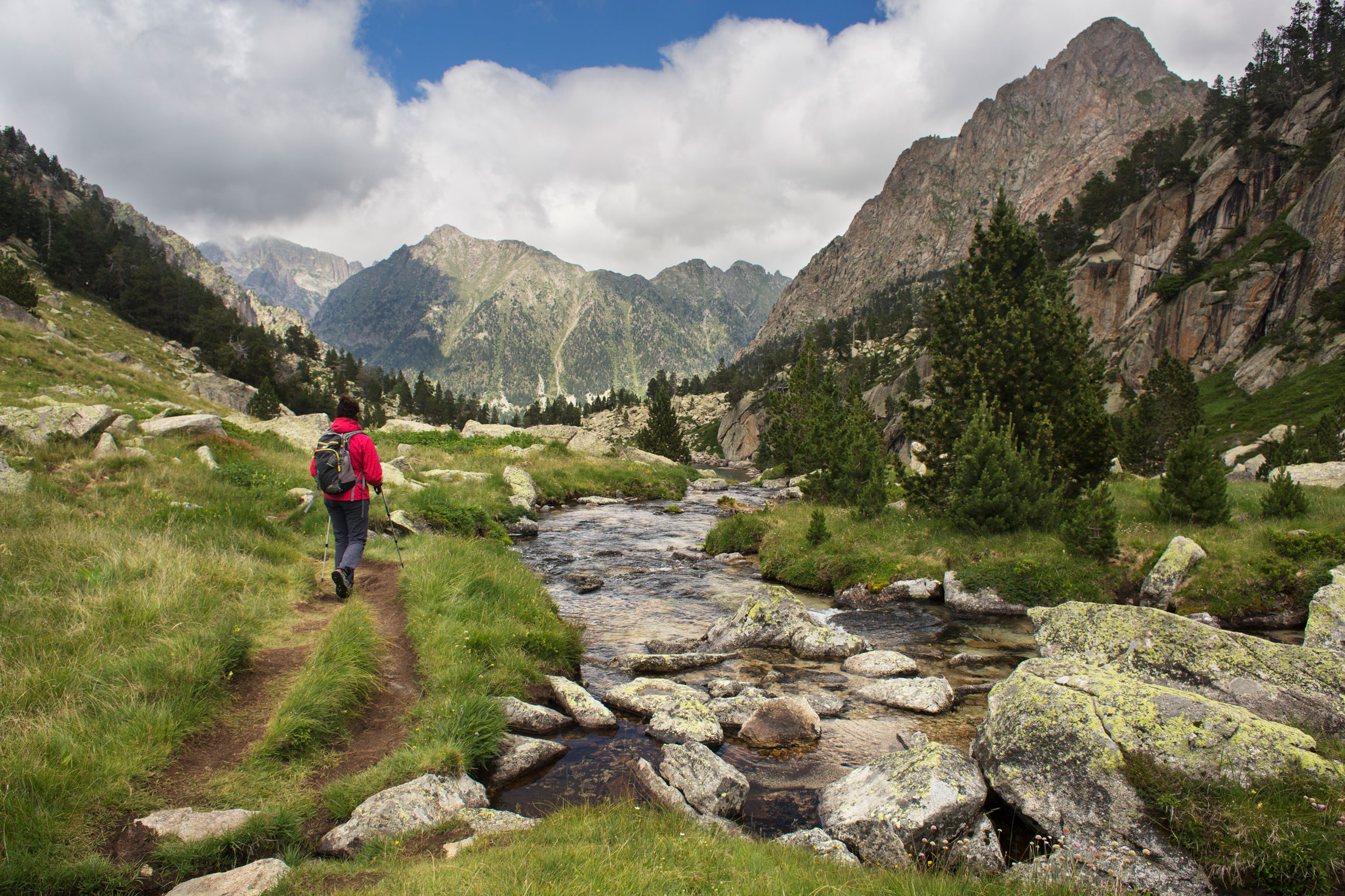
The memory of constellations passes the time as we travel between La Pobla de Segur and la Vall de Boí. Upon reaching Senterada, we see the signs for Vall Fosca, another of Catalonia’s natural wonders that deserves a detour. The road begins with gradual ascent to the top of the Coll de la Creu de Perves, with good views of the Pyrenees. From El Pont de Suert, the road passes between hills to the entrance gate of the Aigüestortes i Estany de Sant Maurici National Park. At this entrance, there is a park information centre. Catalonia's only national park allows us to enjoy a spectacular natural setting: more than 200 lakes of glacial origin are surrounded by peaks around 3,000 metres high. In spring and summer, gentians and rhododendrons add a splash of colour to the green meadows.
The National Park has two other entrance points. Boí and Espot are the villages that contain the main centres and where it is necessary to go in order to visit the best-known spaces, such as Aigüestortes and the Estany de Sant Maurici pool. The third entrance is via the villages of Sort and Llessui, where there is also a park information centre.
Skirting the Mediterranean
We leave Sitges via its seafront promenade, with its Indian and modernist houses by the sea, using the cycle lane with the intense blue of the Mediterranean on our left until we reach the Jardins de Terramar. We take a greenway that crosses a cool, shady forest to Les Roquetes del Garraf. We cross the regional capital, Vilanova i la Geltrú, and leave the coastal atmosphere behind to head inland. The road gradually gains height until we enter the Foix Park.
From the coves of Cap de Creus to the Aiguamolls de l’Empordà
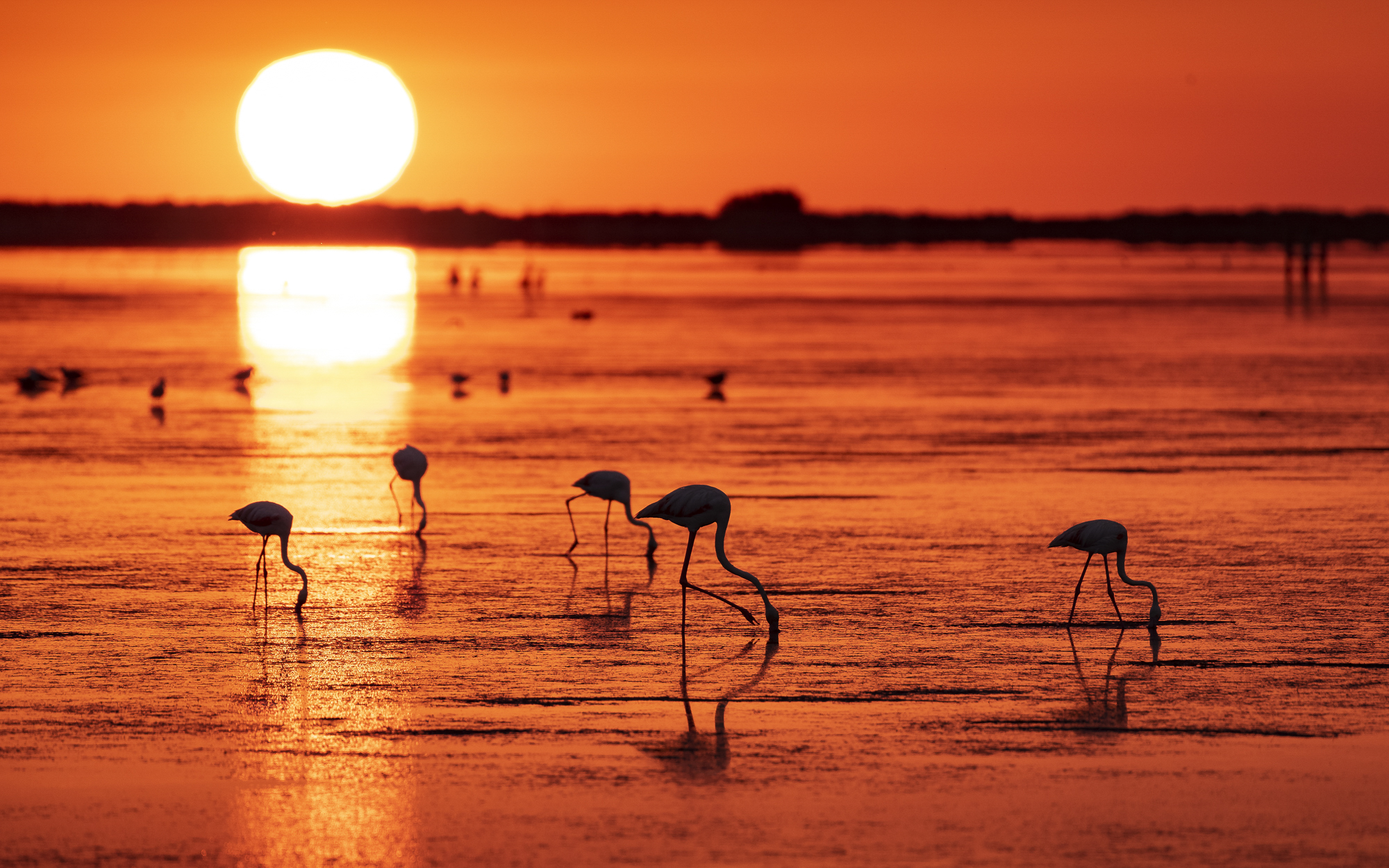
After Cadaqués, the route enters inland tracks that cross the southern slope of the park. The path passes close to Castell de la Guardiola and descends to the coast, following sections of track that alternate between ascents and descents. We pass by iconic coves such as Montjoi and Murtra. After a final short climb, we reach a natural viewpoint offering a privileged view over the entire Golf of Roses. From here we descend towards Roses, which we cross, and head towards the plain along rural paths that enter the Aiguamolls de l'Empordà Natural Park. The landscape changes completely: the mountains give way to rice fields, lagoons and canals inhabited by water birds such as grey herons and pink flamingos. The last few kilometres are completely flat, ideal for a relaxed ride to Castelló d'Empúries, an ancient county town with an important historical heritage and the gateway to the Empordà plain.
From the Aiguamolls de l’Empordà to Sant Pere Pescador
We leave Castelló d'Empúries by bike and cross the Aiguamolls de l'Empordà Natural Park, one of the most important wetlands in Catalonia. The tracks are wide and perfect for cycling through farmland and floodplains inhabited by grey herons, flamingos and mallards. The landscape is open and flat, with the sea nearby and the Pyrenees in the background. After crossing the Fluvià river, we arrive at Sant Pere Pescador, a village marked by the wind and the river that winds its way to the Mediterranean.
Among the meadows and mountains of the Pre-Pyrenees
We leave the asphalt and take a track that continues to climb to Coll de Sant Pere (1,420 m) and, further up, to Coll de Sas (1,483 m), the highest point of the stage. The path winds through high mountain meadows and sparse forests, with spectacular views of Tossal de la Costa (1,867 m) and the Barrabés valley on the left. It is a solitary and authentic stretch, where only the wind and the sound of the wheels on the gravel can be heard. After the pass, a short descent takes us to the small village of Sas, a cluster of stone houses with Pyrenean charm.
Nature on your plate
Around El Montseny, there are several activities that combine gastronomy and nature, such as a walk through a forest of centuries-old chestnut trees, especially recommended in autumn, or a tasting of beers made with the waters of this natural park. Nearby, in the Guilleries Massif, we’ll sample local products such as cheeses, nuts and berries to the sound of water and birdsong. The Farming Museum in Fogars de la Selva offers a further insight into the days when agriculture dominated the region.
Around lake of Banyoles
Once on the plain, the route links up with the Volta a l'Estany de Banyoles cycle route, a circular route of about 6.5 km that goes around the lake on cycle paths. It is a perfect end to the route: a peaceful setting, full of birds and aquatic vegetation. The reflection of the sky on the water and the feeling of calm bring to an end a journey that has taken you through the entire La Garrotxa Volcanic Zone Natural Park to the still waters of the Banyoles lake.
Vall de Lord
Although Vall de Lord is about twenty miles north of Solsona, this quick detour from our route is worth it. At dawn, the morning mists emerge from the Llosa de Cavall reservoir, whose landscape is great for adventure sports such as climbing, canyoning, paragliding and mountain biking. The play of light filtering through the mist fills my camera roll with striking images. When the sun is warm enough, I rent a kayak to roam those bright turquoise waters. With one last glance at the landscape from one of the bridges across the reservoir, I take the beautiful road that follows the Cardener river gorge to Solsona.
Following the Cardener to Manresa
We arrive at Súria, where it is worth stopping to visit its charming medieval old town, and continue along a track parallel to the Cardener river that takes us to Callús. From here, the route changes to a secondary road that winds through fields and farmhouses, with the landscape gradually transforming: the forests give way to more open and urbanised areas. We pass through Sant Joan de Vilatorrada and finally enter Manresa via the Camí de la Joncadella, where the first buildings herald our arrival in the capital of Bages and the end of a peaceful but contrasting stage.
The Gothic Quarter
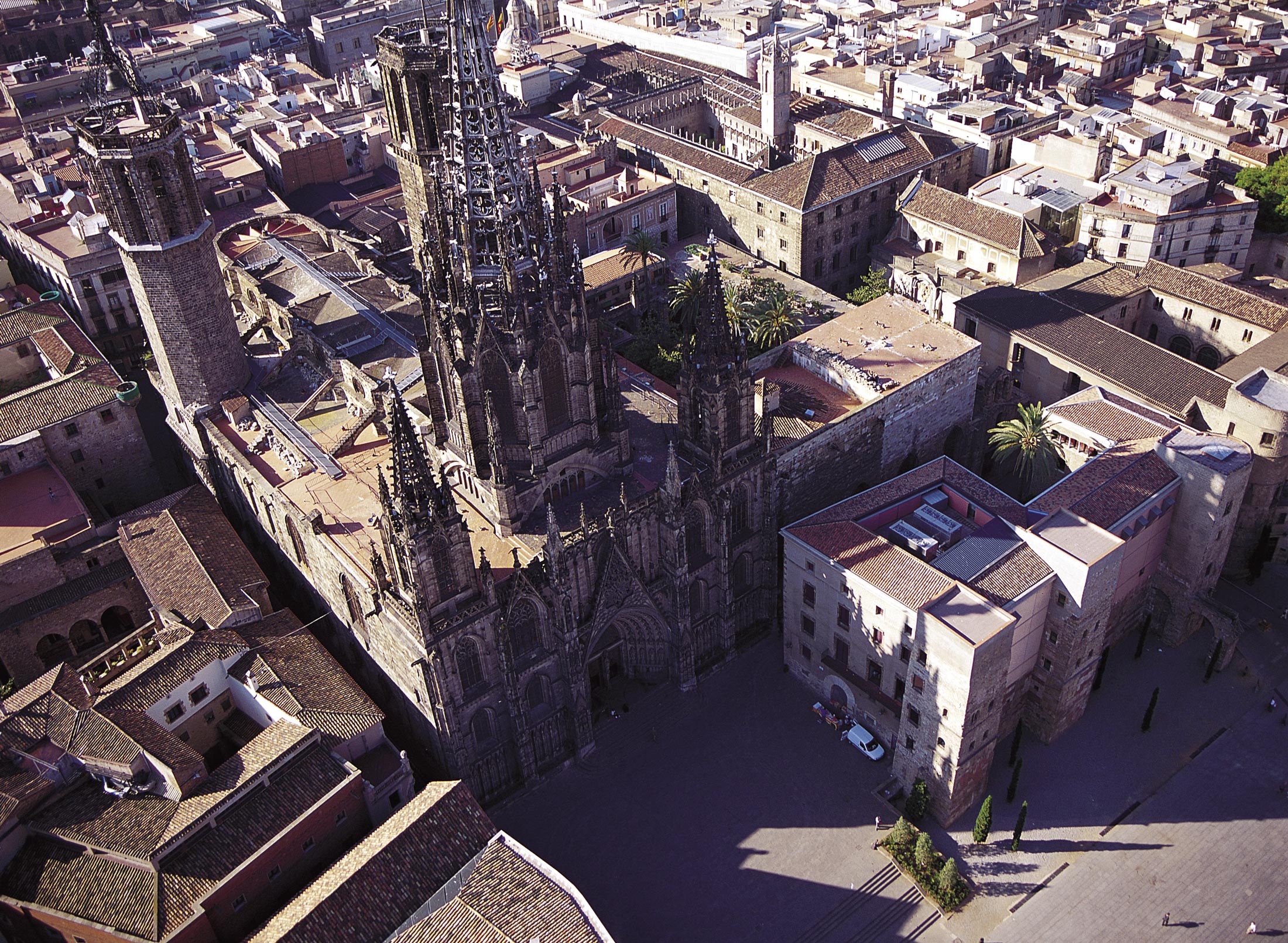
I return to the sea views, climbing to the Mirador de Colón lookout via the elevator installed inside the monument's column. Once I am back on the street, I round out my visit with a tasting of four Catalan wines: Alella, Pla de Bages, Catalunya and Penedès. As the first street lights flicker on, the night tour of Ciutat Vella and the Gothic quarter begin, visiting Santa María del Pi, the Cathedral and charming plazas like Sant Felip Neri, a place that speaks to the working man's Barcelona and still has wounds from the tragic Civil War on some of its walls.
L’Espluga de Francolí
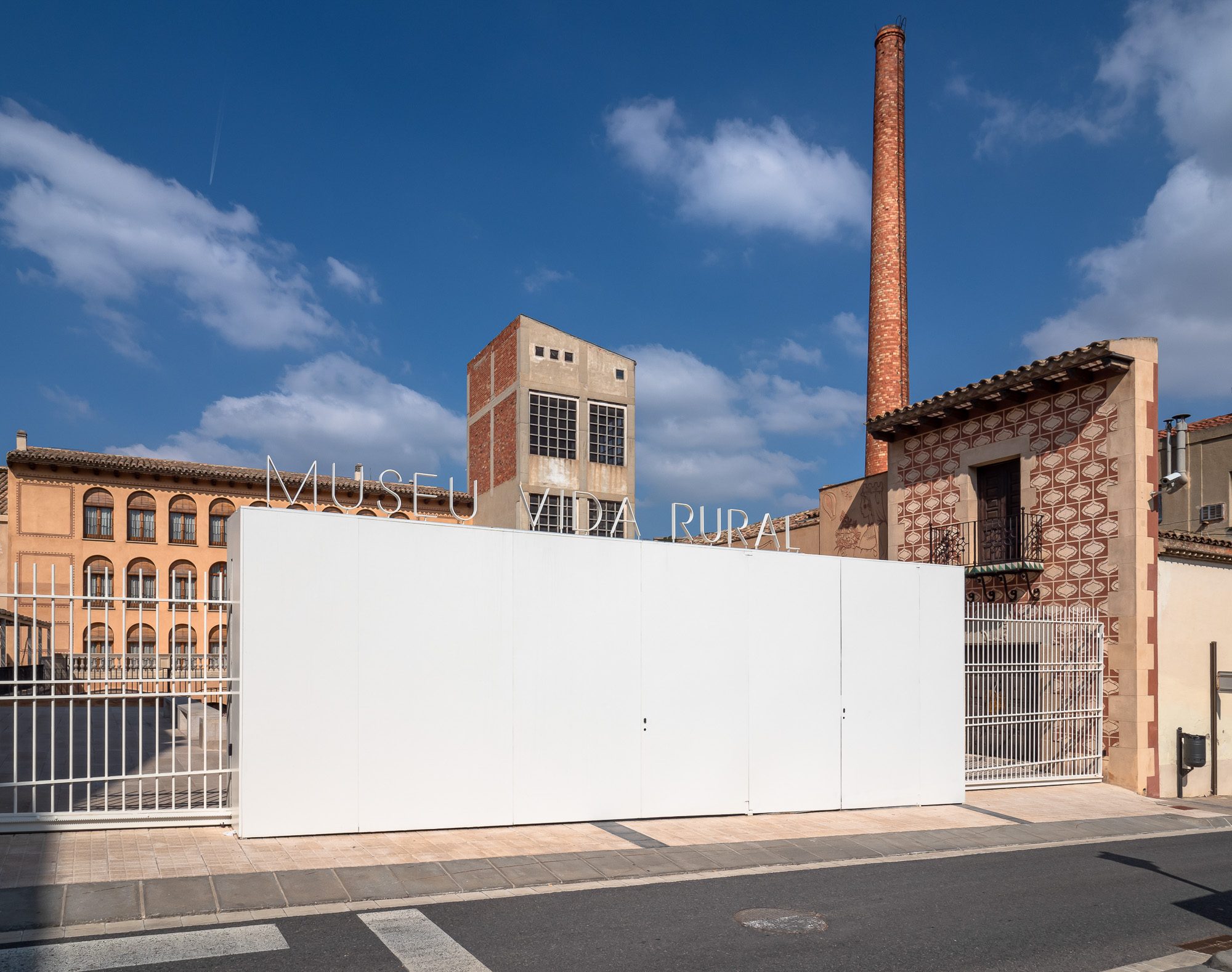
We continue on towards L’Espluga de Francolí to visit the Museum of Rural Life, where we learn about the values and hard work of the people in the countryside. This is a very moving visit thanks to the familiarity of many of the objects on display there, objects that represent ways of life our grandparents carried on and that have now disappeared. Without leaving the village, we continue to investigate the history of our ancestors but this time we take a much bigger leap through time, entering the Font Major cave to experience the geological and prehistoric past of the Tarragona area. If you're looking for a bit more adventure, there is also the chance to go on a tour of the caves. From L’Espluga de Francolí we continue our journey to enter the Lleida districts.
From the Ebre valley to the wine routes
We leave Móra d'Ebre and cross the river to head for Móra la Nova. From here, the route enters an area of Mediterranean fields and forests, with olive groves, almond trees and vineyards alternating between small hills and plains. We follow an easy track, with a constant gentle up and down, passing through Darmós and Capçanes, where the landscape already begins to reveal the character of the Priorat. Shortly afterwards, we reach the Pantà dels Guiamets, a small reservoir surrounded by pine trees and vineyards that provides a moment of calm and coolness before the final climb to Falset, the capital of the region and the cradle of wine.
Entrance to the Vall d’en Bas and end of the stage
The final section takes us towards La Garrotxa, following a gentle slope up to the Coll d'en Bas (589 m), the highest point of the route. From here, a slight descent takes us into Vall d'en Bas, one of the most fertile and beautiful agricultural areas in the region. Green fields, scattered farmhouses, forests and charming villages, and the outline of more than forty volcanic cones herald our arrival in Sant Esteve d'en Bas, the end of the stage and the entrance to the Garrotxa Volcanic Zone.
Descent and transition to Gironès
After the hill, we descend along the Camí de Caulés on a long downhill stretch to leave the massif behind and enter the more open lands of Girona. We cross the motorway via an underpass and cycle through fields, farmhouses and small pine and oak forests. The terrain is gentle and flat, ideal for maintaining a steady pace. We pass through Cassà de la Selva and Quart, quiet villages surrounded by farmland, where you can already breathe in the atmosphere of the Girona plain.
Descent towards Vallès: from Santa Fe to Sant Celoni
Once you have passed the highest point, a long and spectacular descent begins. The first few kilometres run through the Santa Fe del Montseny area, between natural tunnels of tall, shady trees. Further down, the road opens up and the bends multiply; it is a fast, fun descent with the asphalt in excellent condition. From several viewpoints you can see the Vallès plain and the coastal mountains in the background. As we lose altitude, the temperature rises and the vegetation changes, giving way to Mediterranean pine and oak forests. A final stretch along a gently sloping track takes us to Sant Celoni, a village with streets steeped in history, Baroque churches and medieval charm, where the stage ends.
A beautiful sunrise
I slept well in Montserrat. At the start of the morning I take a quick tour around the natural park of Montserrat, along paths that encourage peaceful walks and meditation while the first rays of sunlight paint the peaks of the most iconic rocks red, such as the Cavall Bernat, the Serrat del Moro and La Palomera. If the visit coincides with the performance schedule of the Escolania, one of the oldest music schools in Europe, it is worth entering the basilica to listen to how they sing the Virolai, a song also known as Rosa d’abril and dedicated to La Moreneta.
Rafting in Llavorsí
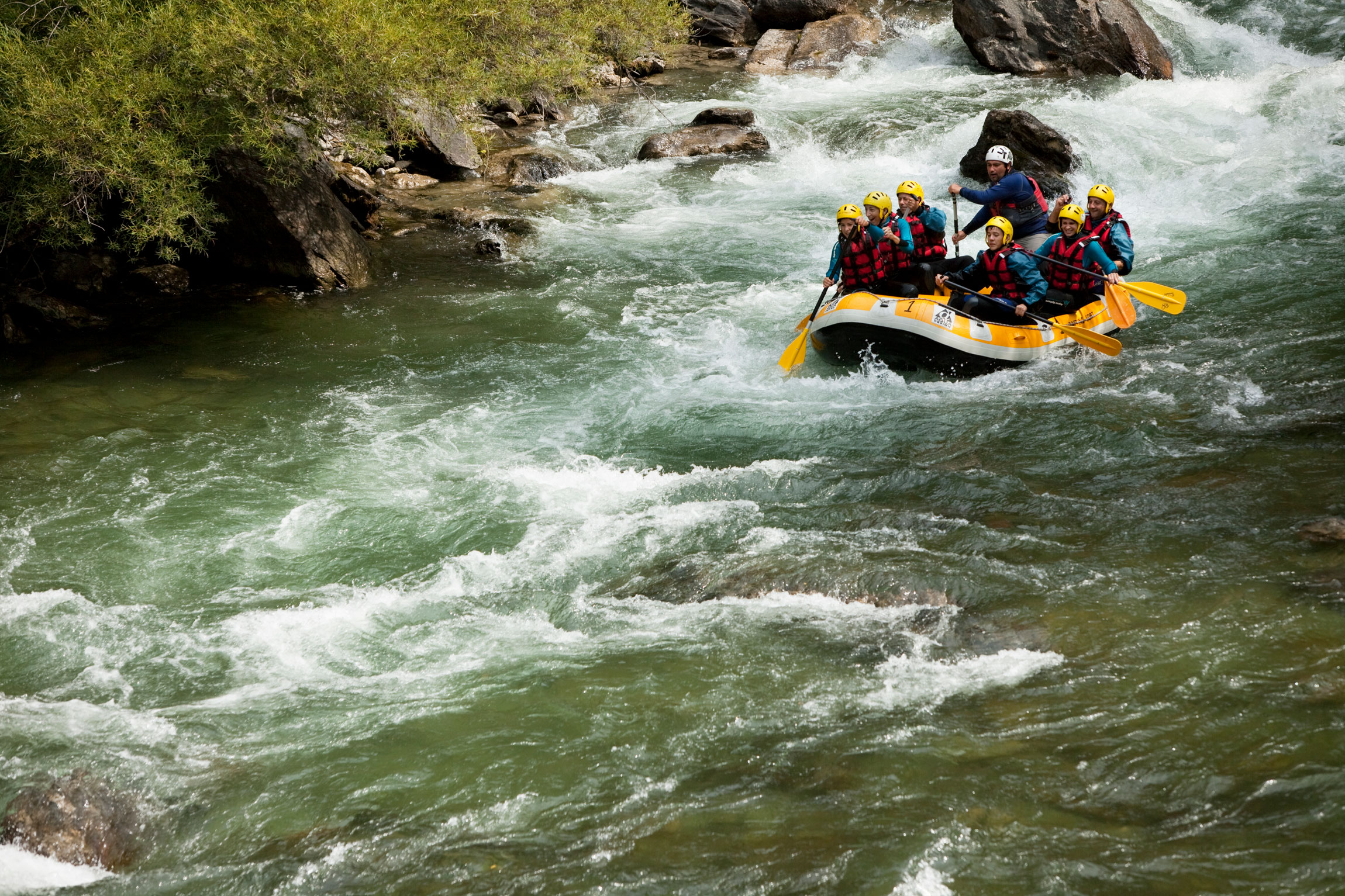
We have reached Llavorsí. The day promises plenty of excitement, as we are in one of the Catalan capitals of rafting alongside Sort, Rialp, Esterri d'Àneu and la Ribera de Cardós. We're looking at one of the best white-water rivers in Europe, the Noguera Pallaresa river, we can’t miss the opportunity to give it a whirl. Wrapped in neoprene and accompanied by an expert rafter, we will disembark at Sort having experienced a thrilling adventure. If you are looking for something a little more peaceful, in the Valls d’Àneu and Vall d’Àssua we will have the option of visiting a couple of interesting ecomuseums and the House of the Brown Bear of the Pyrenees.
Crossing La Molina and Masella
From the pass, we leave the asphalt road and take a scenic track that crosses the ski resorts of La Molina and Masella. The path alternates between open stretches of high mountain meadows and sections of sparse forest, with constant views over the Cerdanya valley. The descent is technical in places, with steep slopes and rocky areas, but the landscape makes up for any effort: the Cadí behind us and the whole Cerdanya plain unfolding at our feet.
A walk through the woods
In Senterada, we’ll explore the forest with a botanical guide. Through legends and traditions, we’ll learn how to identify herbs and mushrooms and how to prepare different recipes, such as preserves. The Àssua Valley is the ideal place to discover the work of shepherds, accompanying one with his flock or visiting an eco-museum that shows unique aspects of this profession. The last stop is the Boí Valley, in the Romanesque mountains that have UNESCO World Heritage designation, where organic Pyrenean cattle graze. Their meat is highly prized in top restaurants.
Culinary currents
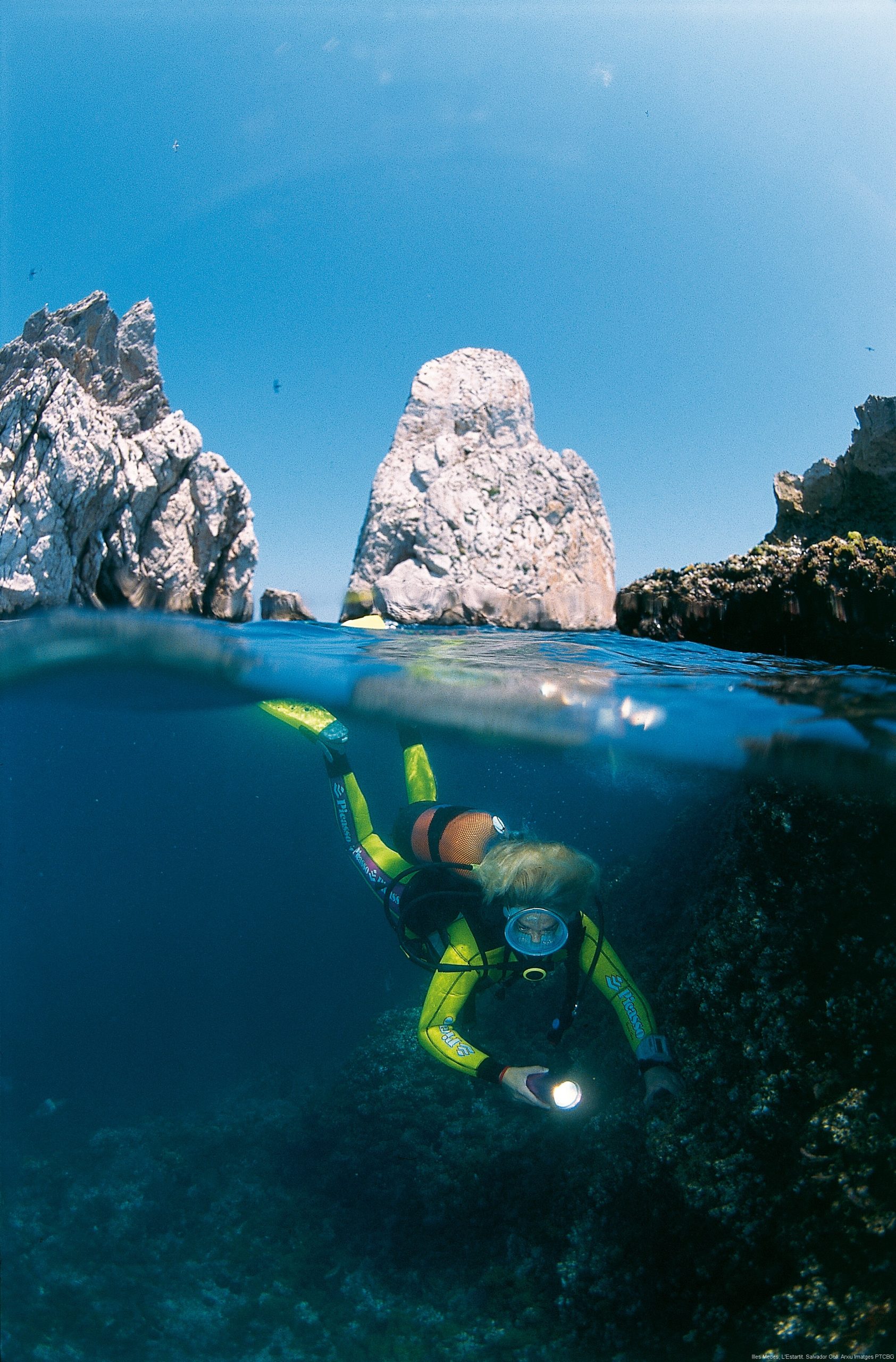
The first stop of the day is in L’Ametlla de Mar, where we’ll experience the thrill of swimming with Mediterranean bluefin tuna. All the options available – snorkelling, scuba diving or an educational tour – end with a tasting. Every year the town organises special events dedicated to the bluefin tuna. In the fishing village of L’Ampolla, we’ll sail across Fangar Bay and visit mussel and oyster farms, tasting fresh seafood and learning about the fragility of the surrounding ecosystem.
Walking through Aigüestortes
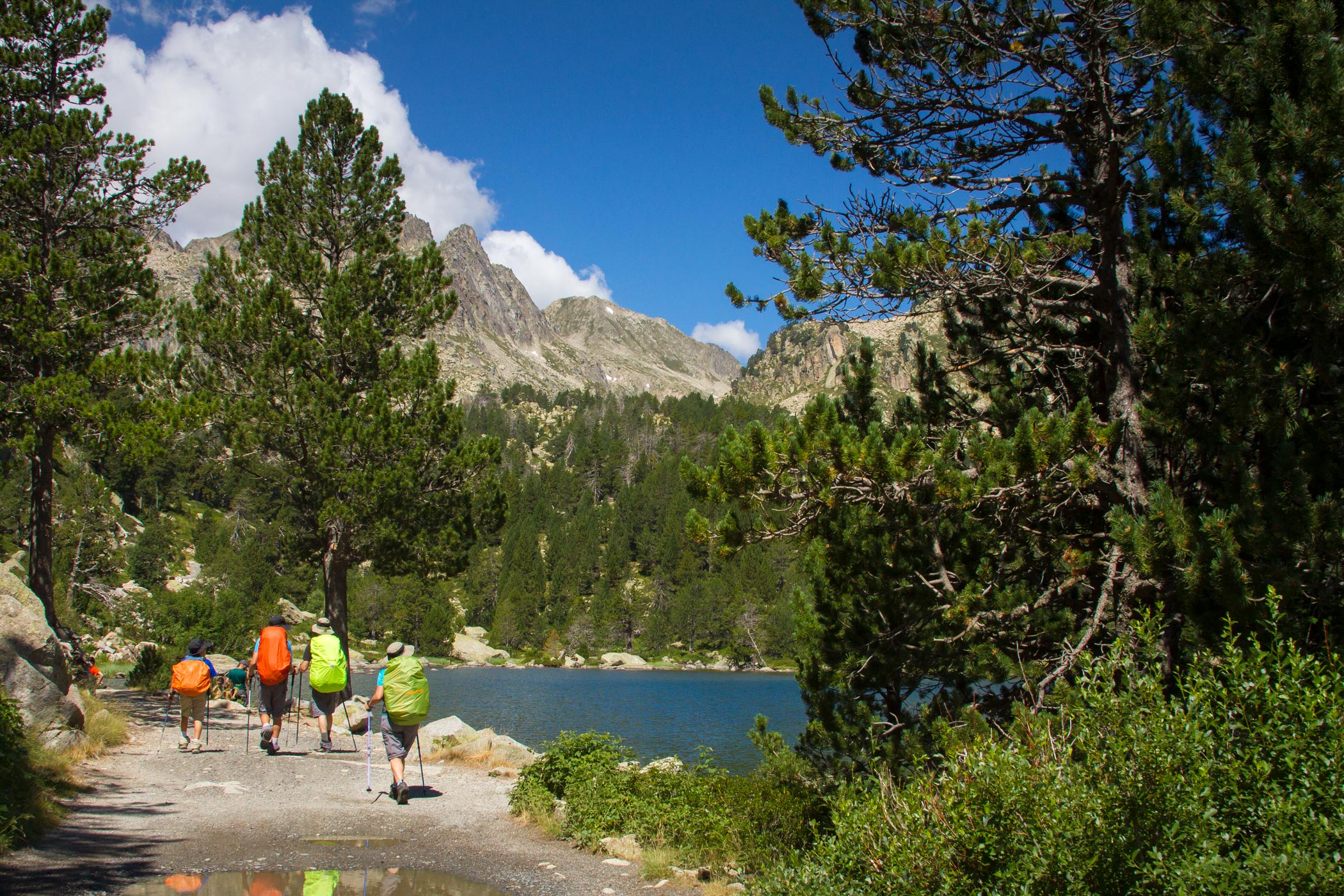
An official Family Nature and Mountain area, the Vall de Boí is a paradise for hikers with trails suitable for all levels, from those with a low difficulty ideal for children to more demanding routes for experienced hikers. We choose to climb to Planell d’Aigüestortes from Boí in a 4x4 taxi, where we start a gentle excursion that will take us to Estany Llong. The path leading up to the Rus hill is the historic road used by the inhabitants of the Vall de Boí to visit Barcelona, before the motorways were built. The same path, although in the opposite direction and on the back of a donkey, was often travelled by the Catalan bourgeoisie on their way from the city to visit the hot springs of Caldes de Boí. After walking we're getting hunger, luckily the Vall de Boí is an ideal place to try hearty Pyrenean cuisine: mushrooms, shepherd’s cheese and a meat cooked a la llosa are served in the local restaurants.
The Aigüestortes i Estany de Sant Maurici National Park has three entrances. One of them is at Boí and Espot, the villages which house the main centres, and where it is necessary to go in order to be able to see the best-known places, such as Aigüestortes and the Estany de Sant Maurici. A second entrance is via the villages of Sort and Llessui, where there is a park information centre. The third is that of Pont de Suert and Senet, where there is also a park information centre
The descent through Castellar de n’Hug and the source of the Llobregat
We begin a long descent full of curves and panoramic views, a perfect road to enjoy at a leisurely pace. The descent passes through the charming village of Castellar de n'Hug, famous for its natural surroundings and for being the source of the Llobregat River. As we lose altitude, the alpine meadows give way to forests and the terrain becomes gentler. The last few kilometres follow the course of the river until we reach La Pobla de Lillet, a village steeped in history that hides one of Gaudí's least known works, the Jardins Artigas, and brings to an end a peaceful but fairly steep stage.
Along the Cistercian Route
The next stop is Siurana, where we will hear a tale of Saracens, warriors and princesses as we walk through this small cliff-top town views of the eponymous wetlands. The village is surrounded by mountains of reddish limestone rock, featuring some of the world’s most famous rock-climbing routes. We will drive along the roads that cross the landscape of the Prades Mountains to Poblet, one of the three monasteries along the Cistercian Route, still inhabited by monks today. The monastery is a UNESCO World Heritage Site and one of the most complete Cistercian abbeys in the world. A short drive from Poblet is Montblanc, where the town’s walled centre is well worth a visit, especially during the feast of Sant Jordi. The last stop of the day will be in Valls, a town of castells, huge human towers reaching ten stories high, and calçots, a variety of spring onions that gather family and friends around the table during the calçotades feasts between November and April.
From Salardú to Pla de Beret, source of the Noguera Pallaresa
We leave Salardú in the direction of Baqueira by road, following the route of the pass that leads to Pla de Beret. It is a 6-kilometre climb with a 400-metre elevation gain, steady but manageable, passing houses and surrounded by fir and black pine forests. As we gain altitude, the views over the Val d'Aran widen and the road winds its way through high mountain meadows. The Pla de Beret, at an altitude of over 1,850 metres, is one of the largest natural plains in the Pyrenees. This is where the Noguera Pallaresa river has its source, surrounded by an idyllic setting of pastures and rounded peaks which in winter become the largest ski area in the Pyrenees: Baqueira Beret.
Arrival in Lleida
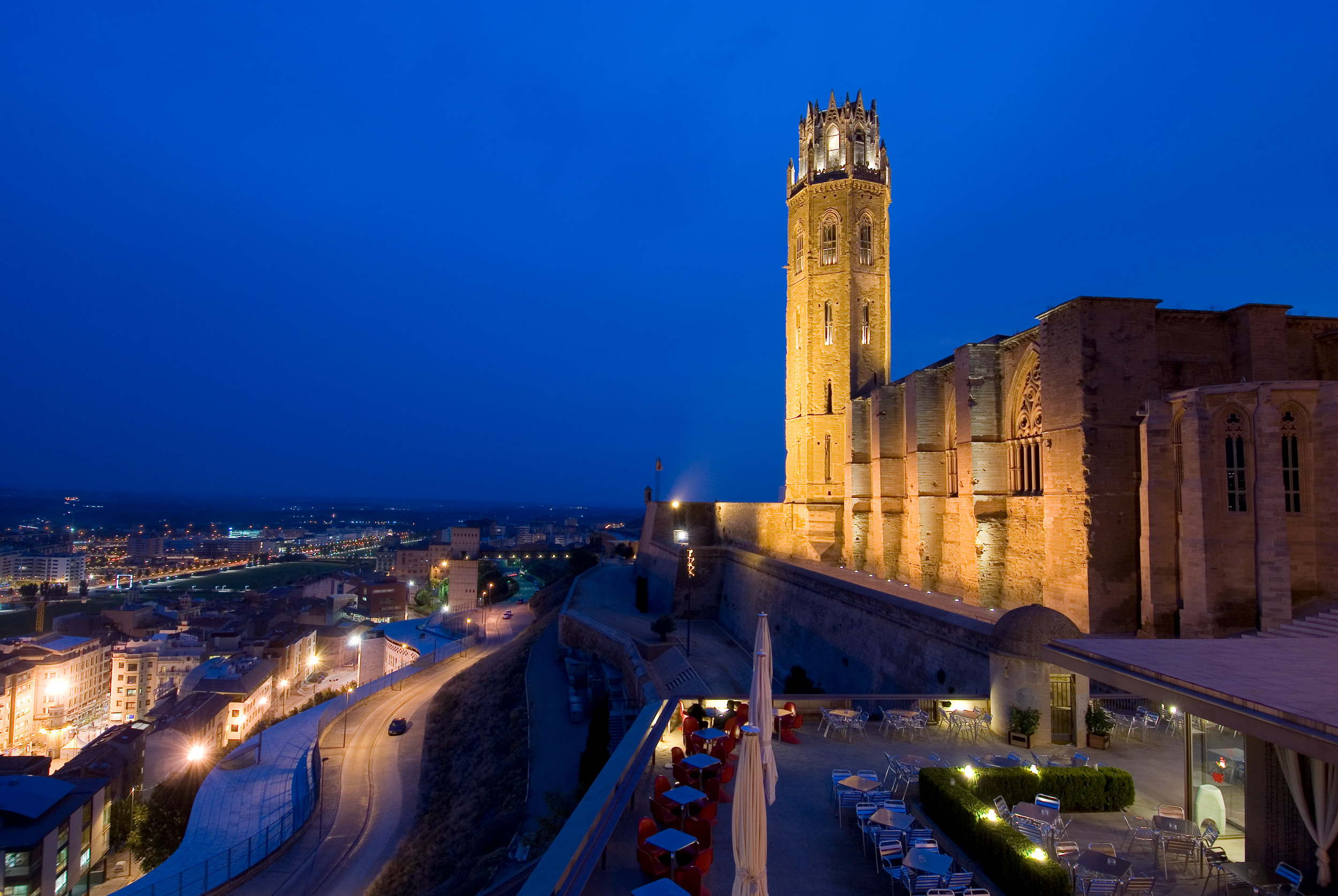
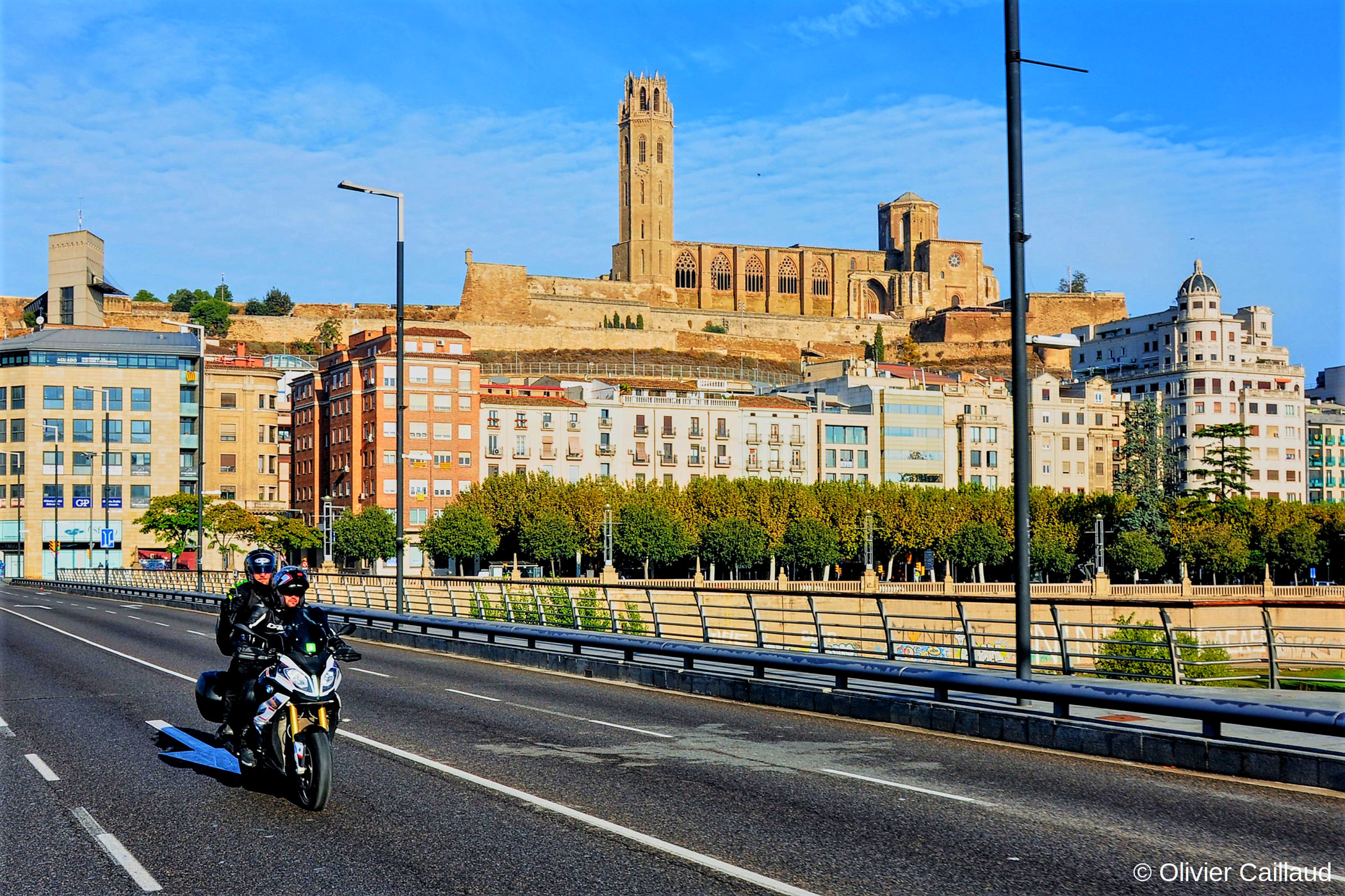
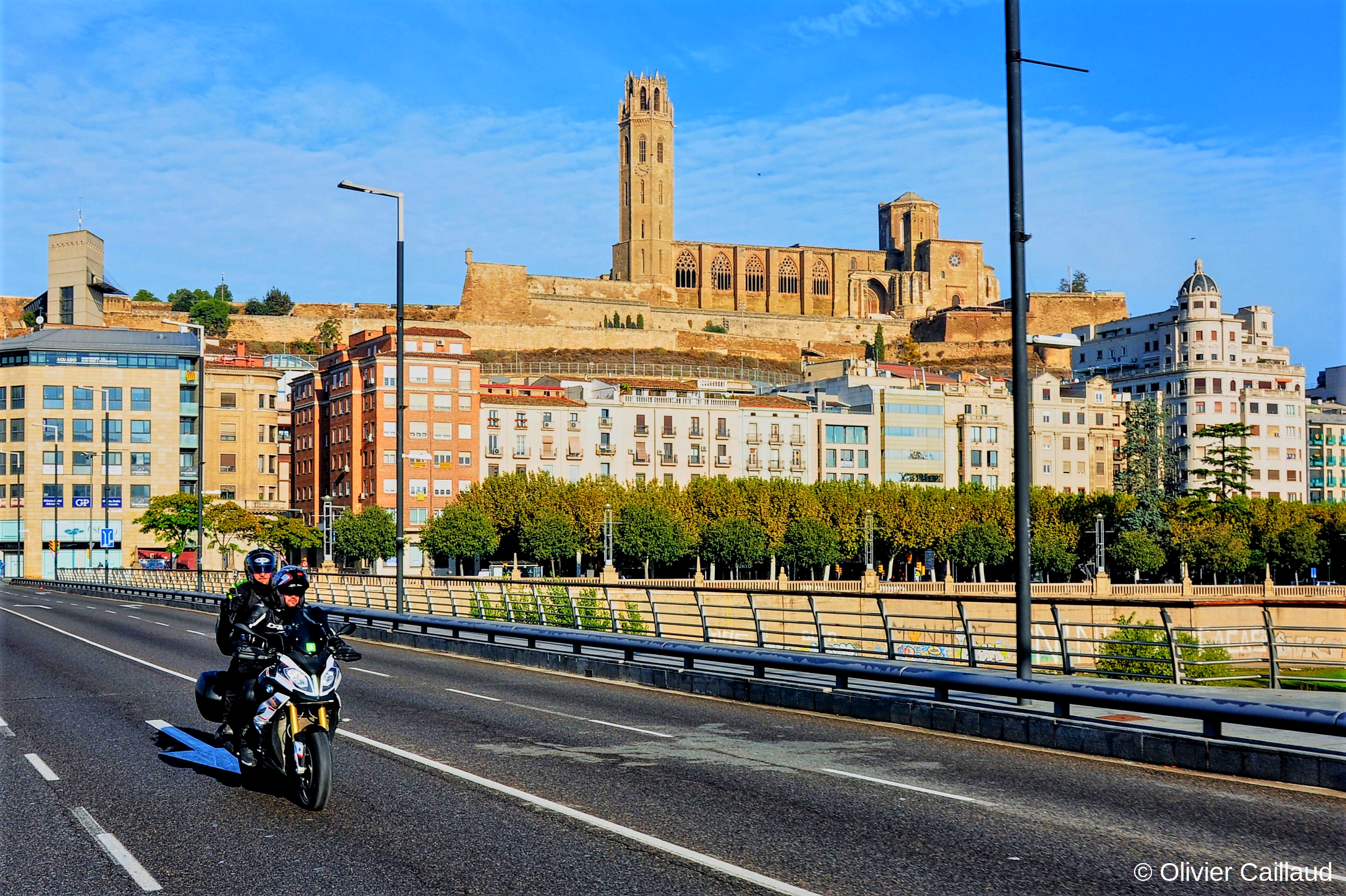
We pass through the Tossals de Torregrossa (Margalef and La Pena), small hills that offer sweeping views over the Ponent plain. The tracks remain just as comfortable and perfectly cycleable until we reach the outskirts of Lleida, where the rural landscape gives way to the first urban centres. We enter the city with the Seu Vella visible from a distance, an unmistakable symbol of the capital of Segrià. The stage 16 and the section 2 end at the foot of the hill where the Seu Vella and the Castell de la Suda stand, an unbeatable end point for a route that has combined history, nature and authenticity. It is highly recommended to climb up there to enjoy a complete panoramic view of the Terres de Lleida.
Passing through Lleida
From Valls, the route passes through Terres de Lleida, until we reach the capital. We will start the day at the top of the Seu Vella, the incredible medieval cathedral of Lleida erected on a rocky promontory overlooking the planes, with a view of the vegetable gardens from which delicious fruits and vegetables emerge. This site of worship, which was first Roman and later Gothic, is a real symbol of the Lleida province, like snails cooked in the local style, a la llauna.
An excellent breakfast
The day kicks off in Montblanc with a generous breakfast served in a wine cellar.
Pa amb tomàquet and extra virgin olive oil, black and white botifarra sausage, dried llonganissa sausage, cheeses, olives, nuts and a little wine are a safe bet to start the day off right. Montblanc is a town with a prominent walled complex where we can still see towers and doorways in good condition. Each year in April, the Legend of Sant Jordi is re-enacted as part of the Medieval Week events.
By bicycle
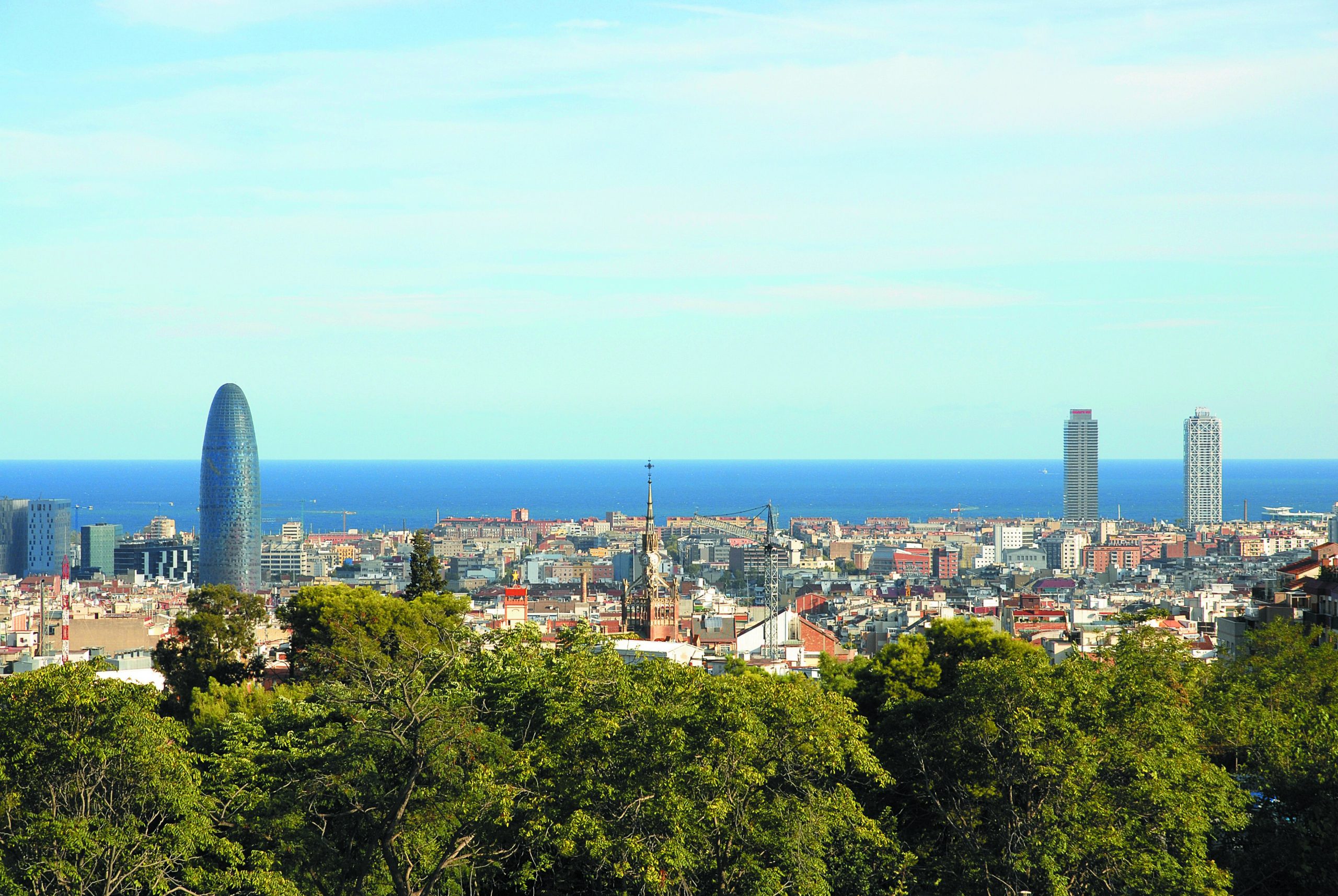
The hotel's rooftop, where my breakfast is ready for me, offers a 360-degree view of Barcelona, from the seaside city to the mountains. I have the beach at my feet, with the Sagrada Familia in the background alongside the modern buildings of the Olympic Village and the Torre Glòries, architectural icons of the Catalan capital's skyline. The sky is clear, as it is more than 300 days a year; an invitation to cycle through the city streets. The route chosen lets me pedal an unusual bamboo bike past several excellent graffiti art murals.
From La Seu d’Urgell to Coll de la Trava
We leave La Seu d'Urgell, the historic capital of Alt Urgell and the point where the Segre and Valira rivers meet. Its old town and the Romanesque cathedral of Santa Maria mark the starting point of a demanding stage. We leave the city behind and take the road that climbs to Coll de la Trava (1,480 m), a long ascent of 16 km and 834 m of elevation gain. It is a quiet road, surrounded by red pine forests and with constant views of the surrounding mountains. As we gain altitude, the mountains of the Serra del Cadí begin to appear in the background, imposing and rugged. Once we reach the top of the pass, a gentle, undulating 6.5 km stretch allows us to catch our breath and enjoy the views before reaching Coll de Bancs, with open panoramic views towards Vall de la Vansa.
The Tradition of Vermouth
Our love affair with modernism will continue in Reus, one of Catalonia’s official Cities and Towns with Character and Gaudí’s hometown. Nonetheless, it is Lluís Domènech i Montaner to whom we owe the best buildings in the city, such as the Casa Rull, the Casa Gasull, the Casa Navàs and the Institut Pere Mata with its spectacular Pavilion 6, also known as the “Els Distingits” Pavilion. The visit will end at the Gaudí Centre, an interpretive centre where we will learn how Gaudí organized spaces based on elements such as water, light and air. Many of these modernist buildings were erected thanks to the windfall brought in by the exports of vermouth. Reus has retained a great tradition of vermouth as an aperitif. At lunchtime, we will visit a former factory to sample and learn the history of this fermented beverage.
From Figueres to Vilamaniscle via the Albera massif
We leave Figueres on flat paths that cross the agricultural plain, passing through Peralada and its vineyards. From Delfià, the terrain begins to rise and we enter the Albera massif on gravel tracks. The slopes gradually become steeper until Vilamaniscle, where the landscape changes completely: the tracks climb between dry stone walls and olive trees, with the first views of the Gulf of Roses and Cap de Creus in the background. The terrain is rocky, typical of the area, and somewhat technical in places, but the surroundings and panoramic views make every pedal stroke worthwhile.
Medieval villages
We move from the coast to inland Empordà. Behind us is the silhouette of the Montgrí with its castle, a mountain that divides the Alt and Baix Empordà, and access to L’Estartit, the port of departure for a visit to the little Medes Islands, one of the most important reserves of marine flora and fauna in the Mediterranean and a must-visit for scuba divers. After arriving at Peratallada and enjoying a breakfast of sausages and cheeses from the Empordà districts, we embark on a “burricleta” tour (electric-assisted bicycles) of the medieval villages of Empordanet: Peratallada itself, Ullastret, Canapost, La Bisbal d’Empordà, Catalan capital of pottery; and Pals, with its unmistakable walled enclosure.
Cathedrals of Wine
The road connecting the two large Cathedrals of Wine we visit in Terres de l’Ebre, the modernist bodegas of Gandesa and Pinell de Brai, runs along the ravine separating the Pàndols and Cavalls mountain ranges. The beauty of the landscape can't let us forget that these mountains were the setting for the most famous battle of the Spanish Civil War. To explore the subject further, we can visit the interpretive centre dedicated to the Battle of the Ebre in Corbera d’Ebre, named 115 days which is open all year round.
Between canals and fields
We leave Mollerussa on a wide, flat track that runs parallel to the Sèquia Tercera del Canal d'Urgell, one of the infrastructures that completely transformed this region. The landscape is open and surrounded by fields of corn, apple and pear trees that grow thanks to the water from this historic irrigation system, built in the mid-19th century. The tracks are wide and fast, with terrain very similar to that of the previous stage, ideal for cycling at a good pace while enjoying the surroundings.
Ascent to the highest point of the stage: Coll d’Ares (1,534 m)
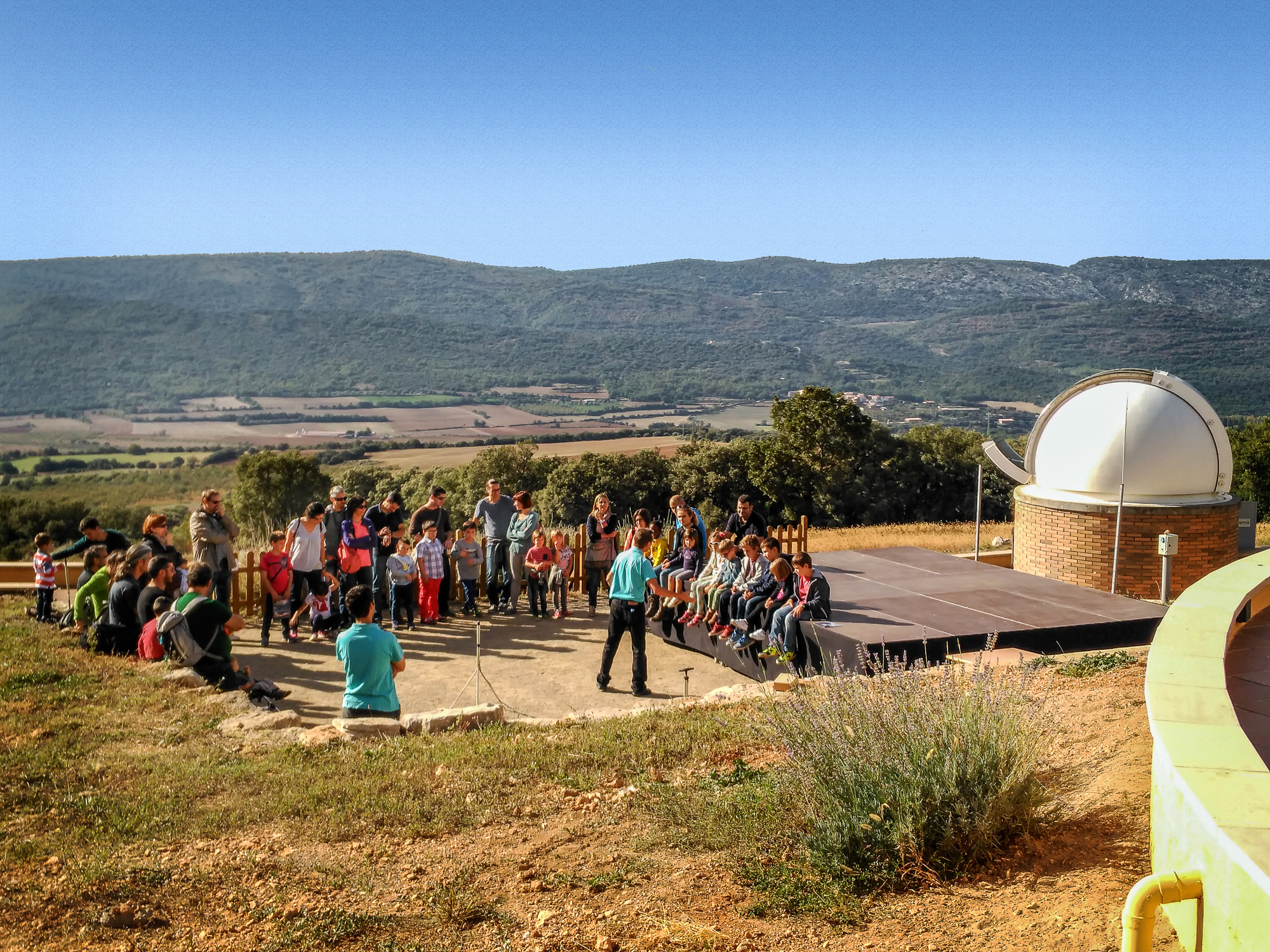
We leave Àger and immediately begin the ascent to Coll d'Ares: 14 kilometres of climbing to overcome a 935-metre elevation gain. The narrow, traffic-free road winds its way up the massif, offering increasingly better views over the Àger valley. In the first half of the climb, we pass through the Montsec Astronomical Park, one of the best places in Catalonia to observe the night sky. As we gain altitude, the landscape becomes more open and rocky, and once at the pass, at 1,534 metres, the views are immense: the Vall Alta de Serradell–Terreta–Serra de Sant Gervàs in the background and, beyond, the Pyrenees on the horizon.
From the Camarasa reservoir to the Aiguabarreig del Segre and the Noguera Pallaresa
We cross the Segre river again before leaving Balaguer heading north on tracks that take us to Camarasa and Sant Llorenç de Montgai, where we cross the Segre river again while the reservoir stretches out to our right. The landscape changes: we leave the agricultural plain behind and enter the Aiguabarreig del Segre and Noguera Pallaresa Protected Natural Area, where the two rivers meet in an environment of great biological and geological richness. This is where the stage's elevation gain begins. The initial climb, along a track, offers good views of the reservoir before entering fields and rolling hills. We pass through Vilanova de la Sal and begin to notice the presence of Montsec, which now dominates the horizon.
Sleeping under the stars
We drive to nearby Banyoles, where there are various camping options around the lake. We opt for glamping. We sleep in clear bubbles in the heart of nature that allow us to see the starry sky from our beds.
From the Cerdanya valley to Puigcerdà
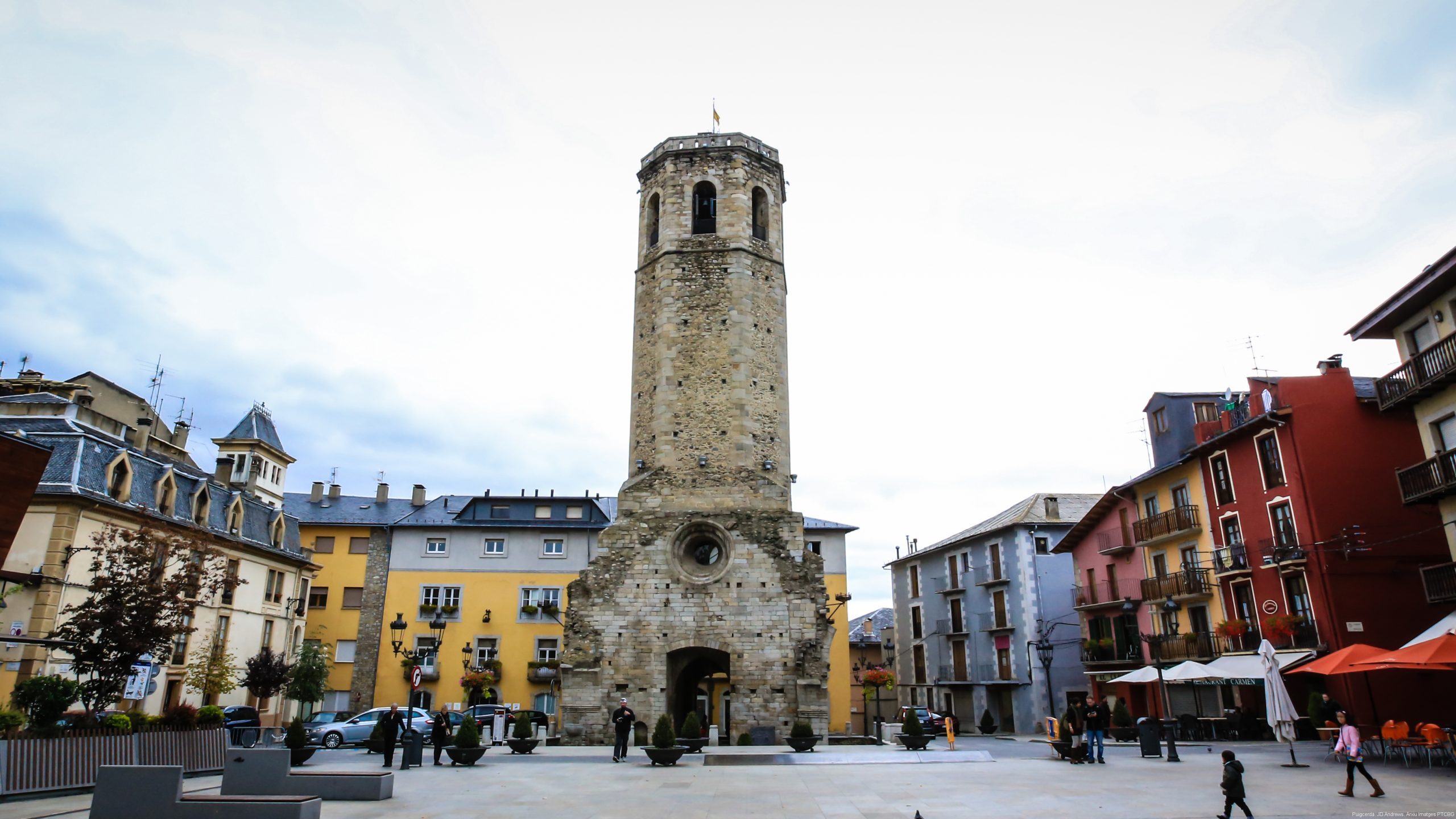
Once we reach Alp, the route changes completely. The terrain becomes gentler and we cycle along rural paths and pastureland, crossing the Segre river to follow the Camí Ral de Sant Jaume, an ancient route connecting the villages of the Cerdanya valley. It is a gentle stretch, with the sound of the river as a common thread, passing through Bolvir before reaching Puigcerdà, the historic capital of Cerdanya, with its lake and bell tower welcoming us and marking the end of the stage.
At La Seu d’Urgell
We continue on to La Seu d’Urgell, in the Alt Urgell district, located between two rivers and in the shadow of the nearby Serralada del Cadí. The late afternoon sun illuminates Santa María, the only fully Romanesque cathedral in Catalonia; we are just in time to visit its fascinating cloister. Here we find the only cheese from Catalonia with a protected designation of origin, a high-quality product made locally. La Seu d’Urgell is considered the Catalan capital of cheese thanks to the importance of the Artisan Cheese Fair of the Pyrenees, held in October during the festival of Sant Ermengol.
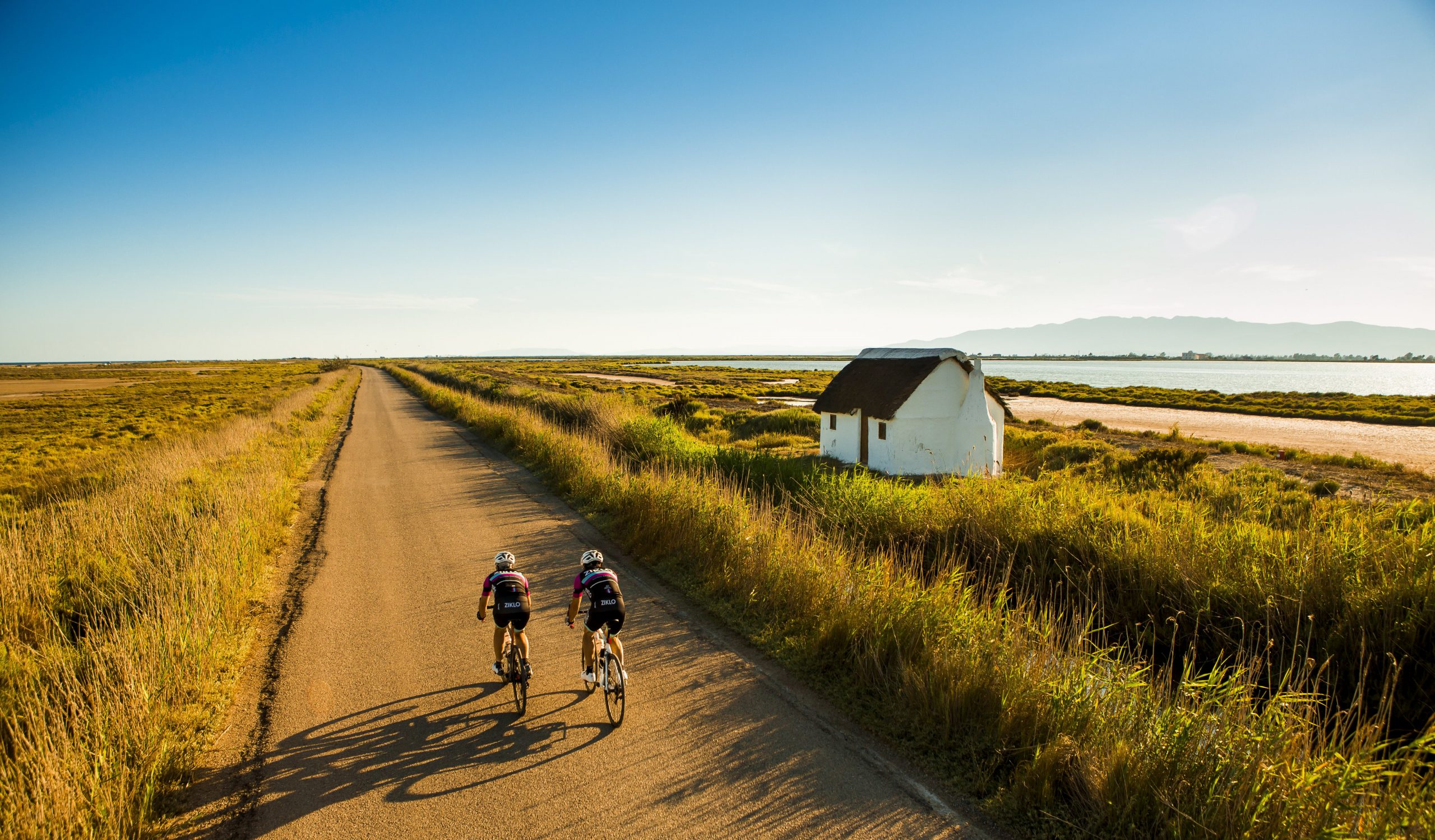
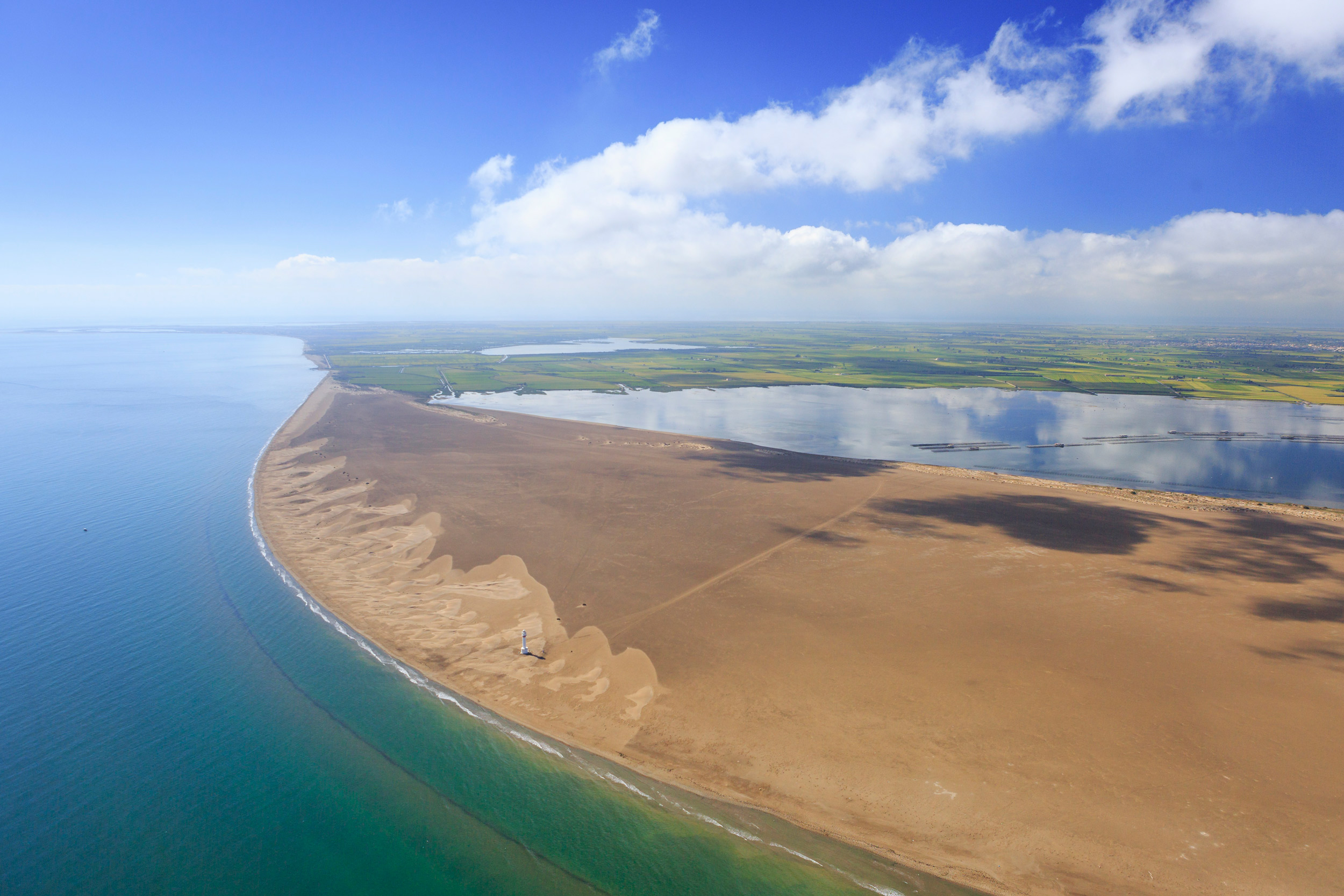
From the Delta lagoons to the Ebre river
The route takes us to Casa de Fusta, one of the Delta's landmarks and now the park's interpretation centre. From here, we take a route that runs around the perimeter of the Encanyissada lagoon, one of the most iconic and photogenic spots in the area. The landscape is completely flat, with wide horizons and a special light that changes throughout the day. We continue along endless tracks surrounded by fields until we reach Amposta, where we take the Canal de l'Esquerra de l'Ebre track, which guides us parallel to Tortosa, and further on we follow a section of the Camino Natural de la Via Verda de la Val de Zafán to reach the end of the stage, Tortosa, a city steeped in history and a link between the delta plain and the mountains of the Els Ports Natural Park, where we can see its imposing Cathedral of Santa Maria. A day to remember, where nature and calm are the absolute protagonists.
A stroll through Tortosa
The area surrounding the Delta de l’Ebre has other attractive visits to offer. This is a territory with very old examples of human presence, including cave paintings forming part of the Mediterranean World Heritage and thousand-year-old olive trees, both located between Ulldecona and La Sénia. Located near the sea, Sant Carles de la Ràpita offers a wide range of water sports and the natural beaches of the delta are an invitation to rest and relax. However, we choose to follow the road to the monumental Tortosa, part of the Cities and Towns with Character; the castle, cathedral and remnants of Jewish Quarter certainly earn it that designation. At the modernist Municipal Market there are typical Terres de l’Ebre products available for purchase, and bars where you can taste them. We leave with a bag of traditional angel hair pastissets.
A Literary Walk
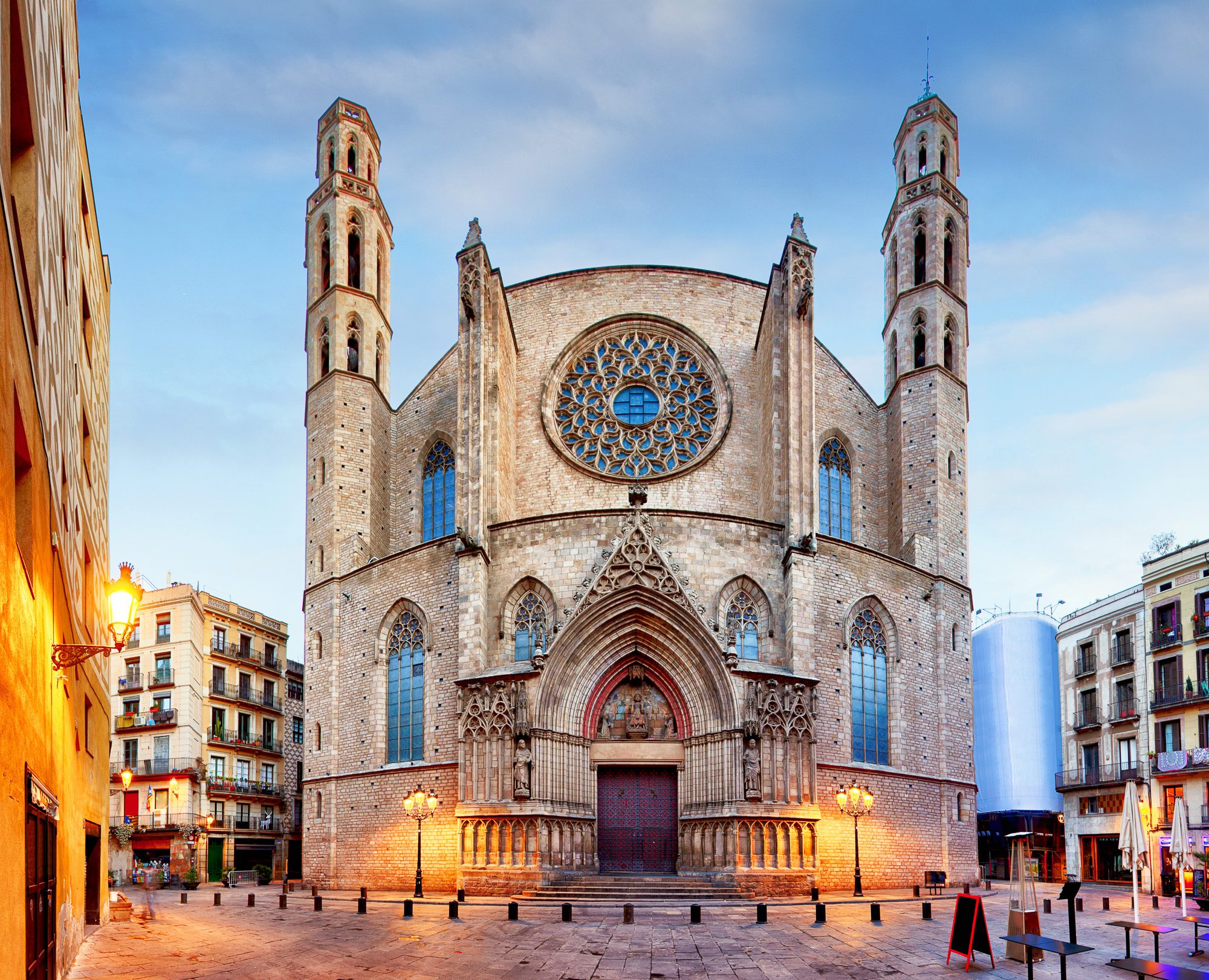
Having tried the dishes we prepared, it is time for a good walk. We opt for a literary route and are given a choice of viewing settings from The Shadow of the Wind or Cathedral of the Sea. We go for the second option so we can visit the Santa María del Mar basilica in the Born district, and then continue in a leisurely fashion through this lively neighbourhood, where there are plenty of options to enjoy tapas and a glass of wine.
Views of La Cerdanya
The route passes through Puigcerdà, a town by a beautiful lake. In its streets we can follow in the footsteps of the characters from one of Carlos Ruiz Zafón's novels. Just seven kilometres from Puigcerdà, by taking a detour we have the option to visit the Llívia pharmacy, one of the oldest in Europe. We continue on local roads to villages with short names and hearty sausages, such as black and white bull and pà de fetge. After passing Urtx, Alp and Das, we climb to Meranges, a village with perfect rustic mountain architecture and the beautiful lake Malniu. From the village’s altitude of 1,590 metres, we enjoy views of all La Cerdanya.
Colonia Güell
I climb to Montjuïc to say goodbye to Barcelona from the heights of its hillside, a spot where you can see the stunning Botanical Gardens, and museums such as the Joan Miró Foundation, the National Museum of Art in Catalonia and the Mies van der Rohe Pavilion.
I set off for Santa Coloma de Cervelló to visit the crypt of Colonia Güell, a spectacular work from Gaudí’s naturalist period. While the crypt is one of the architect's seven World Heritage-listed buildings, it is also the least well-known work on that prestigious list.
Costa Daurada
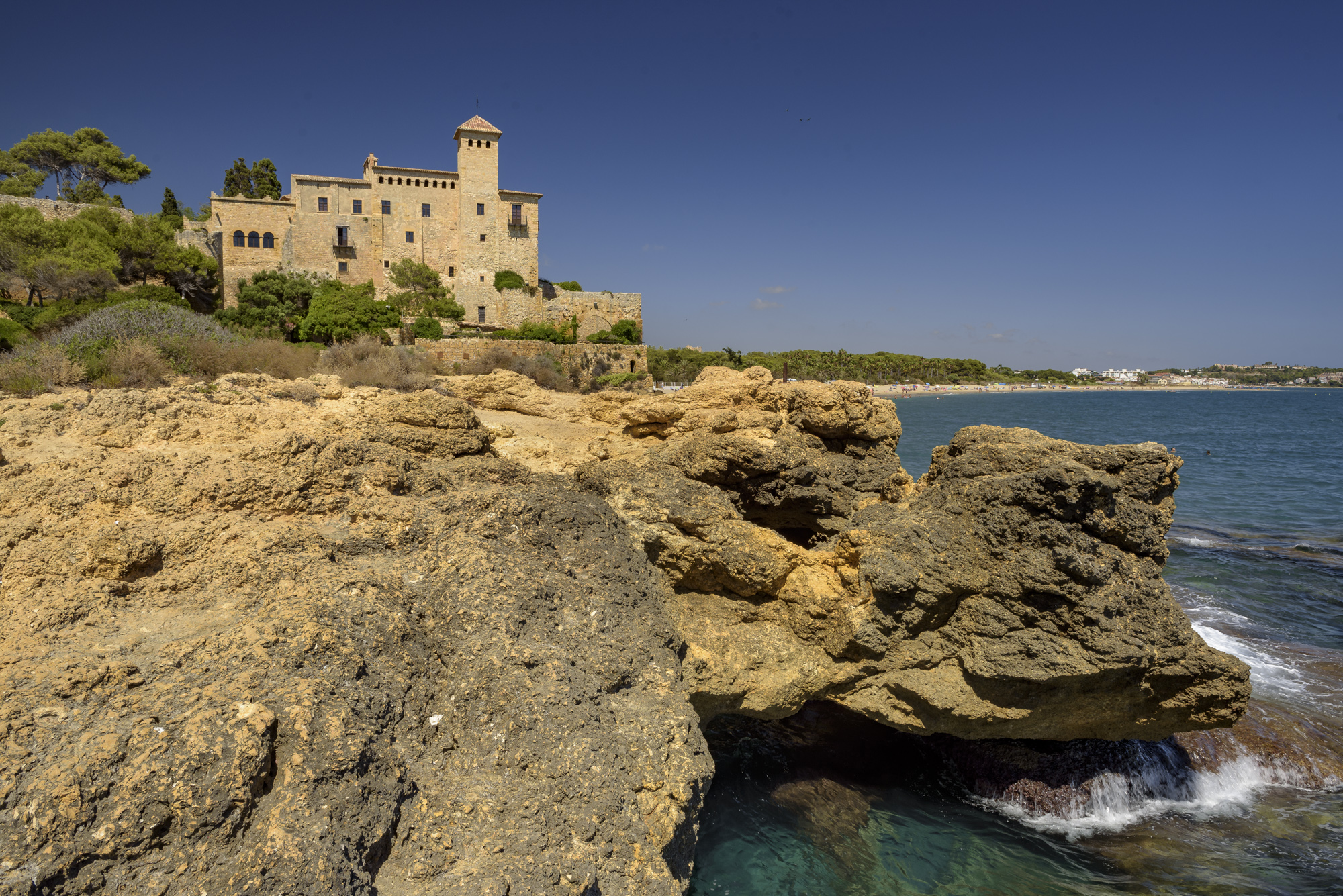
We will spend the late afternoon on the beautiful beaches of the Costa Daurada, joining the Camí de Ronda that runs from Tarragona towards Tamarit castle. The trail passes through beaches, small coves and the La Marquesa Forest Park, the only virgin natural area on this part of the Catalan coastline. Cambrils, an important culinary destination on the Costa Daurada, is a good choice if you want to try the traditional seafood cuisine. For a fun family experience, PortAventura World offers exciting attractions for all ages.
With the Mediterranean as our guide
Leaving Cambrils, the route continues along the road to Miami Platja, where we return to the promenade parallel to the sea, passing idyllic coves such as Cala dels Vienesos and Cala de les Sirenes. We arrive at l'Hospitalet de l'Infant, from where we skirt Platja del Torn along the road, with the intense blue of the Mediterranean within touching distance. After a final stretch along the road and coastal tracks, we enter Calafat and continue along the Camí de les Tres Cales, which leads us to l'Ametlla de Mar, a charming fishing village and the perfect end to a day of pure Mediterranean essence.
Oyster Tasting
A boat awaits at the port of L’Ampolla to sail through Fangar Bay and sample the very freshest mussels and oysters, straight from the mussel farms where they are grown. We choose to stay the night in an old hut, the traditional house of the rice paddies, refurbished to host guests. In the evening with a glass of the white Grenache wine that grows so well in Terra Alta and flooded rice paddies reflecting the sky, we enjoy one of the best sunsets we've seen yet.
Alella Wines
Before we head to Barcelona, where we plan to spend the night, we stop at Alella for a visit to a wine cellar, where we open a natural pink Cava that pairs perfectly with the Vallalta strawberries. The wines of Alella, mentioned by Pliny the Elder as “Laletanum wines” in Roman times, come from small vineyards overlooking the sea. Two other interesting attractions in the area are the Circuit de Barcelona-Catalunya, which offers various experiences related high speed racing and hosts one of the world’s most important motorbike events, and La Roca Village, with more than 140 open-air boutiques of national and international luxury brands with savings of up to 60% on the original price, throughout the year, and only 40 minutes from Barcelona. We enter Barcelona, the final point on this stretch of the Grand Tour of Catalonia.
Lleida’s monuments
The day starts with a hearty breakfast, featuring pa amb tomàquet, with olive oil from D.O.P Les Garrigues, cured meats and pears that come under the Lleida protected designation of origin, and a walk through La Seu Vella, a temple with a magnificent dome and an octagonal bell tower sixty metres high, offering a panoramic view of the city and the surrounding land. Along with the King’s Castle - La Suda, La Seu is part of a monumental complex that helps us understand the history of the city. This is a land of fields stretching all the way to the horizon, full of fruit orchards and vegetables that will end upin the recipes of many Lleidan dishes. On these fertile plains surrounding Lleida, official City and Town of Character, we visit the castell de Gardeny, which in the twelfth century housed the Templar soldiers based in this area. At the castle, there is the option to live the life of a Templar knight for a day.
Coll de les Ventoses
We leave El Vendrell after visiting the Pau Casals Museum, remembering the figure of the city's illustrious son and symbol of Catalan music. The first few kilometres run towards Sant Jaume dels Domenys, along secondary roads and gravel tracks between vineyards and fields. On leaving the village, we begin the steady 8 km climb to Coll de les Ventoses (560 m), the highest point of the stage. The road offers sweeping views over the Penedès, the Mediterranean in the background and the inland mountains that herald the transition to the Conca de Barberà.
Cistercian lands
I start the morning on the banks of the river Gaià, at the doorstep of Santes Creus, one of the great Catalan monasteries. Unlike the two other monasteries on the Cistercian Route, now once again inhabited, Santes Creus was abandoned after the Mendizábal disentailment. It was the resting place chosen by two Catalan kings, and inside you can see the impressive royal sepulchres and a remarkable set of stained glass windows.
In the nearby town of Cabra del Camp, I enjoy the guided Nordic walk through vineyards and grain fields. The gentle breeze that makes the crops sway and the pleasant temperature invites introspection, an intimate moment that connects me to the joys of the Mediterranean landscape. The activity ends with the tasting of a DO Tarragona wine and DOP Siurana olive oil.
End of the route: arrival in Barcelona
Once at the top, we join the Passeig de les Aigües, one of the most emblematic spaces for cyclists and walkers in Barcelona. This old service road, now converted into a panoramic route, runs along the slope of Collserola with unique views over the entire city. As we progress, Barcelona spreads out at our feet: the Sagrada Família, the sea and, in the background, the port and Montjuïc mountain with its castle. The final descent, along a gentle, winding road, takes us to Plaça de Karl Marx, where we enter the city via cycle lanes to Plaça Catalunya, the end point of this stage and the end of the Grand Tour de Catalunya gravel route.
Arrival in Lleida
In the Ivars i Vila-sana pond we have booked one of the special activities they offer, tagging different bird species. Walking around the perimeter of the aquifer, on a path that’s just over 2.5 kilometres long, we see a space that once dried up and is now vitally important to birds. We arrive at Lleida when the afternoon begins to fade, just in time for a tour of the Seu Vella and the King’s Castle – La Suda. For dinner, we opt for the most traditional way of eating the famous Lleida snails, roasted “a la llauna”, on a metal sheet with handles placed directly over the embers.
From Mataró to Vallès Oriental
We cross Mataró and continue towards Argentona, where we leave the coast behind to climb the Serra Litoral again. We climb part of the Coll de Parpers by road and then take a forest track that crosses the massif towards Vallès. The terrain alternates between stretches of scrubland and wooded and open areas, until we begin the descent towards Cardedeu, a town with a rich agricultural and modernist past, where farmhouses and noucentista-style buildings surrounded by fields and banana trees are still preserved. Once on the plain, the landscape becomes rural and agricultural: tracks between cereal fields, streams and farmhouses, with the Riera de Cànoves and Torrent del Pla streams as companions along the way. The last few kilometres are a gradual and gentle climb to L'Ametlla del Vallès, the end of the stage, set among fields and woods, with views of the Vallès plain.
Following in Picasso’s footsteps
I am taking a little leap through time into the bohemian Barcelona of the late nineteenth and early twentieth centuries, the city where young Picasso wandered the streets. I walk past important places from his life, such as the school where he studied, Carrer Avinyó and the brewery where he had his first solo exhibition. The artist's work has given me an appetite: taking advantage of the fact that the route ends at the Picasso museum, located in the El Born neighbourhood, I continue a gastronomic tour of the neighbourhood's iconic taverns. An excellent option to continue the afternoon is strolling through shops, some of which are centuries old, selling handmade goods such as jewellery, fashion, cosmetics, handicrafts, and nougat.
Montgarri Shelter
The Val d'Aran is home to an ancient culture, but above all it features pure air and mountain landscapes. To see it in all its splendour, we will take a walk to Montgarri. This picturesque Pyrenean village, inhabited until the1970s, lies at the headwaters of the Noguera Pallaresa river and is now an idyllic and relatively isolated location. The trail runs through a beautiful high-mountain landscape, featuring forests of black pine and fir trees. In the winter months, it is a popular spot for snow shoeing and dog sledding. At the Montgarri shelter we will enjoy one of the area’s famous recipes olla aranesa. In the afternoon, we will return to Vielha, the capital of Val d’Aran, where we can purchase some traditional sausages and relax with a well-deserved hot tub session in the hotel spa.
Medieval villages
The charming medieval villages of Empordanet can be explored in various ways, on foot, via guided tours specialising in cultural heritage or ceramics, by car and even in a hot-air balloon. We will choose to park the car and visit them on electric bicycles, known as “burricletas”. In Peratallada, we’ll be taken back to the days when gentlemen, noblemen and masters walked the streets; from Pals, a village of whose walls give it an unmistakable silhouette, we’ll enjoy views of the Empordà planes, the Montgrí and the Medes islands. Back on the coast we’ll enter Calella de Palafrugell, a town on the official Charming Villages of Catalonia list along with the two mentioned above. Our guide explains that the great writer Josep Pla spent the summers of his childhood in this seaside town, with its white-washed country homes and traditional habanera music. If you're looking for a more active option, you can walk the wildest stretch of the Camí de Ronda, between Llafranc and Palamós, through such spectacular locations as the small fishing centre of S’Alguer and rocky coves and turquoise waters such as those at Canyers or Els Corbs.
Camprodon Biscuits
We return to Ribes de Freser on the rack railway and take the route back to Camprodon, where we cross its medieval bridge and purchase several boxes of its famous artisanal biscuits. Between Camprodon and Olot, the road passes through beautiful villages, each well worth a stop if you have the time: Beget, a Charming Village, Sant Joan les Fonts with its medieval bridge, and Castellfollit de la Roca, perched on a basalt cliff that emerges from the landscape like the bow of a ship. After a very full day we head towards one of the many classic Catalan farmhouses that have been turned into accommodation, which can be found around Olot.
Crossing the Prades Mountains
From Cornudella de Montsant, we continue along a mountain road that enters the natural area of the Prades Mountains, a surprising environment due to its greenery and variety of landscapes. The route passes through Albarca and climbs the Coll de Forcals, where views open up over the inland valleys and forests of holm oaks and red pines. The climb continues, steady but pleasant, to Coll de l'Arena (1,034 m), the highest point of the day. From Coll de l'Arena, a spectacular 16 km descent begins on a road in perfect condition, full of curves and with a smooth rhythm that invites you to enjoy the ride.
Vic Sausages
We’ll continue on to Vic and head to the Plaça Major, where a lively market is held every Tuesday and Saturday. We’ll enter a century-old drying room and learn to make two of the town’s famous sausages, the llonganissa and the fuet. The next stop along the way is in Sant Fruitós de Bages, where we’ll have the chance to do one of those once-in-a-lifetime activities: a parachute jump from 4,000 metres high, with views of the Pyrenees and Montserrat during the descent. For those who prefer to keep their feet on the ground, we recommend a visit to the Vall del Montcau “tines”, large dry stone constructions in which wine was once made at the foot of the vineyard, or Sant Benet de Bages, a very well-preserved medieval monastery where you can discover the monastery’s wine making history and try the wines of the DO Pla de Bages. Moving south, we’ll have the chance to visit Mura, one of the official Charming Villages, and the Sant Llorenç del Munt i l’Obac Natural Park, a conglomerate rock landscape featuring formations reminiscent of those at Montserrat. Another interesting way to get to Barcelona from Vic is to go via the Costa Maresme and the Montseny Natural Park, a natural biosphere reserve featured on the UNESCO Intangible Cultural Heritage list. At the Maresme we will find peaceful, sandy beaches and towns with excellent modernist heritage.
Crossing the Garraf
After Olèrdola, the landscape changes suddenly. We leave the vineyards behind and
enter the Garraf Natural Park, a dry, rugged terrain dominated by limestone rock and Mediterranean forest. The path alternates between gravel sections and narrow roads, surrounded by rosemary and thyme, with the sea getting closer and closer. We pass close to Sant Pere de Ribes before beginning the descent along the Camí de les Casetes, a scenic track that winds down to the coast with the Mediterranean in the background.
Descent to Bagergue and Salardú through the Vall d’Unhòla
From the pass, the view is majestic: in front of us lies the Vall d'Unhòla, enclosed by peaks such as Cap des Closos and Tuc Blanc de Parros. The descent begins on a wide track where the vegetation is sparser, contrasting with the greenery of the previous valley. The Unhòla river, with its characteristic brownish-reddish waters due to the presence of iron oxides and hydroxides, accompanies us for the last few kilometres until we reach Bagergue, the highest village in the Val d'Aran. We continue down the road until we reach Salardú, the end point of the stage.
Monastery delights
The county of El Bages is our next stop: a combination of culture and gastronomy, with a visit to a medieval monastery and a fun, family-friendly game in which each team creates two recipes to try to win a Michelin star for their restaurant. As we’re on the D.O. Pla de Bages Wine Route, we’ll take the opportunity to discover the impressive dry-stone vats, declared a Cultural Asset of National Interest, where wine was traditionally made. The journey continues northwards. Leaving behind the tracks of the muleteers who transported salt from the Cardona Mountain, we’ll reach the county of El Solsonès, where we’ll taste the raw sheep’s cheese made in the old kitchen of El Miracle monastery.
From the sea to the Montgrí massif
From Sant Pere Pescador, we continue along rural tracks and sections of the Pirinexus route to l'Escala, where the route skirts the coast along the coastal path before heading inland. We cross agricultural areas until we reach the Montgrí, Medes Islands and Baix Ter Natural Park. We pass through Ullà and Torroella de Montgrí, at the foot of the 13th- century castle that crowns the limestone massif. White pine forests and scrubland mingle with rice fields and canals. On both sides of the river, the mosaic of fields and farmhouses reminds us of the agricultural and historical importance of this river plain.
The good life in Tarragona
On the doorstep of the Cathedral, I wait for the guide who will take me through the different spaces: nave, cloister and a climb to the bell tower, a visit with more intrigue, betrayals, struggles, pacts and secrets than the best TV series. At night, with all its Roman heritage illuminated, I grab a seat in a restaurant with just over half a dozen tables and the open kitchen, where I let myself be guided by young chefs who are very committed to cooking with local products, which means no shortage of natural wines and excellent fish straight from the Tarragona fish market.
Secondary roads
The track leads us to the access road to Serrateix, a secondary stretch with hardly any traffic. The route heads towards Montmajor, with the Serra de Sallent mountain range always visible in the background as a constant reference point. In Montmajor, the road winds down a gentle descent that takes us to Navès. From here, the profile flattens out and soon the deep blue of the Pantà de Sant Ponç reservoir appears before us, nestled between forests, inviting us to slow down and enjoy the colours of the water.
Art in Figueres
We hear the bells of the church of Sant Pere de Figueres, one of the spaces of Dalí’s life, that genius with the incredible moustache. We will spend the morning tracing the key points on the Surrealist painter’s path, the Dalí Triangle consisting of his hometown, the Port Lligat house and the Castell de Púbol, making some stops along the way. At the Dalí Theatre-Museum we are fascinated by the innumerable details hidden in the artist’s optical illusions. At the Museu del Joguet we see an exhibition about his younger years, and in the Dalí-Jewellery collection we examine a beautiful collection of his jewellery designs. Another interesting visit equally linked to art, in particular local and contemporary art, is the Museu de l’Empordà.
Baking bread
Along the way we’ll come across artisan breads, such as those with the I.G.P. Pa de Pagès Català label. Determined to find out how they’re made, we’ll sign up for a workshop in Cardedeu, where we’ll learn to bake bread using different types of locally produced organic cereals. We’ll return to the capital through the Collserola mountain range to visit Barcelona’s vineyards, a project with a meaningful social mission, where organic wines and oils are produced. The journey will end with a dinner prepared with products from the Barcelona area, such as white meat from the I.G.P. Pollastre i Capó del Prat in El Baix Llobregat, paired with D.O. Catalunya wine, which represents a winemaking tradition that dates back to the Phoenicians and the Romans.
From Camprodon to Beget along narrow roads and through dense forests
We leave Camprodon in the direction of Rocabruna, along narrow roads that climb gently through thick forests to reach the Coll de la Boixeda pass. Then begins a 12 km descent along a beautiful secondary road, covered with vegetation in every shade of green imaginable. We pass through Rocabruna and Beget, one of the prettiest villages on the stage, with cobbled streets and stunning natural surroundings.
With Picasso in Gósol
The pastoral tranquillity of the Berguedà mountain drew Pablo Picasso to another of these villages. On the back of a mule loaded with his easels, he climbed to the modest town of Gósol to spend the spring of 1906. They say the genius, who stayed at the only local inn, sketched more than one hundred works that marked the beginning of his cubist era in just three months. He painted the houses of the village and the landscape and kept notes in a travel diary, the Carnet Catalan, a reproduction of which is kept at the Centre Picasso de Gósol. While part of the group visits this museum and enjoys the local cuisine, the rest of us pull on our hiking boots and take a circular route that will take us around the perimeter of one of the the most iconic mountains of Catalonia: the Pedraforca. Across 17 kilometres and 790 metres of elevation change, we see the four sides of this rocky colossus, in addition to traversing a stretch of the road that the Cathars walked in the Middle Ages as they fled from France.
The lands of Montsant
At the foot of the Montsant, before we reach Poboleda, another of the beautiful towns of Priorat, we find Escaladei. The peninsula’s first monastery, named after the Priorat district, tells us about the former monks and hermits of what is now the Montsant Natural Park, a mountain range full of symbolism and beloved by climbers from all over the world. In the accommodation they told us about an excursion from La Morera de Montsant, ascending to Montsant via the Barrots path, a short hiking route that runs from Morera de Montsant to Balcó del Priorat, a natural terrace formed from the rock with panoramic views over the district. We save this for the next trip because we want to enjoy the afternoon in Siurana, a Charming Village, with its little hamlet on the cliff's edge and a stunning view of the reservoir. As the tour guide talks about the Saracens who came to the town, on the mountain opposite climbers test themselves against some of the world's most prestigious climbing routes.
Cardona Castle
In Cardona, we pass by its imposing castle, which towers over the town and dominates the view from afar. At its feet, the Salt Mountain, which can be visited, recalls the historical importance of mining, which has shaped the character of the area. A short but intense climb leads us to a track that begins a gentle descent towards Valls de Torroella. The path becomes more shaded as it enters a forest that cools the atmosphere and provides a feeling of isolation. The tracks are comfortable and, in general, the route descends towards Súria.
Entrance to the Bages region
After passing through Artés, we cross under the C-25 via an underpass that marks the start of the Camí de Sant Martí de Serraïma. This sloping gravel section takes us up to an elevated track that offers panoramic views of the region. After reaching the top of el Pic Garrofí, we descend towards Navàs along a track that connects with Gaià road. The last few kilometres, with the sun setting over golden fields and mountain silhouettes in the background, bring to a close a stage that shows the two sides of this region: the mountains to be overcome and the central plain that awaits.
Farmers for a day
In La Vall d’en Bas we’ll visit a farm, an excellent activity for families. After feeding the cows, observing the milking process and meeting the newborn calves, we’ll taste the freshest milk. A similar experience can be had in the Fageda d’en Jordà beech forest, at a cooperative with an important social purpose. We’ll stop by to taste their homemade yogurts before making our way to the nearby town of Santa Pau to buy a bag of fine, tasty D.O.P. Fesols Santa Pau beans. We’ll then cook our own dinner at a quaint, charming hotel in Alta Garrotxa, taking part in a creative healthy cooking workshop using seasonal, organic and plant-based ingredients.
From Sas to El Pont de Suert, following the riuet d’Erta
From Sas, the track continues alongside the Riuet del Port d'Erta, passing by the romanesque church of Sant Bartomeu d'Erta, surrounded by peaks over 2,200 metres high, such as Cap dels Vedats d'Erta and Pic de la Tartera. The route continues downhill to the vicinity of Castellars, where it takes a stretch of road that later connects with the Mina track, which leads us to Malpàs. From here, a final stretch of road climbs slightly to Gotarta, before a fast and fun final descent with sweeping views of the valley that takes us directly to El Pont de Suert, capital of the Alta Ribagorça.
Climb through forests to the top of the stage
We leave Espot and face a 12-kilometre climb with a short break halfway. The first 3 kilometres are on a narrow, shady road, and then the route continues along a forest track, surrounded by tall fir trees that create a feeling of isolation and total calm. The last few metres before the Coll de la Creu d'Eixol are the hardest, with steep slopes, but the reward is immediate: at the top, the landscape opens up and an immense panorama of sloping alpine meadows unfolds, revealing the successive layers of mountains stretching to the horizon, where iconic mountains such as the Pic de l'Orri can be distinguished.
The sound of music
On the road that skirts the Foix reservoir I cross into a different province, Tarragona, but I remain in the land of the Penedès D.O.. I arrive in Sant Salvador, one of El Vendrell’s maritime districts, home to what was once the summer home of cellist Pau Casals and is now a museum. Through personal objects, I experience the life of this iconic musician and the environment in which he created his work. Pau Casals argued that this house was the expression and synthesis of his life as a Catalan and an artist. I think about the emotion the musician must have felt, the same one I feel now, every time he came back from a trip and ran through the door, straight out into the sea.
Montserrat and la Moreneta
Montserrat is the most iconic mountain of Catalonia. We’ll head there, leaving the vehicle in the designated parking area and climbing to Montserrat in the Aeri, a cable car with views of the Llobregat Valley that brings us closer to this dizzying landscape created millions of years ago, with shapes found nowhere else in the world and a fascinating monastery. In the Natural Park of Montserrat, we can enjoy numerous excursions along different routes. After paying our respects to La Moreneta, the Virgin of Montserrat and the patron saint of Catalonia, we set off on a short walk along one of the park’s trails, overlooking such iconic rock such as the Cavall Bernat.
Back to the sea
Beautiful country roads surrounded by vineyards take me to Montferri. In a small watchtower stands a shrine by Josep Maria Jujol, who worked with Gaudí. The base of the sanctuary is shaped like a boat that faces the mountains of Montserrat, whose rock formations inspired its shape. I approach the coast again, passing Altafulla, a town with a lovely historical centre, known as Vila Closa, and a seaside district, Les Botigues, that still retains the seafaring character of yesteryear. When I arrive in Tarragona, I walk through the Part Alta neighbourhood and into Casa Castellarnau, a precious example of bourgeois architecture nestled among the noble houses we find on Cavallers Street.
Cooking workshop
We continue to Palamós as we have signed up to one of the cooking workshops at the Espai del Peix. In this dining room, we take a historical and cultural tour of fish consumption and learn how to cook several dishes from what is known as “boat cooking”, created by fishermen. One of the dishes we prepare must include Pals rice and Palamós shrimp. With boats coming in to port to take their catch to the market, which you can also visit to follow the bidding live, we head to the Brugarol bodega near Palamós, which stands out for its architecture in addition to its wines, as it was designed by the RCR studio in the town of Olot, winners of the prestigious Pritzker Prize.
From Girona to the Ter river, cycling through riverside forests
We leave Girona following wide, well-compacted tracks that climb gently parallel to the Ter river. The path winds its way through farmland and forests dominated by alders, poplars, ash trees and willows, trees that thrive on the constant humidity of the river. Light filters through the leaves and the sound of water accompanies our cycling. We pass through Sant Gregori and Bonmatí, where the landscape begins to become more rural and the terrain more undulating.
Departure from Terrassa
The route begins in the city of Terrassa. Leaving the urban centre behind, we take a gravel track that leads us to Riera de les Arenes, which we follow until we reach Matadepera, where the real challenge of the day begins: Coll d'Estenalles. This classic mountain pass in the area is 11 km long with an average gradient of 3.3% (with some sections reaching 9%) and is climbed entirely by road to an altitude of 870 m. As we progress, the silhouettes of La Mola and Montcau rise up before us. The park's vegetation ( rowan trees, boxwoods and oaks ) accompanies us throughout the climb. It is a pleasant mountain pass, with long straight sections and others with sharp bends that make the ascent entertaining.
Descent to Josa de Cadí and Gósol
From the pass, a 6 km descent begins along a wider and more comfortable track, full of curves and with privileged views of Josa de Cadí, which appears nestled in the valley. The village, with its stone houses and narrow streets, is a living testimony to the medieval past of the territory, linked to the Cathar legends and the craft of the “trementinaires”. From Josa, take the road towards Gósol, which involves one uphill and one downhill section, surrounded by meadows and forests. The last section offers a magnificent panoramic view of the village and part of the Pedraforca massif, which heralds the entrance to the Berguedà region.
Organic olive oil
A breakfast of cured meats, artisan cheeses, tomato bread with EVOO and toasted almonds awaits us at the Vinya dels Artistes in La Pobla de Cérvoles, served at a table overlooking sculptures and art installations that blend into the landscape. We are in the land of the Lleida Wine Route and the D.O. Costers del Segre, where the oils of the D.O.P. Les Garrigues are also produced, so we’ll visit the Catalan Oil Museum and Cultural Centre, located in a 1920s mill in La Granadella.
Giants in Solsona
During the guided tour of this city, with its strong Baroque heritage, I see strange things like the collection of huge figures in the Giant's Quarter, huge creatures that parade through the streets during the festive days. The Miracle Sanctuary is barely twelve kilometres from Solsona, City with Character, and its Baroque altar is reason enough to consider a visit. The journey continues southward, entering the province of Barcelona again, with various options for stops, such as Cardona with its castle and salt mines, the Poble Vell de Súria, which rises on the left bank of the Cardener River and was a major community on the salt trade route; or Manresa, City with Character, with its strong modernist heritage.
Active river tourism
After two days where we have barely used the car, we hit the road again and drive straight to Llavorsí, which together with Rialp and Sort (Sports Tourism Destination of Catalonia), is a Catalan capital of rafting. The Noguera Pallaresa River was the first on the peninsula where this sport began to be practice in the 80’s. With its class II, III and IV sections, is among the best white waters of Europe. We don't want to miss this unique experience, which is also suitable for children, so we put on our wetsuits, helmets and life jackets, and we hop in the river with the invaluable help of the experienced rafter who steers our inflatable boat. In addition to rafting, this area offers other adventure sports, such as hydrospeed, canoeing, canyoning and bungee jumping, among others. If you are looking for a quieter plan, in Valls d’Àneu, another official Family Nature and Mountain area, we have several alternative family outings, such as visiting the Ecomuseu d’Esterri d’Àneu or the Casa de l’Ós Bru dels Pirineus in Isil. At Vall d’Àssua we can learn about the work of the shepherds and visit the Llessui Ecomuseum.
Perfectly cooked rice
After buying a few jars of L’Escala’s famous anchovies, we’ll go to a cider house for dessert, where we’ll taste delicious Girona apples and some of the products made from them, such as cider, juice, compote and vinegar. At the Espai del Peix fish kitchen in Palamós, we’ll don our aprons and take part in a seafood cooking workshop, where we’ll learn how to prepare several dishes, some of which include rice from Pals. There is also an optional trip on one of the boats that fish for prawns in the fishing village of Palamós.
Bages
I spend the afternoon on several visits: the Tines of the Vall del Montcau, huge dry stone constructions in which wine was made at the foot of the vineyard when the Bages district was one of Catalonia’s leading producers; the town of Mura, an official Charming Village which retains a spectacular medieval centre in the midst of its cobbled streets and an interesting mill with more than a thousand years of history; and the nearby Sant Benet de Bages monastery, a well-preserved medieval monastery where I can learn how the monks lived between the walls of the church, the cloister and their cells. The complex has incorporated a innovative modern culinary research centre, the Alícia Foundation, which promotes the benefits of healthy eating; three restaurants and a grocery store selling organic products.
I continue onward to the outskirts of Solsona in the Lleida province, where I have booked a night at an old farmhouse in the Vall de Lord.
Seafood cuisine in Cambrils
The unique climate of this diverse coastline, with beaches ranging from fine sand to beautiful rocky shores with turquoise water, invites you to spend the afternoon sailing in a catamaran from the Cambrils Estació Nàutica water sports centre. From the sea, we see the skyline of Salou, a destination featuring excellent beaches and the dizzying roller coasters of PortAventura World, which we promise to ride when we're back with the little ones in the family. Since we’re in Cambrils, the culinary capital of the Costa Daurada, we can’t leave without trying the delicious suquet de romesco, one of the pillars of the local seafood cuisine.
The ascent through Els Ports
As we progress, the road enters the Els Ports Natural Park. The route narrows and the gradient increases until the tarmac gives way to a dirt track. This is where the climb up Montsagre begins, a demanding and technical ascent that combines steep ramps with rocky and uneven terrain, typical of the limestone geology of the massif. Among the pine trees, the views gradually open up, revealing the course of the Ebre river and, in the distance, the Cardó-el Boix mountain ranges. It is a purely natural, silent and rugged environment.
Shopping in Olot
We all meet again in Olot. A guided tour of the city centre’s century-old market and shops helps us get acquainted with the district's famous delights: beans we buy in bulk, sausages, chocolates and ratafía, one of the most beloved Catalan liqueurs. We arrange for lunch time to coincide with a visit to Santa Pau, another Charming Village, to try the most famous mongetes or fesols in Catalonia. If you're looking to get in touch with nature, a good option is to go for a walk in the Fageda d'en Jordà, a beech forest that grew over the lava fields of the Croscat volcano and can be traversed on foot or in a horse-drawn carriage. Joan Maragall dedicated a poem to this beautiful setting: Li agafa un dolç oblit de tot lo món, en el silenci d’aquell lloc profond (A deep oblivion to the whole world emerges, in the silence of that deep place).
Along the Carrilet I Greenway to La Garrotxa
From Bonmatí, we join the Carrilet I Greenway, which follows the old railway line that linked Girona with Olot. The well-marked, compacted dirt track winds through charming natural surroundings, crossing bridges and small tunnels that recall the line's railway past. As we gain altitude, the vegetation becomes more lush and the landscape greener, following the course of the Brugent river and passing through the villages of Sant Feliu de Pallerols and Les Planes d'Hostoles.
Penedès wines and Cavas
As we head down the mountain, we will set our sights on the lands of the DO Penedès, a territory with an ancient wine tradition based in the vineyards between Montserrat and the Mediterranean Sea. It is a pleasure to drive along the roads of this region of famous wines and Cavas, through a landscape of vineyards that sometime resemble a garden. Wine tourism is well established in Penedès, which offers an attractive range of wine tastings and experiences in many of its wineries. For the best panoramic views, we will take the Miravinya Route, which takes us past five viewpoints overlooking the vast vineyards and characteristic dry-stone buildings. In Sant Sadurní d’Anoia we will visit the Cava Interpretation Centre, located in an ancient distillery. This modern centre offers a wide range of information about the region's offerings and the various festivals held with Cava as their central theme. An essential visit to discover the history of this terroir. Vilafranca del Penedès features one of the greatest associations of Castellers in Catalonia. To get closer to the culture of the “human towers” or castells we will participate in an interesting activity that involves visiting two locations: a wine cellar and a live rehearsal, with the option of participating in the construction of these great human towers. On the coast, it is worth stopping at Sitges, one of the most elegant towns on the Catalan coast.
Kayaking on the lake
We continue our morning with a leisurely kayak on this aquifer, formed more than 250,000 years ago. The silence of our paddles allows us to travel without scaring the herons, storks and ducks who go about their business without seeming to care about our presence. After our boat trip we approach one of the fishing shelters that are scattered along the banks of the pond. These picturesque constructions from the nineteenth and twentieth centuries served as storage areas for fishing tools and as beach cabins for wealthy locals. To emulate those elegant ladies and gentlemen we take the opportunity to go for a dip in one of the areas set up for this purpose.
From Poboleda to Cornudella de Montsant
We leave Poboleda on a track that climbs gently through vineyards to Coll de Conill. From here, the track descends gradually to a secondary road that takes us towards Cornudella de Montsant, crossing small ravines and wooded areas. On the right, the Prades Mountains begin to appear, with their gentle slopes and dense forests contrasting with the bare stone walls of Montsant. The start of a stage that combines wine, mountains and the rural tranquillity of the most authentic Priorat.
Torreta de l’Orri and endless views
From this natural viewpoint, you can see most of the peaks in the area, the Alt Urgell plain and even the Principality of Andorra. Orri is a natural link between Pallars and Alt Urgell, and its panoramic view is one of the most extensive in all of Catalonia. From the summit, a long descent begins along forest tracks that wind down the southern face of the massif. The first sections are gentle and fast, while further down the terrain becomes rockier and more technical in places, always surrounded by forests of black pine, birch and oak.
Vallbona de les Monges
We don’t have much more company at the next stop, just the few nuns who still inhabit the Vallbona de les Monges monastery. They explain to us during the visit that the fact that it is surrounded by the village, unlike the other two with whom it shares the Cistercian Route, is a result of the concessions that the Abbess had to make to overcome the ban imposed by the Council of Trent on female monasteries in isolated locations. After seeing the main spaces, such as the cloister and the souvenir shop where the nuns sell their reproductions of the monastery's ancient pottery, we follow the route to the Ivars i Vila-sana pond past Belianes, Arbeca and Les Borges Blanques, where they produce the excellent olive oils of D.O.P Les Garrigues.
Ascent between tracks and panoramic views
We leave Navàs, in the heart of Bages, behind us and tackle a long 18-kilometre climb on a gravel track. The gradient is constant but gentle, allowing for comfortable pedalling as the horizon opens up and the views of the valley widen as we gain height. The landscape alternates between farmland, forests and scattered old farmhouses. The silence of the track, broken only by the sound of tyres on gravel, marks the start of a stage closely linked to the essence of gravel: moving forward without haste, but with the constant feeling of getting away from the noise.
From Gombrèn to Ripoll along the cattle track
From the pass, a descent, also full of curves, takes us to Gombrèn, a small, very pretty, quiet medieval village, located in a beautiful setting at the foot of the Montgrony sanctuary. From here, we leave the road and join the Campdevànol cattle track. It is a very cycle-friendly rural track that combines stretches of forest and open meadows, with the constant sound of water in the background. Near Campdevànol, the path becomes flatter and more pleasant, and we soon reach Ripoll, the historic centre of the Ripollès region and a traditional crossroads, where we can visit the monastery of Santa Maria, one of the jewels of Catalan romanesque architecture.
Hiking in Colomèrs
In his Journey to the Pyrenees of Lleida, Camilo José Cela wrote that the legs are the wings of the heart. Walking the trails is one of the best ways to explore the territory, which is why in the afternoon, starting in Salardú, we take a hike to explore a wonder of nature: the largest lake area in the Pyrenees, the Colomèrs cirque, located within the Aigüestortes i Estany de Sant Maurici National Park. The entire route spans seven glacial lakes, but we're not that ambitious; instead we just climb as far as the shelter. Along the way we pass two lakes, several creeks, bridges and all kinds of rock formations. Once in the shelter, we sit with a coffee in hand to enjoy the views of the Estany de Colomèrs and the surrounding peaks of the mountains it reflects. This is what peace feels like. A couple of short and long circular routes start from the shelter and link the different lakes. We end the day with an aranese olha, a hearty and delicious soup typical of the valley’s cuisine that helps us recharge our batteries.
Castellar de N’Hug
We have a free afternoon, so it is time to walk a little bit. We travel towards Castellar de N’Hug, one of the official Charming Villages and the point of arrival of the Cement Train. The town is known for its spectacular natural setting, its Romanesque architecture, and its enormous croissants. It is also famous because it is home to the source of the river that forms the backbone of the entire province of Barcelona, from the Pyrenees to the Mediterranean: the Llobregat. The path to its source is short and well-established, with wooden ladders and handrails. As we get to the end, we see the spectacular waterfall bursting straight from several cracks in the rock wall. Before it gets dark, with a couple of croissants weighing a kilo each in hand, we reach Ripoll where we spend the night.
Descent towards the Monastery of Poblet and Montblanc
The vegetation around the road deprives us of any views until halfway down the descent, where we discover where the road continues and can enjoy views of the entire valley. The long descent leads us directly to the Monastery of Poblet, a UNESCO World Heritage Site and one of the jewels of Catalan Cistercian architecture. From here, we leave the asphalt to take a track that winds through olive groves and crops, passing through l'Espluga de Francolí, until we reach Montblanc, a walled town with a medieval centre that retains all the charm of centuries past.
A swim in the Mediterranean
We end the day as we started it, by the sea, but this time aboard a catamaran to watch the sunset. Soon after leaving port, they unfurl the sails and shut off the engines. After sailing for a moment, and without losing sight of Barcelona, they stop the boat and invite us to take a swim in the Mediterranean; an invitation we are sure to accept. Back on board, we are served an aperitif of seasonal fruit and a glass of Cava, finishing up a great trip as the sun sets behind the Collserola Mountains.
Sant Pere de Rodes
We drive through the vineyards of the Empordà DO, which stretches from the Pyrenees mountains to the beaches of the Mediterranean, to reach the Monastery of Sant Pere de Rodes. The guide tells us entertaining anecdotes about monks growing wine while we visit the church, the two cloisters and the wine cellar. We end the visit at the bar's lookout, with bird's-eye views over Port de la Selva and a taste of that wine shaped by the Tramuntana. On the beautiful roads that cross the Cap de Creus Natural Park, we reach the Dalí house in Portlligat, nestled between a white-washed hamlet at the foot of a cove where small fishing boats dock. This house, which Dalí converted into a studio, was a meeting place for many artists and intellectuals of that era, such as his filmmaker friend Buñuel and poet García Lorca. We decide to stop for lunch in Cadaqués, one of those perfect postcard villages on the Catalan coast. Its narrow, steep old town is an invitation to enjoy a calm stroll accompanied by the murmur of the sea.
Agriculture and heritage
In the morning, the stalls of Tarragona’s Fòrum market, set amidst the Roman ruins (a UNESCO World Heritage Site), are overflowing with fresh, colourful produce from the Camp de Tarragona farmlands. Without leaving the historic centre, we’ll take a tour to learn about the history of D.O. Tarragona wine and young natural wine producers, and hear about the revival of L’Embutada, a festival celebrating the arrival of new wine. We’ll stroll to the fishermen’s quarter of El Serrallo to discover another of the city’s culinary treasures: the fish and seafood used to make romesco is not just a sauce but the basis of a dish rooted in boat cuisine.
Tastes of the sea
Next we’ll make our way to Reus, where vermouth is practically a religion. The Vermouth Route will take us to a museum with a collection of objects used in its production and to an old factory. The visit ends with a tasting of vermouth and D.O.P. Reus hazelnuts, with views of Casa Navàs, one of Catalonia’s Modernista gems. The town is also one of the stops on the Olive Oil Cycling Route, which passes through the towns that produce D.O.P. Siurana EVOO, made from the Arbequina olive, one of the most prized oils in the world. The afternoon will be spent watching the fishing boats return to the port of Cambrils, while the aromas from the kitchens of the nearby restaurants tempt us to sample the seafood cuisine of the culinary capital of the Costa Daurada.
From Dalí’s landscape to the Cap de Creus lighthouse
From Cadaqués, we continue along a narrow, winding road that passes through Portlligat, where Salvador Dalí's house opens onto the sea, and continues climbing among eroded rocks to the Cap de Creus lighthouse, the easternmost point of the Iberian Peninsula. The lighthouse, located 87 metres above sea level, dominates an environment of wild, mineral beauty: cliffs, hidden coves and rock formations, where Dalí found inspiration in the shapes of the wind and stone. The descent back to Cadaqués is short but spectacular, with the sea always in the background and the wind bringing the smell of salt.
A historic bathroom
The route continues south, along the Bay of Roses, part of the club of the world’s most beautiful bays, and crossing the Aiguamolls de l’Empordà Natural Park, one of Catalonia’s most varied natural areas. We dedicate the afternoon to history because we want to see the Empúries Ruins, the location where the Greeks and Romans entered the peninsula. We choose a guided tour specialising in the trade and consumption of wine in the ancient world. The privileged location of the ruins, at the foot of the beach, allows us to do something unusual: swim by the pier where the Greek boats docked twenty-five centuries ago. Just six kilometres south of the archaeological site is L’Escala, an official Marine Village because of its historic connection to the sea, where we visited the Anchovy and Salt Museum to learn about the work of the salt curing factories that brought so much prosperity to the town. And of course, we sample the famous L’Escala anchovies in one of the old town's traditional taverns.
Picasso’s olive oil
To start the day, we’ll wake up in a hotel specialising in wine tourism and enjoy a breakfast of products such as I.G.P. Terres de l’Ebre clementines and olive oil from the millennia-old olive trees of the Sénia Territory, some of which were planted in Roman times. Next to Tortosa market, we’ll board one of the three traditional laüts that sail along the Ebro, where we’ll taste pastissets, a pastry of Arabic origin with a variety of sweet fillings. The Ebro counties have two D.O.P extra virgin olive oils – Baix Ebre-Montsià and Terra Alta – so we’ll carve out some time to enjoy the olive oil tourism experiences. In Horta de Sant Joan, a town closely tied to Picasso, we’ll learn that the artist liked to dip slices of bread directly into freshly pressed olive oil. We’ll also visit an old mill and learn how to prepare clotxa, an old peasant dish made with round bread, garlic, roasted tomatoes, salted sardines and EVOO. Another activity is a cooking demonstration in the olive groves.
The Jewish Legacy
From Banyoles, the road passes through pine forests to the noble town of Besalú, where we see the magnificent Romanesque bridge over the river Fluvià, iconic symbols of medieval Catalonia. The historic centre and the Call Jueu, the Sephardic quarter from the thirteenth century, today retains its extraordinarily well-preserved synagogue and mikvah. In the afternoon, we continue our journey to Figueres, the home town of genius Salvador Dalí. We dine on one of the terraces of La Rambla, where the teenage Dalí spent long hours drawing in cafés. In one, the café Emporium, the surrealist painter and his friend Luís Buñuel wrote the screenplay for the short film Un Chien Andalou.
From Palafrugell to Palamós along the greenway
We descend from Begur towards Regencós and Palafrugell, the historic centre of the Catalan cork industry, and from here we join the Pirinexus greenway. This section is flat and very pleasant, surrounded by fields and farmhouses, until we reach the sea at Palamós. An old fishing port with a long tradition, its promenade and port retain an authentic atmosphere, where fish is still unloaded early in the morning.
Flavours of Girona
Without leaving the coast, we take a short detour along the way to reach Lloret de Mar and visit the Santa Clotilde Gardens, planted on an impressive bluff overlooking the sea. Landscaper and architect Nicolau Rudó was inspired by the Italian Renaissance when he designed this beautiful space. On the seafront staircase flanked by statues of sirens, we cannot stop taking photos to post on social media. In Blanes we find Marimurtra which is another important garden. This botanical garden, where important scientific studies are carried out, was founded by the German Carl Faust. The temple overlooking the cove of Sa Farconera is one of the most photographed places on the Costa Brava. We head inland and to the north towards Girona, an official City with Character. We choose to explore the city through its flavours, taking a gastronomic tour. As well as strolling through its architectural heritage, such as the Cathedral, the Jewish Quarter and the colourful houses on the River Onyar, we taste the xuixo de crema, the brunyols, regional cheeses with pa amb tomàquet and olive oil, sweet botifarra sausage and ice cream made by one of the Roca brothers, among other delicious snacks. Our favourite part is that we are visiting places that the locals love.
Ascent to the upper basin of the Noguera Ribagorçana
From Senet, a short paved climb takes us to the Baserca reservoir dam, also known as the Senet reservoir, located at an altitude of 1,361 metres. Built on the Noguera Ribagorçana river, this hydroelectric reservoir is surrounded by peaks over 3,000 metres high, such as the Maladeta massif, the Besiberri massif and the Pic de Mulleres. The landscape is granitic, rugged and spectacular: a deep valley carved out between mountains that accumulate snow for much of the year. Once you have passed the dam along a very rough and steep section of track, the track widens and the slope eases as you follow the GR11, with open sections that allow you to contemplate the blue water of the reservoir on the left and the alpine forests of black pine and fir that mark the way north.
From Lleida to Balaguer following the course of the Segre
We leave Lleida crossing the Segre river and immediately join the Ruta dels Llacs, a cycle route that connects the city with the Pyrenees, following old railway service roads. The first section is completely flat with very smooth tracks and paths, surrounded by fields of cereals, fruit trees and storks that accompany us along the way. The river is on the right, meandering slowly between banks and small pools overflown by birds. We enter Balaguer with Castell Formós and the sanctuary of Sant Crist in the background. A good place to take a break and try the typical ‘coca de recapte’ before tackling the second half of the day.
From Port de la Selva to Cadaqués through the heart of Cap de Creus
We leave Port de la Selva, skirting the port and the bay to Punta de la Creu, where the path climbs steeply along rocky tracks that quickly gain height. The first views are already spectacular. We enter an area with low, hardy vegetation and rocks shaped by the tramontana wind. The tracks, typical of the park's granite terrain, alternate between ascents and descents until the sea reappears, now further away, and leads us to Cadaqués, one of the most iconic villages in the area: white houses, cobbled streets and the unmistakable light that captivated Dalí. Despite its tranquil air, it retains a lively, seafaring energy, surrounded by a unique landscape where rock, sea and tramontana wind intertwine.
From Les Garrigues to L’Urgell, through lands of oil and fruit
We cross Les Borges Blanques, capital of Les Garrigues and renowned for its long tradition of producing extra virgin olive oil, a symbol of the region. We continue along compact dirt tracks parallel to the railway line until we reach Juneda, always surrounded by fruit fields. Leaving Juneda, the route connects with the Sèquia Quarta del Canal d'Urgell, one of the main branches of the hydraulic system, which distributes water to hundreds of fields in l'Urgell and Segrià. An agricultural mosaic that shapes the identity of this entire territory.
From Gósol to Saldes, at the foot of Pedraforca
We leave Gósol, a mountain village with a strong Pyrenean identity and a history linked to Picasso, who lived here in 1906. We begin by descending the road that leads to Saldes, with Pedraforca always in the foreground. The road winds through the valley and at several points offers spectacular views of this stone colossus, with its two “pollegons”, symbol of Berguedà and the Catalan Pyrenees.
From rural Vallès to Caldes de Montbui
We leave L'Ametlla del Vallès in the direction of Santa Eulàlia de Ronçana, cycling along wide tracks between fields and forests of white pine and holm oak. The landscape is open, with the silhouette of the Serra de Collserola already visible on the horizon. As we approach Caldes de Montbui, the terrain becomes more undulating. The town is known for its Roman baths and thermal springs, a living tradition that makes it one of the oldest spa towns in Catalonia. After crossing the old town, we enter Vallès Occidental, passing through Sentmenat and following rural tracks through fields, forests and small villages.
Climb through forests to Pic de l’Orri
We leave Sort following a cycle path that runs parallel to the Noguera Pallaresa river to Rialp, a flat and very pleasant stretch. From here, we take the Roní road towards the Port Ainé ski resort, beginning a long and steady climb of 25 km and 1,681 m of elevation gain. The first few kilometres, on asphalt, climb through red pine and fir forests, with occasional views of Pic de l'Àliga and the valley. We pass through Roní and follow the road to Port Ainé, where we leave the asphalt behind and take a gravel track. As we gain height, the vegetation thins out and the landscape opens up: the Port Ainé ski slopes mark the last few metres to the summit of Torreta de l'Orri (2,439 m), the highest point of the stage and the highest point of the massif.
Arrival in Tarragona
The last few kilometres cross Vilabella and take us, along secondary roads and open tracks, to the outskirts of the capital of Tarragona. We pass through the Jardins Imperi before entering Tarragona, a city declared a World Heritage Site by UNESCO. The arrival in the centre transports us directly to the grandeur of Tarraco, with its walls and Roman remains, such as the imposing amphitheatre with the sea in the background, the perfect end to a varied, cultural stage full of memorable moments.
From Banyoles to Platja d’Espolla and the Fluvià
We leave Banyoles around the lake by the bike path Banyoles-Melianta and continue on wide tracks and plains between fields, until you reach the Platja d'Espolla, one of the most unique natural spaces in Catalonia. This intermittent pond, which is only filled with groundwater, forms a unique landscape where life adapts to the cycles of water and drought. From here, the track continues along the Pla de Martís until you reach the Fluvià river.
Dinner under the stars
On a visit to a farm in Lleida, we’ll enjoy the best of the fertile Pla orchard, picking juicy Lleida pears straight from the tree. This orchard is also the source of the vegetables used to make the coca de recapte pie in Balaguer. For lunch, we’ll try one of Lleida’s traditional dishes: seasoned and cooked snails a la llauna. For a sweet finish, we’ll visit the Turron and Chocolate Museum in Agramunt, one of the stops on L’Urgell Gastronomic Route. The day will end with dinner in an old monastery under the stars of El Montsec.
Descent towards Horta de Sant Joan
From the highest point, a spectacular panoramic view over the Paüls valleys heralds the start of the descent. The track descends steeply and has some technical sections, passing through Coll de la Carrasqueta and offering views over the impressive rock formations of the Els Ports Natural Park, with vertical walls and cliffs that look like natural sculptures. The descent ends at the road from Prat de Comte to Arnes, which we follow for a few kilometres before turning off towards Horta de Sant Joan, a stone village with an unmistakable silhouette, known for being one of the most emblematic gateways to the park and for its connection with Pablo Picasso, where we can also visit the Picasso Centre, which houses the works that the artist created in Horta. A short but intense stage, where nature shows itself in its wildest and most majestic form.
ElBulli lives on
Through a series of installations, designed like a tasting menu, elBulli1846 invites us to discover the history of elBulli, with views of Cap de Creus Natural Park, and to reflect on the themes of food and innovation. In the Aiguamolls de l’Empordà we’ll go on an electric bike tour of the marshes, where we’ll see numerous birds and taste products such as D.O. Empordà olive oil. In L’Escala we’ll learn about the life of the esquenapelats, the local fishermen who are honoured during the Salt Festival. At the Anchovy and Salt Museum, we’ll get to explore the rooms and tools of the old factories.
The track from Espot to Llessui, a balcony over the Pallars
From the pass, the track continues almost flat, winding along the ridge of the mountain from where you can always see the whole valley. The landscape is open and pastoral: immense meadows, flocks of sheep, cows and horses grazing freely, and ravines sliding down to the bottom of the valley. There are no trees, just a succession of steep, green slopes that convey a feeling of infinite space. In some sections, the track descends slightly and then climbs again, always with views of the valleys on the left and the mountains on the right. It is a perfect stretch to enjoy cycling at a leisurely pace, surrounded only by nature and tranquillity.
Modernist geniuses
Barcelona is a Mediterranean city, with a wealth of culture, excellent cuisine, local trade and a coast where you can enjoy water sports and the seaside. From the terrace of our hotel, as the sun begins to sparkle over the sea, we’ll watch the light gradually illuminating iconic buildings such as the Sagrada Familia, one of the great modernist structures of Europe and a UNESCO World Heritage Site. Barcelona is the city with the most buildings on this exclusive list. The influence of modernist architects leads us to take a guided tour of some of the most well-known works on the Modernist Route by Gaudí and Domènech i Montaner. We will learn about the history and unique features of the Sant Pau Recinte Modernista, the Casa Batlló, the Casa Milà and the Palau de la Música Catalana, among other buildings.
Rice fields, rich flavours
The mosaic of fields, salt flats and lagoons of Ebro Delta is particularly stunning when the rice fields are flooded, creating shimmering mirrors that change colour and intensity with the light. In a family-run farmhouse nestled among the rice fields, we’ll come across a unique project: a sake brewery. The project, which also produces miso, will introduce us to the world of this popular Japanese drink in the only kura in the Mediterranean. They offer various experiences, including a tour on electric bicycles. Also noteworthy are the annual planting and harvesting celebrations, which honour the region’s rice culture. A dinner of prawns from La Ràpita, tops off a day steeped in the rich taste of the sea.
Vall de la Vansa and Coll de Jovell
From Coll de Bancs, we begin a gentle descent to Cornellana, where we leave the asphalt to take a forest track that runs below the Serra del Cadí, following the course of the Ribanegre river. The path is more technical and stony, but very authentic: a pure mountain environment with views of the limestone walls of the Cadí and the meadows that fill the valley. This track leads us to Coll de Jovell (1,793 m), a natural pass separating Cornellana and Josa de Cadí. The landscape is alpine, open and spectacular, with a clear feeling of high mountain traversing.
Birdwatching
There are many options and activities for learning about the delta, boating on the river or sea, pedalling on quiet country roads or learning about rice cultivation. We choose to approach the wildlife of this unique natural space, which means we rise at dawn because we’ve planned an outing to watch birds in the Delta de l’Ebre, and they are much more active in the early hours of the day. With the help of binoculars and a telescope, given to us by our naturalist guide, we observe species such as the Western marsh harrier, the glossy ibis, the grebe, the little grebe and a flock of colourful flamingos. To better understand the delta and the fragility of this valuable natural space that has been declared a Biosphere Reserve —more than 300 bird species nest in or pass through it —we enter MonNatura Delta, an interpretive centre focused on its nature, traditional ways of life and resources.
The return to the Sant Ponç reservoir and arrival in Solsona
We circle the reservoir on a dirt track that follows the contour of the water, alternating between small slopes and flatter, more open sections. The reflection of the sky on the surface and the tranquillity of the surroundings make this one of the most memorable moments of the day. Leaving the track, there are only 6 kilometres of tarmac left to Solsona, in a fast and comfortable final stretch. The entrance to the city is through quiet streets, with the cathedral peeking out from among the rooftops, marking the end of a stage that combines nature, calm and heritage.
From Montblanc to the Serra del Tallat
We leave Montblanc and immediately take a wide, gradual gravel track that climbs through fields of cereals, almond trees and olive groves. The route climbs gently towards the Serra del Tallat, a place that combines agricultural landscape and wind energy, with turbines crowning the summit and offering panoramic views over the entire Conca. The last stretch to the pass is along a narrow road with a steady but manageable gradient, the main climb of the stage. It is a short but scenic ascent, marking the transition to the flat lands of Ponent.
Ascent via the Port de Varradòs to the pass (2,049 m)
From Arròs, the road begins to climb steadily. The first 7.5 km are demanding, with sustained gradients. Vegetation and water are abundant: forests of fir, beech and oak trees. The last 2.5 km to Saut deth Pish, an iconic waterfall in the Val d'Aran, are gentler and allow you to enjoy the landscape and begin to see the immensity of the valley. From here, we leave the asphalt and continue along a dirt track that continues to climb for about 6.5 km, with constant but never technical sections. The path enters the valley, flanked by green meadows bathed by the waters of the waterfalls that feed the Varradòs River. If we turn around, the views over the Val d'Aran are spectacular. Finally, we reach Coll de Varradòs (2,049 m), the highest point of the day.
Estany d’Ivars i Vila-sana
From Bellpuig, the route enters a completely flat, agricultural landscape until it reaches Estany d'Ivars i Vila-sana, a restored natural area that is now one of the most important wetlands in inland Catalonia. The route around the lake is peaceful and exclusively for pedestrians and cyclists, where you can observe more than 200 different species of birds and enjoy the calm of the surroundings. After completing the half-turn, we leave the lake behind and take the Camí de Vila-sana to Mollerussa, the end of the stage, where the landscape is now fully that of the Lleida plain.
From sea to table
The hunger to learn more about Mediterranean fish will lead us on a tour of the Barceloneta quay, accompanied by a fisherman who will tell us stories about his trade and take us to the fish market auction. We’ll spend the rest of the afternoon on a guided tour of iconic shops, such as traditional grocers, where we’ll buy typical Catalan delicacies. For dinner, we’ll book a table at one of Barcelona’s Michelin-starred restaurants (there are more than fifty in Catalonia), whose tasting menu is surprisingly affordable and full of fresh, local produce.
The ascent to Coll de Pal (2,106 m)
We leave Bagà and, almost without transition, begin the ascent to Coll de Pal, a legendary road in Catalan cycling with 20 km and 1,338 m of elevation gain. The first few kilometres pass through dense forests, with shady stretches and straight sections that wind through the mountains. Then the landscape opens up and the views widen: you can see the successive lines of the Cadí-Moixeró mountains. We pass by the Mirador de la Devesa viewpoint, from where you can see Pedraforca, Serra d'Ensija, Verd and, on clear days, even Montserrat. The vegetation changes as we gain altitude: the black pine forest gives way to alpine meadows that herald the proximity of the pass. At Coll de Pal (2,106 m), the view extends across the eastern Pyrenees and the great Cerdanya plain.
Cooking workshop
In one of Passeig de Gràcia’s modernist buildings, we will participate in a cooking workshop and learn to prepare two of Catalonia’s traditional dishes: esqueixada, a salad featuring cod and tomato among other ingredients, and crema catalana, a delicious dessert. We will watch the sunset aboard a catamaran. While aboard you can’t help but be tempted to enjoy a relaxing swim in the warm, peaceful Mediterranean waters, with breathtaking views stretching from Barcelona’s seafront to the backdrop of the Collserola mountain.
Empúries Ruins
The sun will just have risen when we cross the Bay of Roses , one of the most beautiful bays in the world, and reach the windy, watery landscapes of the Aiguamolls de l’Empordà Natural Park. During the early hours of the day the birds that inhabit the marshlands are much more active, and their singing will be the soundtrack for a moment of profound relaxation. Passing wetlands, marshes, rice paddies and farmhouses, we will eventually reach the Empúries Ruins, the location where the Greeks and Romans entered the peninsula. They tell us that the entrance to the walled city was where the tabernae were found, premises in which something like wine was served; the higher-quality drinks were reserved for the convivium, gatherings featuring feasts of food and wine from the Tarraconense province of which Empúries was a part. The beach in front of the ruins offers the opportunity to swim by the wharf where, twenty-five centuries ago, Greek boats docked.
The climb to Coll de Bracons
We leave Sant Esteve d'en Bas and begin the climb to Coll de Bracons to cross the Serra dels Llancers. It is 8.2 kilometres with 655 metres of elevation gain and an average gradient of 8%, a demanding but spectacular pass. The road winds through a lush forest dominated by beech and oak trees, which keep the atmosphere cool and humid. At some points, the vegetation opens up, allowing us to contemplate the Vall d'en Bas and the mountains of La Garrotxa, which unfold behind us. The final stretch is the most intense, but the arrival at the pass compensates for any effort with a wide and silent panoramic view of the mountains.
From Tortosa to the gates of the Natural Park
We leave Tortosa following the Via Verda de la Val de Zafán, an old railway line converted into a cycle path that runs along the course of the Ebre river. The route is practically flat and very comfortable, passing through the villages of Aldover and Xerta, where the river and the farmland set the pace. We leave the greenway and cycle a short stretch along the road before turning off onto a secondary road towards Paüls, a solitary and pleasant stretch that winds through Mediterranean forests.
Endless tracks in the Delta de l’Ebre
We enter the natural park via Platja de l'Arenal and skirt Bassa de les Olles, the smallest lagoon in the Delta, where we can already observe its rich fauna with birds flying over the rice fields. The path continues along perfect, flat gravel tracks, surrounded by irrigation channels and aquatic vegetation, until we reach Deltebre. Here we cross the village and the Ebre river via the bridge that connects Deltebre with Sant Jaume d'Enveja. We continue cycling along comfortable tracks between rice fields and canals, with the birds as our faithful companions.
Foix Park
Inside the park, we face a climb of less than a kilometre and a half but very intense, with curves that offer spectacular views of the Mediterranean. At the top, we begin a rapid descent on gravel that takes us to the Pantà de Foix, a peaceful setting surrounded by Mediterranean forest and vineyards. The reservoir, built in the 19th century, is now a key biodiversity site, presided over by Castellet castle, which dominates the valley from a hill. We circle the reservoir on a small road before tackling the last 15 km of the stage.
From Manresa to the gates of Montserrat
We leave Manresa via the Camí de les Pedreres, where from the very first pedal strokes you can see the unmistakable silhouette of Montserrat in the distance. We continue along forest tracks and paths that stretch between Castellgalí and El Pinyot, in a peaceful and shaded environment. The massif becomes closer and more imposing as we head towards Marganell. We leave the track and take a small road that offers one of the best panoramic views of Montserrat, with its perfectly defined peaks and vertical walls.
Panoramic climb to Coll de Torn
In Saldes, the climb begins towards the Mirador de Gresolet, one of the most
emblematic points of the Cadí-Moixeró Natural Park. From these balconies you can see the north face of Pedraforca and the Gresolet valley, surrounded by fir and beech forests. At this point, we leave the asphalt and continue along a forest track that runs along the southern slope of the massif, with the rock walls on the left and the valley on the right. The path, which is always slightly uphill, passes through places such as Collell, Coll de les Bassotes and finally Coll de Torn (1,915 m), the highest point of the stage. Throughout the climb, Pedraforca appears and disappears, offering one of the most impressive views of the route.
Congost de Mont-rebei
After a stroll through the town centre, we’ll get driving again to enjoy the panoramic road between Balaguer and Baronia de Sant Oïsme, an itinerary of beautiful landscapes with views over the Segre river and the Camarasa swamp, next to the Montsec mountain range. The skies in this area are an official Starlight Reserve and offer opportunities for astronomical observation. In the spectacular Congost de Mont-rebei, an iconic Catalonian gorge, we will go kayaking on the Noguera Ribagorçana river, paddling alongside the imposing stone cliffs on either side of the river. The gorge can also be experienced on foot thanks to a system of elevated walkways. We will end the day in La Pobla de Segur, where before dinner we will learn to make ratafia, the famous herbal Catalan liqueur.
Swimming with tuna
The first stop of the day is in L’Ametlla de Mar, a town on the list of Marine Districts and Villages. Its well-preserved seafaring charm can be seen on a quiet stroll through the lively port and its intimate and varied coves: urban, white sand, rocky, next to lush forests or cobblestones. But today we’re ready for adventure, we pull on a wetsuit for an intriguing activity: swimming among huge specimens of Mediterranean bluefin tuna. We arrive at the pools after a short trip from the coast, during which they give us the basic instructions. It's a breathtaking experience to see the tuna come out of the deep and swim by us. The activity ends with a tasting of this highly prized fish, which was already used as a source of protein by the Roman legionnaires.
Modernism in the Maresme
We continue to the Domènech i Montaner House-Museum, former home of one of the great modernist architects, in Canet de Mar. It is wonderful to see the models for some of his most iconic works, such as the Palau de la Música or the Hospital de Sant Pau. In one of the village cafés, we try “vidrieres modernistes”, or “stained glass”, a type of unusual tea biscuit born of the initiative of local pastry makers. We continue to Arenys de Mar, the other Marine Village of the Maresme coast. In its fishing port, one of Catalonia's most important, a picturesque auction is held every afternoon where we can see the prized prawns that will later be on the menus of major restaurants. At Arenys de Mar we see a curious kind of modernism, at the Sinera cemetery, a place Salvador Espriu immortalised in his poetry. If you are looking for another view of the town, the port starts off with boats that offer guided tours through the natural environment to enjoy the landscape, the seabed, and the pelagic birds. There is also the chance to do some night boating, watch the stars and hear mythological stories.
The tale of the entrepreneurs who made their fortune in the textile industry, as we saw on the visit to the Ter colonies, is reflected in houses like the Coll i Regàs in Mataró, our next stop. In the district capital, we also visit the Nau Gaudí, the architect’s first work which has now been converted into a contemporary art museum. We spend part of the afternoon shopping, not forgetting a few boxes of neules, a crunchy dessert typically eaten at Christmas, both plain and filled with Catalan cream and catanies chocolate almonds.
The Vall del Corb and the villages of l’Urgell
After the pass, a long descent begins, taking us towards the Vall del Corb. The route descends along secondary roads and compact dirt tracks, crossing open and silent rural landscapes. Fields of wheat, barley and almond trees alternate with small villages such as Vallbona de les Monges, with its Cistercian monastery, Maldà, Belianes and Bellpuig, which retain their agricultural and tranquil charm. The tracks here are wide and pleasant, perfect for maintaining a steady pace, with the wind and the scents of the countryside as your travelling companions.
The essence of Priorat
Terres de l’Ebre deserves another trip, there's a long list of things left to do: sailing to the mouth of the river Ebre, the monumental heights of Tortosa, the landscapes of Els Ports Natural Park, following in the footsteps of Picasso in Horta de Sant Joan, pedalling the Green Route, the modernist bodegas and Cathedrals of Wine in Gandesa and Pinell de Brai in Terra Alta; visiting Miravet castle. But it is time to continue the journey inland, away from the Costa Daurada. We will enter the district of Priorat, home to the famous wines of the DO Montsant and the DOQ Priorat. Terrace vineyards and the presence of Montsant form the landscape of the panoramic roads that run through the district and invite paused driving. We will visit a wine cellar to explore the essence of Priorat: its vineyards, its wines and also an excellent olive oil.
Through olive groves to the sea
We leave Reus behind and head towards Riudoms on smooth, wide gravel tracks that cross a mosaic of olive and almond groves. The atmosphere becomes more peaceful and the terrain descends gradually and gently until we reach Cambrils, where the Mediterranean Sea appears before us. From here, we follow the promenade along the cycle path, a quiet, flat stretch where we can enjoy the impressive views offered by the Costa Daurada.
Museums in Barcelona
We will spend the next hours pausing to visit one of the best exhibition spaces in Barcelona, the Miró Foundation. It was created based on the painter’s private collection, now complemented by works from contemporary artists. Another interesting option is the Museu Nacional d’Art de Catalunya (MNAC), which presents over a thousand years of art history thanks to one of the world’s best collections of Romanesque art. We have decided to say goodbye to Barcelona as we started our journey, from above. Travelling in the cabin of the Montjuïc cable car we will enjoy stunning views of the city. We will descend on the Mirador, passing through leafy green areas from which we can enjoy the sunset and watch the iconic buildings of this Mediterranean city.
Finger-licking good
Girona’s xuixo, a pastry made with milk from the Empordà, eggs from El Pla de l’Estany and flour from the city itself, is a good place to start our journey through the sweet side of Girona. The classic version is filled with custard, but there are also varieties with dark chocolate, apple, ratafia and turron, among others. We’ll continue with a visit to a chocolate factory, where we’ll be able to taste different types of cocoa and some delicious chocolates. The route will then take us to Vic, a town with a lively market located in the tourist area of Paisatges Barcelona. As well as buying Vic’s traditional dry-cured pork sausage, known as llonganissa, we’ll take part in a workshop to make our own artisanal fuet, another type of sausage.
The elegance of Sitges
On the way to the coast, driving along the Wine Road, I stop at the Olèrdola castle, a monumental outpost with excellent views of the Penedès plane and Garraf. Sitges, on the official list of Marine Districts and Villages, is one of the most beautiful towns on the Catalan coast. From the promenade, I climb the stairs to the Sant Bartolomeu i Santa Tecla church, located on a small hill that offers panoramic views of Sitges beaches. A walk through the historic town centre with its fresh, whitewashed streets takes me to the Maricel Museum, with its remarkable art collection. As I leave, I make sure to try one of the most unusual wines made in Catalonia, a sweet wine made with malvasía grapes that is still in production thanks to the Fundación del Hospital San Juan Bautista.
Pyrenean fauna
Forests in this part of the Pyrenees are home to marmots and large deer. When autumn comes, the calls of the deer in rut is the soundtrack to these forests. Throughout our walk we know that the animals are there, but they are hard to see, so in the afternoon we choose to visit Aranpark, in Bossòst, a town of featuring traditional architecture. In this wildlife park, both young and old alike are amazed at the imposing presence of brown bears, lynxes and grey wolves. To finish the day we go back to Vielha. If the visit happens to be on a Tuesday, we can participate in something that is a real institution in this valley, the Pintxo Pote. A bar-hopping route through the old town featuring miniature cuisine.
Bécquer’s inspiration
Today we head out quickly towards the district of La Cerdanya, which features 17 municipalities located more than one thousand metres above sea level. We stop for breakfast in Bellver de Cerdanya, which before it was a town was one of the castles in the line of fortifications that controlled movements between Conflent and Urgell counties. Fresh bread with butter and homemade jam give us the energy we need to explore the medieval town centre — including where Gustavo Adolfo Bécquer wrote the legend The Devil’s Cross — and walk to the nearby Santa María de Talló church, one of the important points on the Camí de Santiago in Catalonia.
Between tracks and monasteries
After crossing the Pla de Manlleu, we leave the asphalt and take the Camí de la Coma, a track that winds through woods and fields to Coll de l'Arboçar. We return to the road and begin the descent towards the Gaià river, where the landscape becomes cooler and shadier. Here one of the day's main attractions awaits us: the Monastery of Santes Creus, a jewel of the Cistercian route and a historical symbol of the region. The route continues towards Aiguamúrcia, Vila-rodona and Bràfim, on a gradual descent that alternates between villages and farmland.
From l’Ametlla to the gates of the Delta
We leave l'Ametlla de Mar via its port, following the port road and then the Camí Vell de l'Ampolla, a narrow road that skirts the coast and approaches the sea at several points, offering spectacular views of the Mediterranean. The route passes through coves and coastal stretches until it reaches l'Ampolla, where the route changes. We take the Passeig de l'Arenal, and suddenly the landscape opens up. Before us lies the Delta de l’Ebre, with its first rice fields, lagoons and the unmistakable feeling of infinity. A perfect transition between the rugged coastline and the delta plain.
From the Gresolet valley to the medieval heritage of Bagà
From Coll de Torn, a long and pleasant descent begins, gradually entering the valley. The track is wide and comfortable, although rocky in some sections, and finally turns into asphalt. As we lose altitude, the vegetation becomes denser, with mixed forests of red pine, beech and oak. Near Guardiola de Berguedà, the route links up with a section of the Via del Nicolau, an old railway line that has been converted into a cycle path. This section is a real pleasure to cycle: tunnels, wooden footbridges and views of the Bastareny river accompany the entrance to the valley floor. The last section follows the historic royal road that links Guardiola de Berguedà with Bagà, until it reaches the porticoed square of the medieval town, the end of the stage.
Via Verda del Ferro i del Carbó to Sant Joan de les Abadesses
The Via Verda del Ferro i del Carbó begins in Ripoll, an old railway line converted into a cycle path. This path, mostly paved and surrounded by vegetation, follows the course of the River Ter with a very gentle slope to Sant Joan de les Abadesses. It is a peaceful, green stretch, flanked by trees and wooden walkways and bridges crossing the streams. The arrival in Sant Joan de les Abadesses, with its monastery and the old bridge over the Ter, is the perfect end to a gentle stage that combines history, nature and Romanesque art.
Catanias of Vilafranca
Yesterday was all about the history of Cava, now it’s time for the Vinseum in Vilafranca del Penedès, a museum dedicated to the production of wine in Catalonia, located in an old mansion opposite the basilica of Santa Maria. It is not easy to decide between the great experiences on offer at the Penedès wineries, with different themed visits, activities, and tastings. I opt for a wine and cheese pairing, which offers me the nuanced range of these wines born so close to the sea. Before leaving Vilafranca del Penedès, I go to a sweet shop and buy a few boxes of catanias, a traditional dessert made from toasted, caramelised and chocolate-covered almonds.
Besalú and its medieval heritage
Following the countercurrent of Fluvià river, we reach Besalú, one of the most emblematic medieval villages in the country. Its Romanesque bridge over the river, the Jewish quarter, the monastery of Sant Pere and the cobbled streets form a historic complex of exceptional beauty. We cross the bridge and, once crossed the river, leave the road and the tracks begin to climb gently towards the Coll de Sacreu (318 m), the highest point of the stage.
Among hills of vineyards and winding roads
We leave Falset on a winding road that descends and climbs among perfectly terraced vineyards, passing through Gratallops and Vilella Baixa. As we progress, the Serra del Montsant Natural Park becomes increasingly close and imposing, with its vertical limestone walls dominating the horizon. The journey is a real visual spectacle: hilltop villages, roads winding over the hills and the smell of wine permeating the air.
Looking for Picasso
In the final hours of the day we near Horta de Sant Joan, the town with which Picasso fell in love. “Everything I know I've learned in Horta," the painter would say. Watching sunset over the Roques de Benet, one of the best-known formations of Els Ports, a natural park ideal for hiking, we can understand what led Picasso to make that claim.
Between the green of the pine trees and the blue of the Mediterranean
After Palamós, the route follows the coast through Platja d'Aro, S'Agaró and Sant Feliu de Guíxols, where one of the most spectacular roads on the coast begins: known as the route of 365 curves. It is 30 kilometres of pure coastline, with gentle ups and downs, constant curves and viewpoints over hidden coves and pine forests that fall to the sea. Each curve opens up a different view: cliffs, blue waters and the infinite line of the horizon. The stage ends in Tossa de Mar, dominated by its medieval castle and the walls that rise above the sea.
To the coast
Today we descend from the mountains through the Eastern Vallès district to the sandy beaches of the Maresme coastline. Jutting out into the sea, from Calella´s lighthouse we see a part of that coast that we are going to travel today. We start at one of the district’s two Marine Villages, Sant Pol de Mar, walking through its streets to the Les Escaletes urban beach, where we sit in the sand and let time pass while gazing peacefully out at the water.
Hiking in Aigüestortes
Today, we will rise early to make our way to Vall de Boí, the gateway to Aigüestortes i Estany de Sant Maurici National Park. Glacial lakes, peaks around 3,000 metres tall, plant life including gentians and rhododendrons, green meadows, and spectacular wildlife such as bearded vultures, rock ptarmigans and grouse, wood grouse and chamois form part of the landscape in Catalonia's only national park. This is a paradise for hikers, with routes appropriate for all ages and levels of fitness. We will climb as far as Planell d’Aigüestortes, in a 4x4 taxi from the town of Boí, to take an excursion to the photogenic Llebreta and Llong ponds. After the walk, we will take pictures in front of the spectacular Sant Esperit waterfall and take a taxi back to the valley, where we’ll recover with a delicious lunch of local meats, mushrooms and shepherd’s cheeses.
The Val de Zafán Greenway Nature Trail
We leave Horta de Sant Joan and immediately join the Via Verda de la Val de Zafán, a disused railway line converted into a cycle path that descends gently towards the south. The route runs between mountains and Mediterranean forests, passing through Bot and crossing numerous bridges and tunnels, some illuminated and others not, which is why it is advisable to bring a light. The route follows the Canaletes river, which appears and disappears between gorges and pools of clear water, creating a constant feeling of adventure and calm at the same time. An emblematic stretch, where nature and railway history meet.
Delights of El Maresme
The day begins in El Maresme with yoga among the vines. We’ll follow the D.O. Alella Wine Route, known for its wines caressed by the sea breeze. As well as being one of the counties where D.O.P. Mongetes del Ganxet beans are produced, it is also home to haute cuisine delicacies such as El Maresme peas and strawberries, which visitors can help pick in season. In Mataró we’ll stop to buy boxes of neules, traditional Christmas wafers made according to age-old recipes.
Congost de Mont-rebei
Our next stop will be Balaguer, where we will regain our strength with a coca de recapte, made, of course, with peppers and eggplant from the Lleida gardens. The panoramic road between Balaguer and Baronia de Sant Oïsme is a journey through beautiful landscapes, with views over the Segre river and the magnificent Camarasa reservoir. The landscape around the reservoir, overlooking the Montsec mountain range, is conducive to hiking —one stage of the GR-1 passes through it—, observing cave paintings and even flying in a low-altitude balloon or hang glider. These landscapes are a good prelude to what awaits us at the Congost de Mont-Rebei. The vertiginous landscape and most famous rock in Catalonia can be explored on foot, through a narrow pass, or in a kayak along the Noguera-Ribagorçana river. We decide to stay on land and walk between stone walls whose height, in some sections, exceeds five hundred metres.
Modernist Barcelona
It is not every day that we have the privilege of waking up in a modernist hotel, and the enchanting spell of modernism' suggestive forms pushes us to continue to dedicate the morning to this style of architecture. The Modernist Route in Barcelona covers as many as 120 buildings from this beautiful artistic movement, including works by such important architects as Gaudí and Domènech i Montaner. We choose to take a guided tour of some of the most impressive buildings of the Barcelona’s UNESCO world Heritage, such as the Casa Batlló, La Pedrera, the Casa Vicens , the Recinte Modernista Sant Pau and the Palau de la Música Catalana, learning about the origins of this artistic movement, its importance for the city and revealing important details of the façades.
The mountains and coves of Begur
We leave Pals and head towards the mountains of Begur, crossing rural roads and Mediterranean forests. On the coast, we pass Platja de Pals and the small coves with crystal-clear water nestled between rocks and pine trees, Sa Riera and Sa Tuna. From here, the road climbs up to the village of Begur, with its Indian-style houses, defence towers and viewpoints overlooking the Mediterranean. From the castle, one of the highest points on the coast, you can see the entire Empordà coastline, from the Medes Islands to Cap de Begur.
From Coll de Toses to Coll de la Creueta (1,888 m)
Once past Collada de Toses, the road continues to climb on a stretch of ups and downs that takes us to Collada del Pedró and then to Coll de la Creueta (1,888 m), the highest point of the stage. This pass marks the natural divide between Ripollès and Berguedà. The landscape is open and alpine, with extensive meadows and peaks such as Pic de la Creueta (2,067 m) on the left. From here, the views are spectacular: lines and lines of mountains stretching to the horizon.
The Poblet monastery
One of the stretches of the Cistercian Route, an itinerary connecting the monasteries of Santes Creus, Poblet and Vallbona de les Monges, leads from Montblanc to Poblet. Since it is only ten kilometres, we decided to take a walk and enjoy the landscape of the Prades Mountains. On reaching the Cistercian monastery of Poblet, an official World Heritage Site, one of the monks tells us that the landscape, in addition to its silence, truly shines in the autumn, when the land offers up the best potatoes, chestnuts and mushrooms.
From the Baix Ter plain to the medieval villages of the Empordà
Once we cross the Ter, the route becomes more rural and cultural. We pass through Gualta and Ullastret, an ancient Iberian settlement and one of the best-preserved medieval villages in the area. The next stop is La Bisbal d'Empordà, the regional capital and renowned for its pottery tradition; in the workshops you can still hear the sound of the potter's wheels and the colour of the tiles fills the streets. The last few kilometres take us to Peratallada, a real medieval treasure with cobbled streets, fortified gateways and golden stone façades, and to Sant Feliu de Boada, a small feudal village surrounded by fields and centuries-old farmhouses. From here, a final stretch through fields and rural roads takes us to Pals, the end of the stage, where the old town and its Romanesque tower bring to a close a day full of history and Empordà authenticity.
Medieval villages and rural roads
After La Fageda, the route continues to Santa Pau, a medieval village with cobbled streets and an exceptionally beautiful porticoed square. From here, we continue along secondary roads that pass through El Sallent and Santa Maria del Collell, alternating between stretches of forest and open fields with views of the Serra de Rocacorba. The track climbs gently to Collet de Guixeres and then begins a descent through the forest until it reaches the lake of Banyoles basin.
Crossing the Collsacabra Natural Area
After reaching the top, we descend a few kilometres down the other side to a turn-off on the left that leads us along a track to Sant Julià de Cabrera. We enter the Collsacabra Natural Area, a place of striking geology, with steep cliffs and a wealth of biological diversity. The landscape is green and humid, dominated by oak, holm oak and beech forests that cover the area. We return to the road to descend a few kilometres and face a new climb to Coll de Bac, crossing forests typical of the Alta Garrotxa. From the pass, a winding descent takes us to Rupit, one of the most bucolic villages in the country: stone houses, cobbled alleys and a suspension bridge over the river, all surrounded by cliffs and waterfalls that define its beauty.
Berguedà cuisine
In the afternoon we all meet again and continue on the road to Bagà, making a short stop at the Guardiola de Berguedà to visit the magnificent Benedictine cenotaph of Sant Llorenç. We end the day with a well deserved selection of local recipes. The table features a parade of pèsols (peas) negres with pancetta, patates emmascarades, potatoes cooked with botifarra negre sausages, and the sliced cabbage and potato known here as trumfos amb col. After dinner, we take a stroll through the picturesque village of Bagà.
Delta de l’Ebre
The route continues to the Delta de l’Ebre, one of the most valuable ecosystems on the peninsula, especially for the many species of birds that nest or pass through the area. We will visit Delta de l’Ebre Ecomuseum in Deltebre, to understand the unique nature of this landscape and our relationship with it. From one of the lookouts of this natural space, considered a Biosphere Reserve, we will enjoy magnificent views of the wetlands and the rice paddies that produce a product found in any good Delta meal. At sunset, a large flock of flamingos crosses the sky towards their roosts, where they will spend the night.
Past and future
Breakfast at the hotel includes yoghurt and kefir made from organic milk from a farm that practices regenerative agriculture. Our interest in this practice, which is so closely linked to soil health, will encourage us to take part in an activity centred on permaculture, a philosophy linked to sustainability that seeks harmony with nature. After buying biscuits from Camprodon and traditional sausages from La Cerdanya, including bull, bisbe and pa de fetge, we’ll make a final stop before heading to La Garrotxa. The Ripoll Ethnographic Museum is dedicated to preserving the memory of trades and traditions, reminding us that knowing the past is essential to understanding who we are.
Vermouth, reimagined
After buying some El Montsec saffron in the hotel’s farm shop, we’ll head for the northernmost part of the Lleida Wine Route, where vineyards grow at almost 1,000 metres above sea level. In La Pobla de Segur, we’ll stop at a craft brewery that offers unique pairings such as beer and ice cream, as well as beermut – a modern take on the classic vermouth, paired with local cheeses and sausages such as secallona. We’ll also visit a ratafia factory, a family business that has been perfecting the maceration and distillation process since 1883.
The towns of Collsacabra
There are so many options to get to know La Garrotxa, from the air in a balloon, on foot or by bike through the volcanoes, always with good local products on the table. We promise to return as we head towards the province of Barcelona. The first stop of the day is in one of the Charming Towns, Rupit, with its cosy stone cottages in the middle of the Collsacabra, a natural landscape of mountains with dizzying cliffs, streams, and waterfalls. At the Rupit tourism office, we hire a guide to explain us the story of this town in the shelter of an enormous rock, where there was once a castle.
A quiet village
We begin the morning by taking a short detour to visit Guimerà, an excellent example of a rural medieval site. In the early hours of the day we get the chance to walking alone through the streets of a village that is one of the most postcard-perfect communities in Lleida province.
Ascent to Àger and Montsec
After Vilanova, the route descends along a secondary road that crosses Les Avellanes before returning to a gravel track to start the last climb of the day, towards Turó de les Torres. The track is comfortable, with some more demanding sections, but always in the middle of an open and quiet environment. As we gain height, the views open up over the Montsec mountain range, which rises imposingly to the right. The last section is flat and very pleasant until the viewpoint of Àger, a privileged vantage point before a short descent by road that takes us to the end of the stage, the village of Àger.
To Montserrat
Our journey continues north, as we seek to explore the industrial modernist heritage of Terrassa, one of the official Cities and Towns with Character, featuring the Freixa farmhouse with its parabolic arches, and we take a tour of the city’s most outstanding gardens and Visigoth churches. This is an exceptional European heritage site where we can explore centuries of art history.
The next stop is Monistrol de Montserrat, where I take the rack railway to the mountain of Montserrat. This is one of the most iconic and beautiful landscapes of Catalonia, full of powerful symbolism thanks to its monastery and sanctuary dedicated to the Virgen de Montserrat, the patron saint of Catalonia, popularly known as La Moreneta. The mountain woods are impressive, so I decide to stay overnight in the monastery's lodgings.
Mató and back on the road
After visiting the shops around the sanctuary square and buying some traditional mató, a cottage cheese that is delicious with honey, I descend the mountain in the Aeri, a cable car that overlooks the Llobregat valley. Now it’s time to get back in the car and cross the Sant Llorenç del Munt i l’Obac Natural Park. Although I’m tempted by the option of heading to Sant Fruitós de Bages for a tandem jump, free falling from 4,000 metres high, I decide to postpone it for when I come back with friends and can share the adventure.
The Priorat vineyard
We've entered the district of Priorat, home to the famous wines of the D.O. Montsant and the D.O.Q. Priorat, driving on a road overlooking Montsant. The first light of day tints the crest of the rocky massif red. There are many activities available in Priorat to discover the thrilling world of wine and its production. We have decided to start with the historical side and stop at the Falset-Marçà cooperative, another of modernist cellar like those visited the previous day. As we wait for the guide to start the visit, Blai, a “worker”, introduces himself and gives us a funny explanation of the wine making process. From Falset we embark on a journey along one of the most spectacular roads in the districts of the Costa Daurada with views of the terraces of the Priorat vineyard and the villages of Gratallops, La Vilella Alta and La Vilella Baixa, among others. We save some villages that deserve their own visit and require a short detour from the route for the next trip, such as Porrera, Torroja del Priorat or Cabacés.
Descent towards the Ebro
From the highest point, the path begins to descend towards Miravet, known for its Templar castle and its historic bridge over the river. We continue along secondary roads and tracks through fruit orchards and dry crops, passing through Benissanet, until we reach Móra d'Ebre, the capital of the Ribera d'Ebre. The Ebre river once again takes centre stage and brings to a close a stage full of history and nature. A day that exudes authenticity at every turn.
Boí Romanesque
The afternoon will be reserved for the Vall de Boí Romanesque, which features on the UNESCO World Heritage list. These small temples, including eight churches and a charming chapel, connect us to the Middle Ages, when Romanesque art was an expression of faith. We will visit the church of Sant Climent de Taüll, where we will gaze at the famous Christ in Majesty, which looks as if it were painted yesterday thanks to the use of video mapping. It's a moving experience to see how the interior may have originally looked. Sant Climent will pique our appetite for more Romanesque art, so we’ll head to the church of Santa Eulàlia, with its slender Lombard tower, and to the chapel of Sant Quirc de Durro, where sunset offers cascading pink tones over the Pyrenean peaks.
Wine tourism in El Priorat
The county of El Priorat offers an infinite number of ways to discover D.O. Montsant and D.O.C. Priorat wines, including some quirky options such as a winery tour with riddles or the traditional grape harvest, where the grapes are trodden like in the olden days. We’ll book a dramatised tour at the Falset cooperative, where a fictional worker will provide a humorous explanation of the wine-making process. The villages of El Priorat, this small county of heroic viticulture, are linked by some of the most scenic roads in Catalonia, lined with terraced vineyards. One of these roads leads to the Carthusian monastery of Escaladei, which was inhabited until the mid-19th century. The presence of the monks was key to the rise of vine growing in the area.
Cap de Creus
Our route takes us to Figueres, the hometown of a genius. Few artists have been as fascinated with their homeland as Salvador Dalí was with the Empordà. We’ll visit the Dalí Theatre-Museum, a space that, in the artist’s own words, is “an absolutely surreal object.” After enjoying some of his finest works and intriguing illusions, we'll set off for the Cap de Creus Natural Park, a scenic landscape shaped by the whimsy of the northern wind and featuring plenty of activities, such as hiking to observe nature and wildlife, sampling wine at sunset and kayaking to discover the park from the water. We will choose to walk a section of the horseshoe path that is part of the spectacular Caminos de la Ronda de la Costa Brava.
Dawn in Tarraco
We see the sunrise in Tarragona, a World Heritage city, from the wrought-iron railing known as the Balcó del Mediterrani, one of those perfect sunsets, with the sun on the horizon over the sea, which the Romans once saw as they occupied the stands of the amphitheatre at our feet; the same warm light that led the poet Florus to describe Tarraco as the “city of eternal spring”. Our guide tells us that the stone of the Mèdol quarry on the outskirts of the city was used to construct buildings such as the circus, the praetorium and the walls we are now visiting.
Girona apples
Since we are in the lands of Apples of Girona (PGI), we continue to Palau Sator to visit a cider shop where we buy different products made from those apples. Not just the most obvious, cider, but also juices, jams and vinegar. The route approaches the coastline to the Begur coves, another of the towns on the list of Marine Districts and Villages. No one has captured the Empordà districts better than the writer Josep Pla. If we are interested in his literature and his landscapes, we should head to Palafrugell, where the Josep Pla Foundation is located, and Calella de Palafrugell, Charming Village, to explore the writer's childhood landscapes, as he spent his summers at the family home on Canadell Beach.
Descent towards the sea: arrival in Port de la Selva
From the monastery, an unforgettable descent begins, along a road full of curves and sea views that give the sensation that we are about to fall into it. As we lose altitude, the blue of the Mediterranean draws closer until we enter Port de la Selva, a picturesque fishing village surrounded by mountains and bathed by the sea, where the silence of Cap de Creus mingles with the smell of salt and the sound of sails in the harbour, the final stop on this stage.
A Romanesque cathedral
La Seu d’Urgell is a city with an interesting heritage linked to its status as diocese, the greatest example of which is the Cathedral of Santa María, the only entirely Romanesque cathedral found in Catalonia. We drive along the panoramic road that connects La Seu d'Urgell with Gósol, along a route that snakes between the pine forests that mark the western border of Cadí-Moixeró Natural Park. The first rays of sunshine glaze the honey-coloured walls of the villages we pass along the way: El Ges, Adraén, Fórnols, Cornellana and Tuixent among others, picturesque stone villages whose inhabitants have grown accustomed to living at a high altitude and in relative isolation.
Glacial waterfalls
From Vielha we drive along the Garona River to one of the most picturesque places in Val d’Aran, Artiga de Lin, a series of green meadows, ravines and rivers that form one of the most beautiful and easily accessible valleys in Val d’Aran. From here, a short walk brings us closer to Els Uelhs Deth Joeu, a waterfall fed by the waters of the Aneto glacier. An exceptional phenomenon, the water disappears four kilometres up in the Benasque Valley only to resurface here in all its strength.
Arrival in Terrassa
In the last few kilometres, the terrain becomes gentler with slight undulations that anticipate the arrival in Terrassa, a city with character and a rich modernist and industrial heritage. The wide, tree-lined paths allow you to enjoy the effort you have made. The views open up to reveal the first buildings of the city, framed by the mountains that we will encounter in the next stages. The entrance to the city is through Vallparadís Park, a green corridor that gently leads us to the end of this first day, in the heart of the city of Vallès Occidental, where we find all kinds of services and accommodation. You can also visit the National Museum of Science and Technology of Catalonia (mNACTEC).
A Starlight Sky
Before the day is over, it’s very worthwhile to double back a few miles to Àger and see another one of nature’s great spectacles: a starry night. The mountains of the Montsec, an official Tourist Destination and Starlight Reserve, are home to the Centre d’Observació de l’Univers, where young and old alike learn a little bit more about the mysteries of the cosmos. After an intense, exciting day we set off for La Pobla de Segur, the end point of the historic Tren dels Llacs a journey offering spectacular panoramic views.
The capital of the River Ter
The road between Rupit and Manlleu crosses the Collsacabra, and taking a detour of just ten kilometres we reach Tavertet, where an easy hike brings us spectacular views of the cliffs from which the village takes its name and the Sau reservoir, fed by the Ter River, at the foot of the Guilleries mountain range and surrounded by forests of exotic pines and fir trees. In Manlleu, a city shaped by the River Ter both in terms of its terrain and its industrial past, we enjoy a very interesting dramatized tour. Assumpta, one of the “Spirits of the Ter”, tells us about the importance of the industrial colonies that were established along the river for the development of Catalonia, mainly related to the work of processing cotton into yarn to serve the textile industries.
From the Garrotxa to the Empordà
After the hill, the landscape changes progressively. Oak and cork oak forests give way to open fields and scattered farms that announce the Empordà plain. We pass through Maià de Montcal and Lladó, a charming village located between Mediterranean forests and dry stone margins, and continue on comfortable gravel tracks to Cistella and Avinyonet de Puigventós. The last kilometers are flat and pleasant, among olive trees and cereals, until you reach Figueres, capital of the Alt Empordà and city where the famous Dalí Museum is located, end of the stage and section 4.
Home remedies
We’ll then take the winding roads to Ossera, where we’ll follow the Aromas and Wise-women Route, centred around the local trementinaires – women who used to gather aromatic plants to make medicinal ointments. After learning about their fascinating history, we’ll take part in a workshop to make our own turpentine. Another scent, that of cheese, will take us to La Seu d’Urgell, the capital of the D.O.P. Mantega i Formatge de l’Alt Urgell i la Cerdanya. Every year in October, the Sant Ermengol Fair is held here, showcasing the best artisan cheeses from the Pyrenees.
Greenway
From Horta de Sant Joan we enter the Val de Zafán Greenway, a very flat cycling route that takes us to Sant Carles de la Ràpita on the original route, or to the delta if we connect to the GR-99 in Tortosa. This version of the route gives us the chance to enjoy the changing landscape of the Terres de l’Ebre, from the Els Ports Natural Park mountain range in the north, passing by the banks of the river Canaletes and its spectacular viaducts, to the plains of the delta and the coast. The ease with which the hired bicycles can be collected at an agreed point leads us to decide to pedal along one of the paths of the Greenway, towards Bot. When we get to this small town we stop at an old German-built railbus that has been converted into a bar.
Descent through the Vall d’Àssua to Sort
We follow the track to a point where it turns right and opens up onto the Vall d'Àssua, where the Berasti river meanders. The track flanks the valley at mid-height, with the barns of Llessui below and the peaks of over 2,500 metres above, such as Montsent de Pallars (2,883 m), which we leave behind as we progress. Little by little, the path begins to descend, passing close to Coll de Triador and crossing the old facilities of the abandoned Llessui ski resort. The descent continues in a zigzag pattern along a wide track that leads to the Llessui road. From here, all that remains is to let yourself be carried along the asphalt, passing through Llessui, Sorre and Altron, until you reach Sort, a medieval village, where the Noguera Pallaresa river reappears as the guiding thread and the end point of the day. The more adventurous can swap their bikes for canoes and enjoy white water sports on one of the best rivers in Europe.
Bordering the Noguera Pallaresa and the Sant Antoni reservoir
From the viewpoint, the route continues gently and pleasantly, always parallel to the Noguera Pallaresa river. The path, which is gravel and greenway, alternates between sections of track and small paths alongside the road, passing through areas of great biodiversity, irrigation channels and riverside forests. The route skirts the Sant Antoni reservoir, with sections close to the water and others higher up offering magnificent views over the Pallars basin. We cross Tremp, where the terrain becomes gentler, and continue cycling until we reach La Pobla de Segur, the end of the stage and the culmination of the Ruta dels Llacs.